

Nuvei is acquiring Payoneer in a move to expand its payout infrastructure and create inroads across more markets and verticals globally. We sat down with Phil Fayer, CEO of Nuvei, to find out more about Nuvei’s growth strategy and where it positions itself in the market.

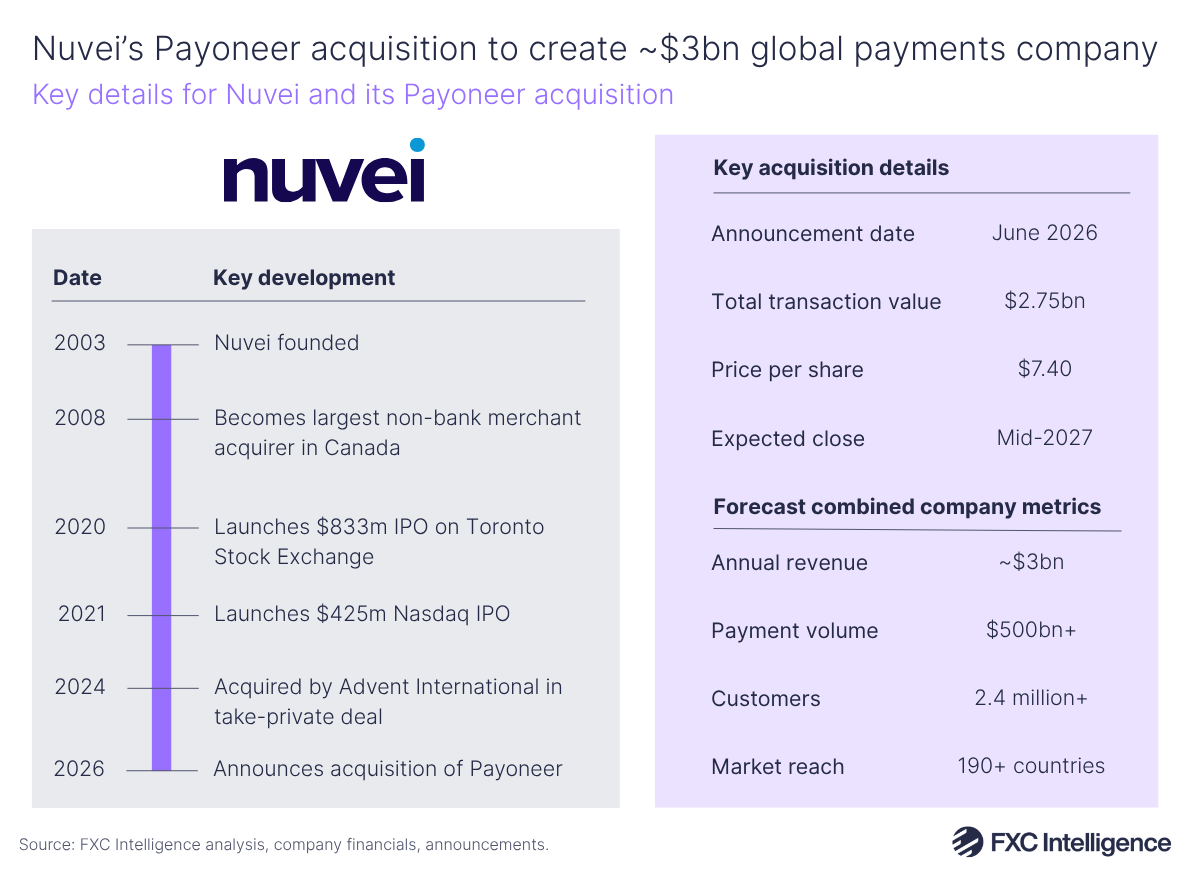
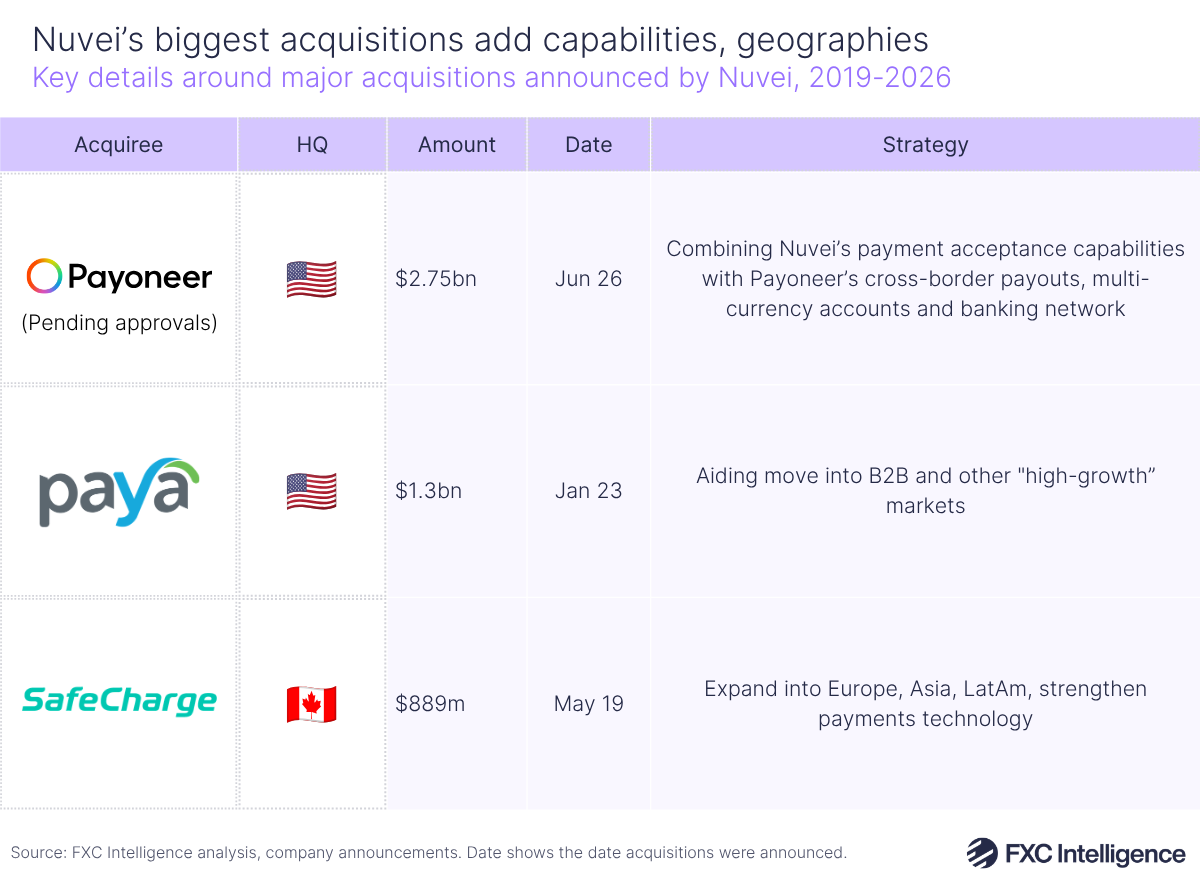
Last month, payments infrastructure provider Nuvei announced an agreement to acquire SMB-focused platform Payoneer for $2.75bn – its largest ever acquisition and one of the biggest cross-border payments takeovers so far in 2026.
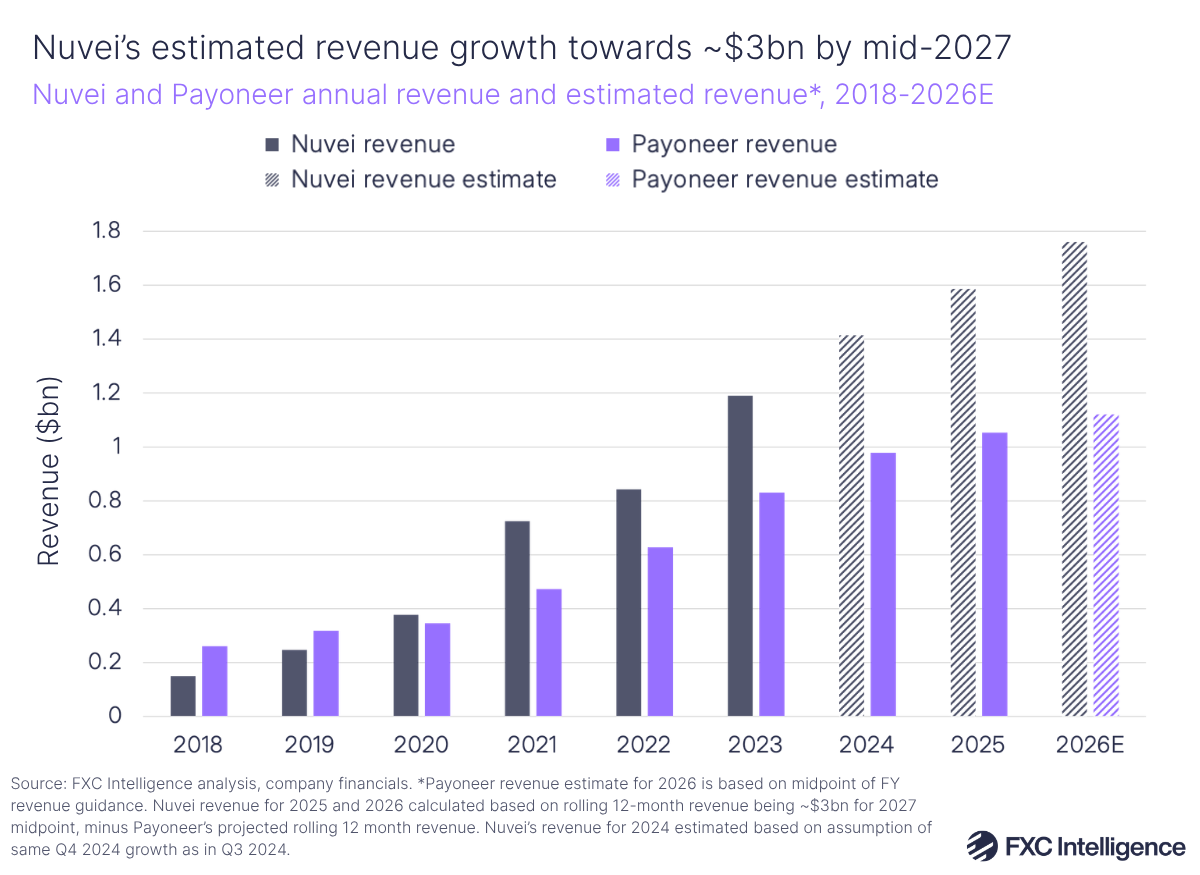
Expected to close mid-2027, the acquisition is predicted to create a combined company that will generate approximately $3bn in annual revenue, backed by more than $500bn in annual payments volume and supporting more than 2.4 million customers. Adding Payoneer at a $2.75bn valuation likely takes Nuvei into large market cap territory, given that Nuvei itself was acquired by Advent International for $6.3bn in November 2024.
Nuvei has traditionally seen its strengths lie in merchant acquiring and payment processing, but has built out a significant stack for payments, spanning business accounts, multicurrency banking, virtual cards, real-time payments and (recently) stablecoin payments.
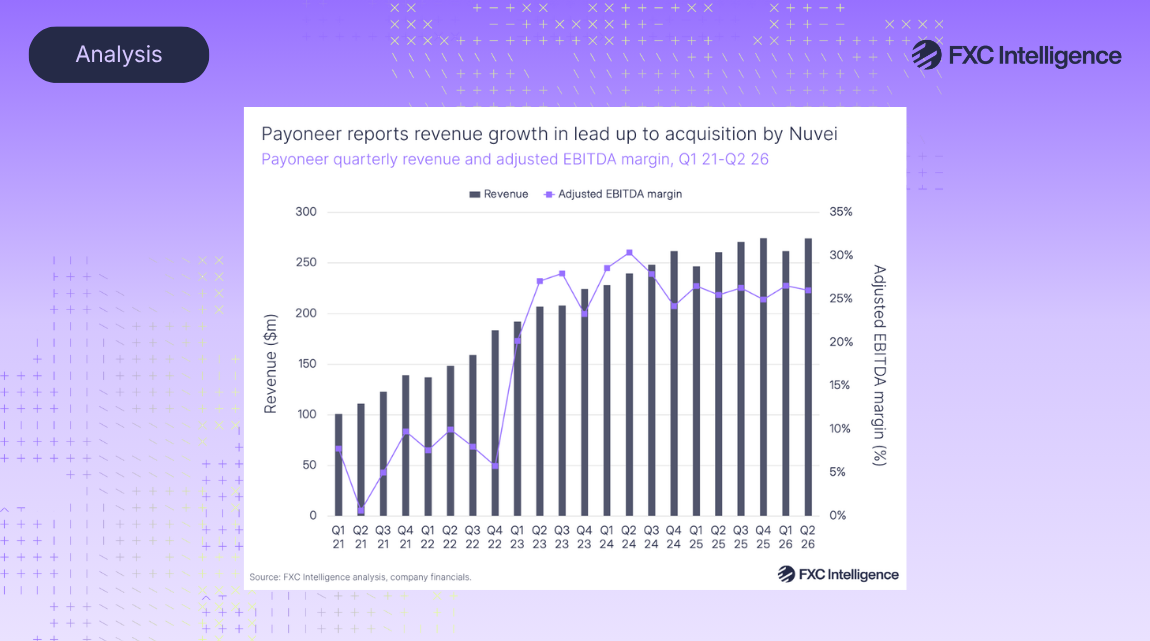
For Payoneer, the acquisition ends a five-year stint on the public markets, which has seen the company grow its annual revenue to over $1bn and expand its employee base to over 2,500 worldwide. During this period, the company has significantly grown its network to create a suite of solutions for SMBs making payments across borders, spanning marketplace and B2B payouts, workforce management, freelancer payments and global payroll, and much more.
We sat down with Phil Fayer, Chairman and CEO of Nuvei, to discuss what’s driving the company’s acquisition of Payoneer, how it will achieve synergies across the two businesses and what its priorities are moving forward.
Where Payoneer fits in Nuvei’s broader strategy
Daniel Webber:
Where will Payoneer fit into Nuvei?
Phil Fayer:
Our raison d’être is to provide infrastructure for every payment everywhere and to connect our customers in the mediums that make sense.
We’ve been really focused on acquiring pay-ins, and we’ve dramatically expanded our infrastructure capabilities by looking at payouts, banking, issuing and a lot of cross-border rails that we’re adding with Payoneer.
This is not an acquisition of synergies; it’s a capability acquisition. We really think that our product offering today – our licences, footprint and technology with respect to accepting payments, the addition of Payoneer and some overlap in terms of our local reach – really adds a comprehensive set of infrastructure capabilities to customers that we think is unparallelled.
How Nuvei has evolved over time
Originally founded as Pivotal Payments in 2003, Nuvei was initially focused on payments processing for SMBs in the US and in the years since has expanded into Canada and other geographies through a series of acquisitions, as well as investments from major players in the space such as Goldman Sachs, Novacap and CDPQ.
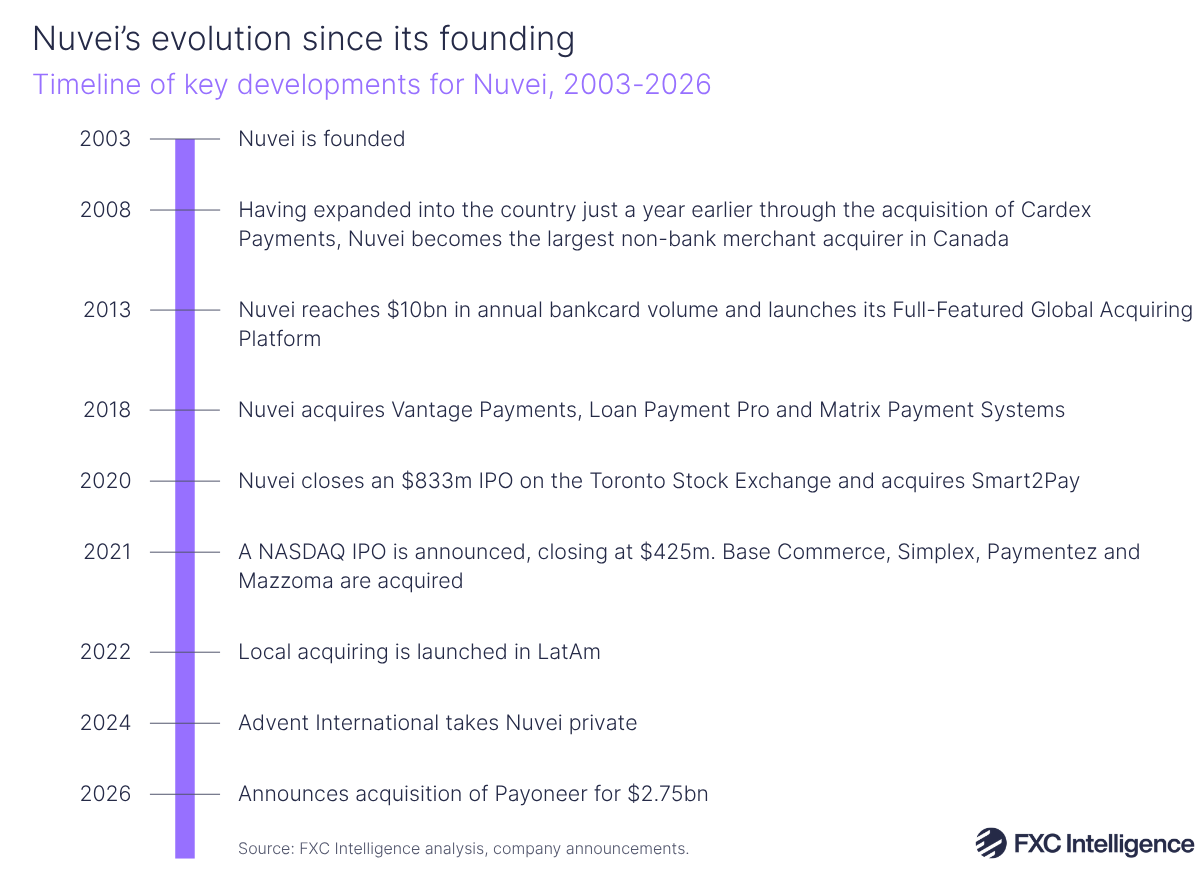
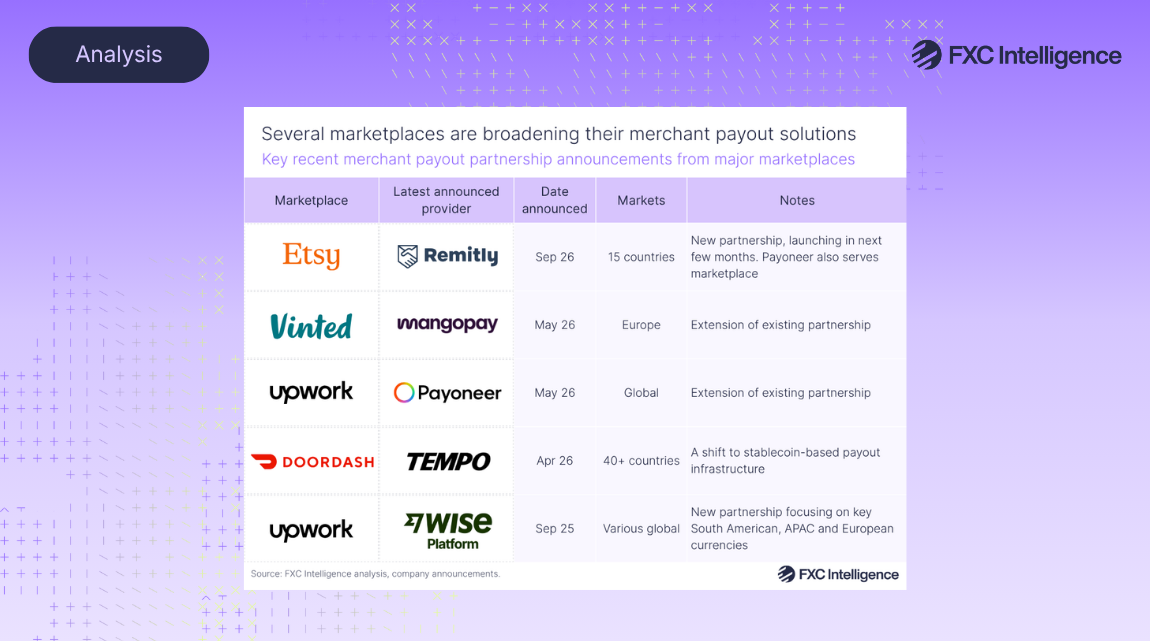
Today, Nuvei provides a broad suite of payment services, framing itself as “the infrastructure for every payment everywhere”, with services spanning pay-ins and payouts, global payment acceptance, bank-to-bank transactions and real-time payments. Through its API service Nuvei for Platforms, it embeds its platform in marketplaces, while its other offerings include issuing, embedded finance and currency management, including fiat to digital asset services.
Excluding this acquisition, the company currently serves a network enabling more than 720 payment methods and facilitates payments across over 150 countries, as well as enabling local acquiring in more than 50 markets.
Nuvei’s focus is broadly on the pay-in side across merchants, though it serves a variety of use cases, spanning marketplaces, financial services, digital content & subscriptions, travel, online gaming, crypto platforms and video games. It integrates software facilitating payments across B2B use cases, government payments and independent software vendors (ISVs), as well as a tailored offering for small & medium-sized businesses.
Creating revenue synergies and growth opportunities
Daniel Webber:
With this acquisition, you’re probably adding some meaningful scale in revenues as well?
Phil Fayer:
Obviously, the financial metrics make sense, but we’re really talking about the rationale of the transaction, which is the capabilities.
We’re not here to shrink ourselves to greatness, we’re here to grow. This opportunity is about adding that second sleeve, ultimately the other side of the coin to our customers from a payout perspective. We think that is really exciting from a product offering perspective, and that will create significant revenue synergies and growth opportunities for us.
Together at scale today, we [project] $3bn of revenue, really good operating metrics, great cash flow conversion and a leverage profile that is really exciting because of the cash flow we deliver. So it all fits: great business, great people, great product offering and a really enviable financial position post-transaction.
What is Nuvei acquiring in Payoneer?
Nuvei has built out a significant payments focus on payment acceptance, enabling its clients to connect with their customers around the world and to make payments. Through its acquisition of Payoneer, it aims to tap into the specific strengths of Payoneer’s cross-border payouts offering.
Payoneer’s significant marketplace reach and licensing strength across many markets, particularly in Asia, as well as its strength in supporting marketplaces, enables receipt of funds and the cross-border transfer of those funds. Payoneer is embedded across a number of significant digital marketplaces, including Amazon, eBay, Walmart, Airbnb, Fiverr and more.
When plugged into Nuvei’s platform, this then gives the company the ability to build a more fully rounded financial platform, supporting different business requirements including accepting, holding, converting and transferring funds, as well as embedded financial services.
The company also sees the acquisition supporting its moves into “emerging financial models”, spanning agentic commerce, stablecoin payments and platform-native financial services. In February, Payoneer also filed an application with the US Office of the Comptroller of the Currency to establish a national trust bank designed to support stablecoin-enabled payments infrastructure, and prior to the acquisition was set to launch stablecoin payout services (powered by infrastructure provider Bridge) in Q2 2026.
This aligns with Nuvei’s own move into digital assets, with the company being among the first payment firms to receive the EU MiCA Crypto-Asset Service Provider licence in December 2025, alongside a Payment Institution licence, which enables the company to provide services around electronic money tokens.
Nuvei’s positioning in the market
Daniel Webber:
If we broaden it out, how would you then like to see Nuvei positioned in the market, hopefully with this all together?
Phil Fayer:
Well, if you think about it, now we offer infrastructure really for every payment, modularity or function that our customers need.
If you think about marketplaces, they need to accept, pay, reconcile and manage FX. They need to provide wholesale banking that’s easy for their customers. We tick all the boxes. Sometimes people try to ask “what is that singular aspect?”, but we come in with so many relevant modules and infrastructure that people need.
It really is dependent on the business model of the customer. Amazon might say, “I don’t need you for pay-ins, but I need you for banking, distribution, disbursements and cross-border”. Initially, for Nuvei alone, that would be a “no”, but today it’s a “yes”.
Ultimately, we now come in with so many different sleeves of opportunity to enable payments from an infrastructure perspective that it makes our total addressable market that much larger.
Nuvei’s acquisition strategy
Nuvei has made a number of acquisitions to help bolster its capabilities and geographical reach. Among the most significant of these deals was SafeCharge in 2019, which helped the company push beyond its native market of SMBs in US and Canada and expand its foothold across Europe, Asia and Latin America.
After Nuvei’s public listings on the Toronto Stock Exchange in 2020 and Nasdaq in 2021, it acquired Paya for $1.3bn in 2023, helping the company push further into “underpenetrated and non-cyclical verticals”. The same year it gained significant public attention through an investment from Hollywood actor Ryan Reynolds.
In 2024, Advent International’s $6.3bn acquisition of Nuvei saw shareholders receive $34 per share, with Nuvei saying that Advent as an experienced investor in the payments space would spur its growth as a global platform.
Key customer use cases for the combined company
Daniel Webber:
Which of the use cases are you most excited about now?
Phil Fayer:
We’re going to continue doing all the great things that we do. If you think about the overlap between Nuvei’s customers, we receive money from all different countries. We have licences, we’re operating in and provide local acquiring in 52 markets, but we provide alternative payment methods really around the world.
Currency management is a wonderful opportunity for us. [For example], we receive source currency, Payoneer receives dollars. Merchants want dollars and Payoneer’s customers want the opposite side. We have so many cross-paths of availability from a functionality perspective. I wouldn’t pick just one, but fintech and infrastructure for fintech is so broad.
We offer the broadest scope to trigger and enable all of these use cases. Payoneer’s case is marketplaces and SMBs, Nuvei’s is enterprise, but we have overlap on the enterprise side. All of them require some set of functionality because they’re all operating globally. The underpinning here for us is enabling customers, and interconnectivity is very important. Ultimately, I think it’s very exciting for the transformation of the company.
Payoneer’s growth over time
In a LinkedIn blog following the acquisition announcement, Payoneer CEO John Caplan spoke about Payoneer’s rise since his arrival in 2022 (initially as Co-CEO, before becoming sole CEO in March 2023).
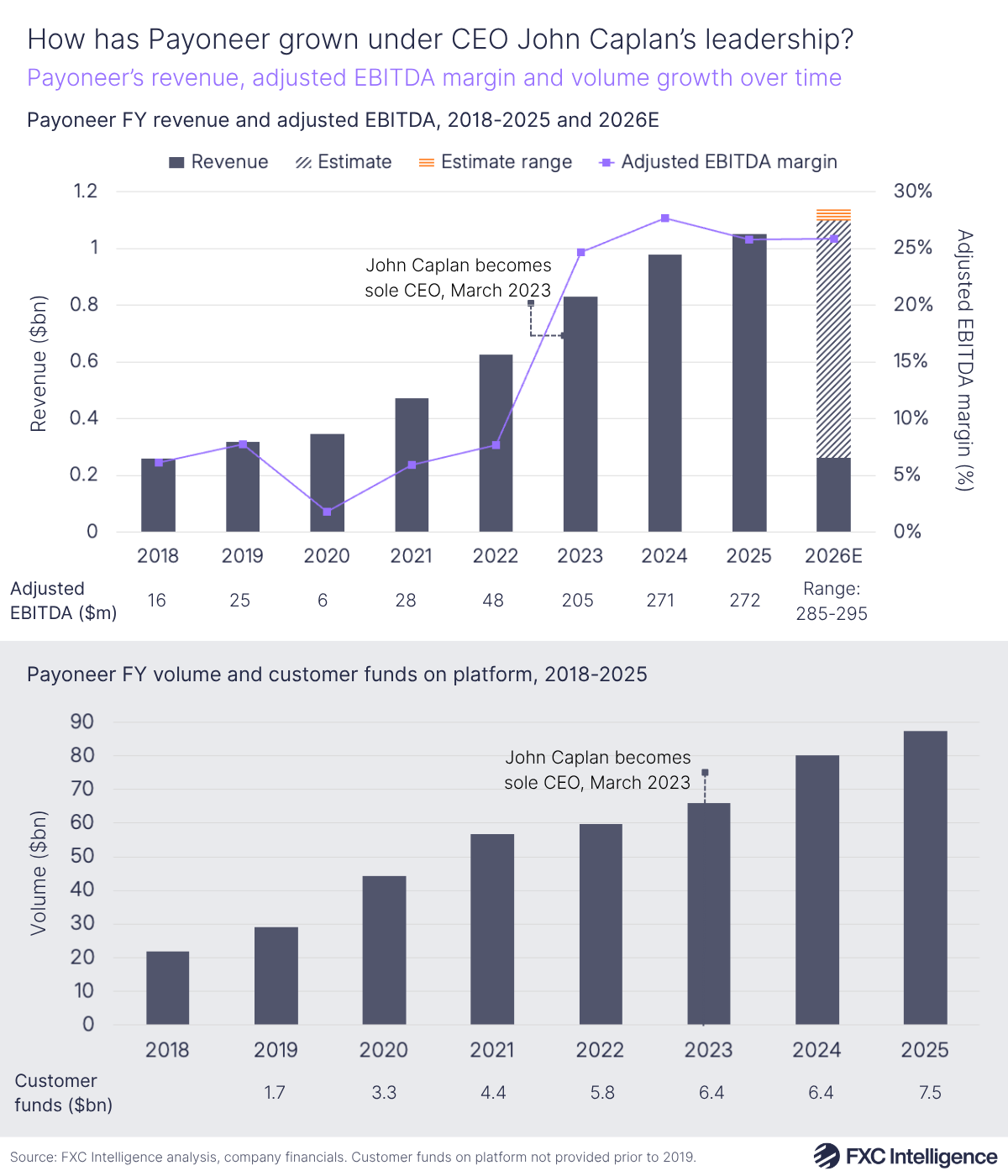
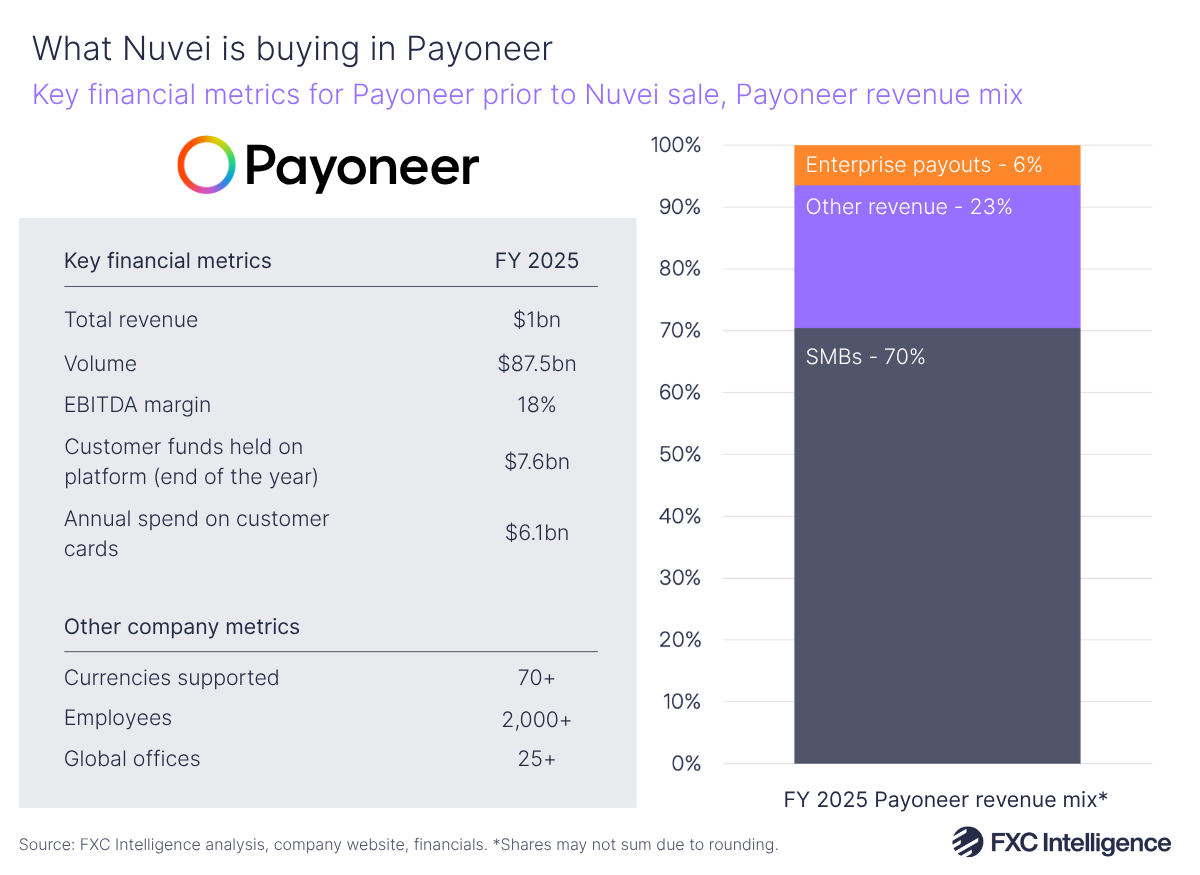
Payoneer has seen significant growth since it went public through a SPAC merger in 2021. The company has seen revenue rise from $473m in 2021 to $1bn in 2025, a 22% CAGR, and grew volume from $57bn to $88bn.
The company also saw adjusted EBITDA grow by nearly 10 times from 2021, from $28m in 2021 to $272m in 2025, which expanded its adjusted EBITDA margin from 6% to 26%.
How Payoneer’s licences contribute to the deal
Daniel Webber:
How important are Payoneer’s licences as part of this mix?
Phil Fayer:
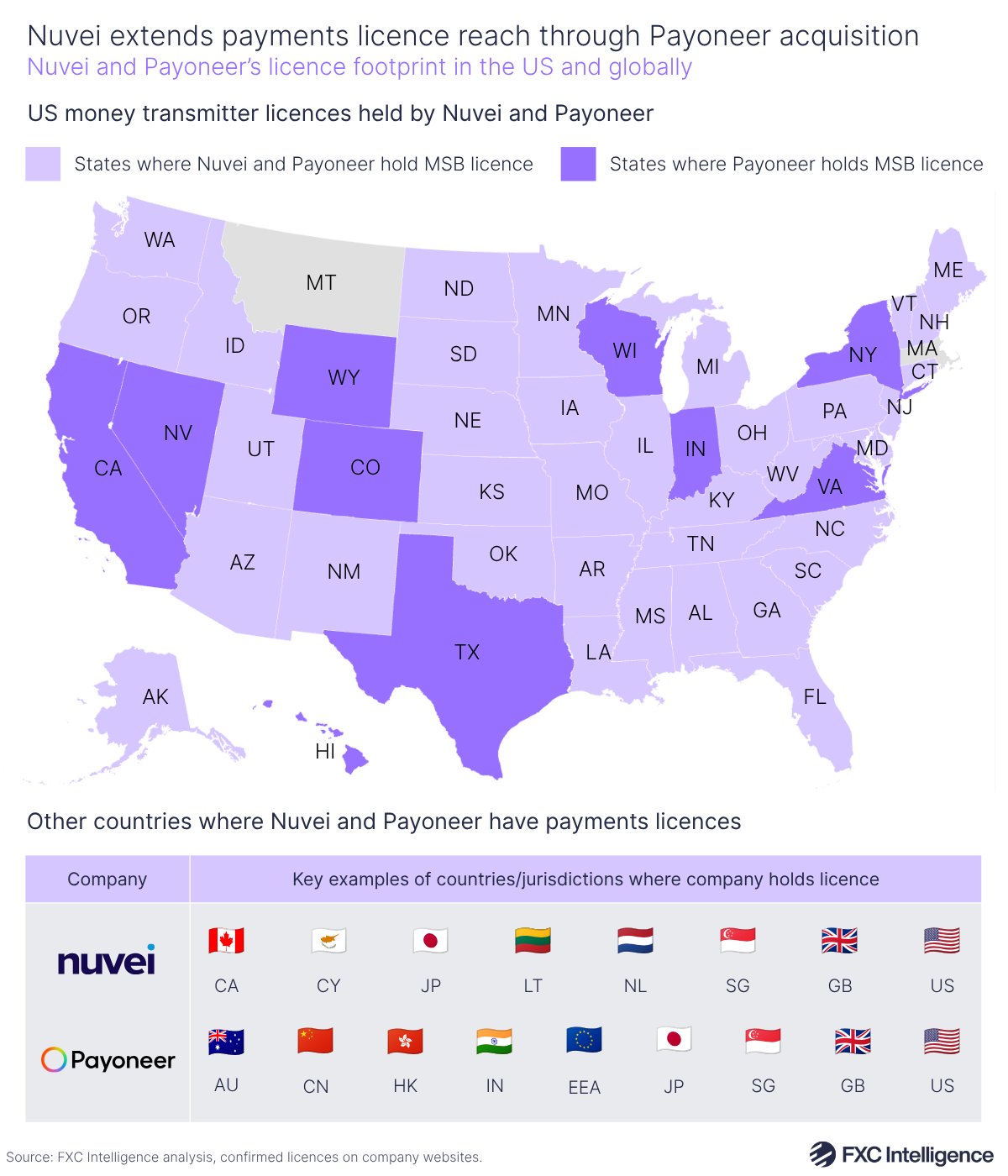
There’s not one aspect of Payoneer that’s more important than another. Obviously, they have licences that we don’t have and they have licences that overlap with what we have. But if you look at Payoneer, certainly China and India are really unique assets from a licence perspective.
There are some others as well. They have filed an application with the Office of the Comptroller of the Currency (OCC) for a charter in the US on the GENIUS Act side (pending approval). More work is to be done in terms of what that offers us from a capability standpoint. We have the Markets in Crypto-Assets Regulation (MiCA) licence in Europe.
Ultimately, there are a lot of symbiotic relationships that we can bring to the licence footprint and monetise that on a great basis. The fun part here is that every local market is a locomotive of the world. Unfortunately, if you’re sitting in the US, you think the US drives the market. If you’re sitting in Europe, you think Europe does. It’s a matter of how you bring that lens so that we can enable whatever locomotive is starting.
Today, we have locomotive opportunities in India, China, Europe, LatAm, the US, Canada and Mexico as well. We have so many aspects where we could onboard new customers in those markets, bring other customers into those markets and help folks from those markets drive not only domestic but global commerce. Those licences are going to play a critical role. It’s not just one piece like, “Oh, this is the most interesting piece of Payoneer”. It’s the totality of it with Nuvei to be excited about.
Payoneer diversifies revenues across segments and geographies
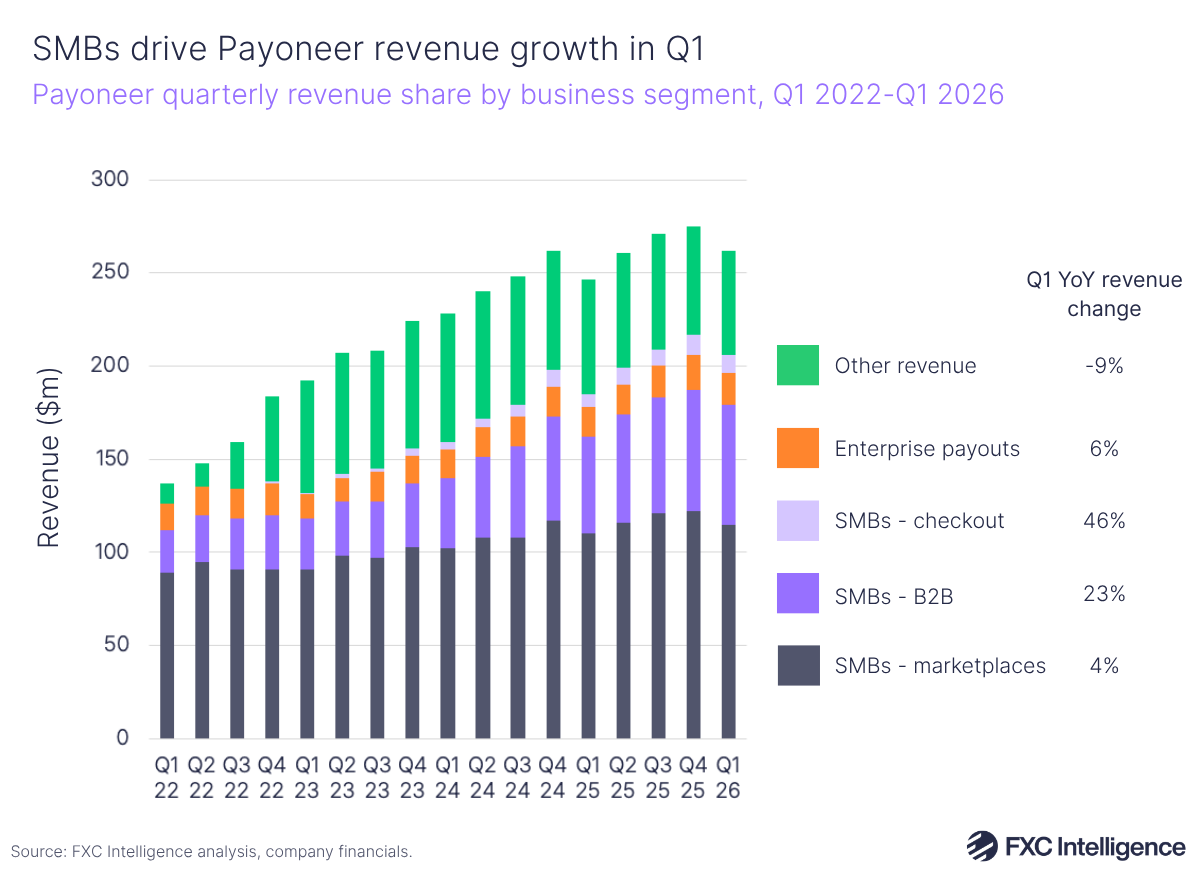
Payoneer has expanded significantly to become a more resilient, diversified provider. This is firstly seen in its share of services, encompassing revenue across its SMB segment (spanning marketplaces, B2B and checkout services), enterprise payouts and other revenue (the vast majority of which stems from interest income held on customer balances).
While marketplaces remain a strong revenue drive for the company, it has grown B2B volume to over $12bn in 2025, expanded card usage to $6bn+ and has driven into workforce management through the acquisitions of Skuad and Boundless.
Based on its Q1 2026 figures, SMBs took 72% of Payoneer’s revenue share, with 44% of this attributable to marketplaces, 24% to B2B payments and 4% to checkout services. Other revenue accounted for 21% of the total, highlighting a significant interest income impact partly driven by the significant growth of customer funds on Payoneer’s platform over time, rising from $4.6bn in Q1 2022 to $7.6bn in Q1 2026.
Secondly, Payoneer has diversified geographically, driven by significant licence expansion across China, Singapore and the UK, among other regions. Asia-Pacific in particular has been a key driver for Payoneer, having seen the fastest rate of growth across the different segments that Payoneer services. Greater China accounted for the highest share of Payoneer’s Q1 2026 revenue (33%), followed by Europe, the Middle East and Africa (25%), APAC (23%), Latin America (10%) and North America (10%).
These highlight the potential for Nuvei to grow the reach of its financial platform in Asia through Payoneer’s strong regional presence, as well as its capacity to target marketplaces through cross-sell opportunities.
Nuvei’s approach to digital assets
Daniel Webber:
What’s your approach to the digital asset world and stablecoins?
Phil Fayer:
I think a lot of it is on the come up. There have been a lot of investments in people trying to plow the road with de minimis revenue models produced to date. I don’t think that’s necessarily out there, but from a cross-border perspective, moving funds quickly and from an off-ramp perspective, Payoneer and Nuvei offer a really interesting stack. You can receive your funds in real time in North America, and we can distribute them for you in real time anywhere else around the world.
That is because we have presence and float everywhere, but we’re going to enable that with a payout stablecoin strategy as well. But ultimately, these are use cases that are still developing. If you look at it on a vanilla basis today, if I send you USDC, you’re very thrilled to get it, but you want cash because you need to spend cash. You need to offboard that, which means you have additional costs in terms of how you receive it.
It’s still in its infancy because the off-ramp is still not cleared out. Yes, I could send you USDC, and Circle charges me 10 basis points in and 10 basis points out like everybody else. But then once you get your coin and you have to bring it to an exchange or an off-ramp provider that charges you additional fees plus the FX fee.
We are at the beginning of a process of how these stablecoins join. I think it’s going to be fascinating to watch. The outcome here that is very exciting is that there’s going to be a new set of rails for moving money globally, and I’m very excited about that. Do I think the existing business cases are the ones that are going to win in the long run? No.
What we do is enable stablecoin as another form of local and alternative payment method. We’ll enable all of them that are governed and licensed, like USDC or others. We want to enable as many stablecoin strategies as an alternative but the volume has to come, and it will come when we have maturity on the off-ramp and on-ramp and provide near-instant capabilities around that.
What does Payoneer get from the Nuvei acquisition?
On Payoneer’s side, CEO John Caplan highlighted that going private through the Nuvei acquisition will enable the next stage of Payoneer’s growth, allowing it to capture a greater share of the substantial B2B cross-border payments opportunity.
“Nuvei’s ecommerce, acquiring and B2B payment capabilities will combine with Payoneer’s marketplace and cross-border payout network, multicurrency virtual accounts, card issuing, workforce management and corporate spend management,” Caplan said in the aforementioned LinkedIn post. “The result will be one company serving the full lifecycle of a global business, from a freelancer receiving a first payout to an enterprise managing payments across 100 markets and the millions of platform-driven customers in between.”
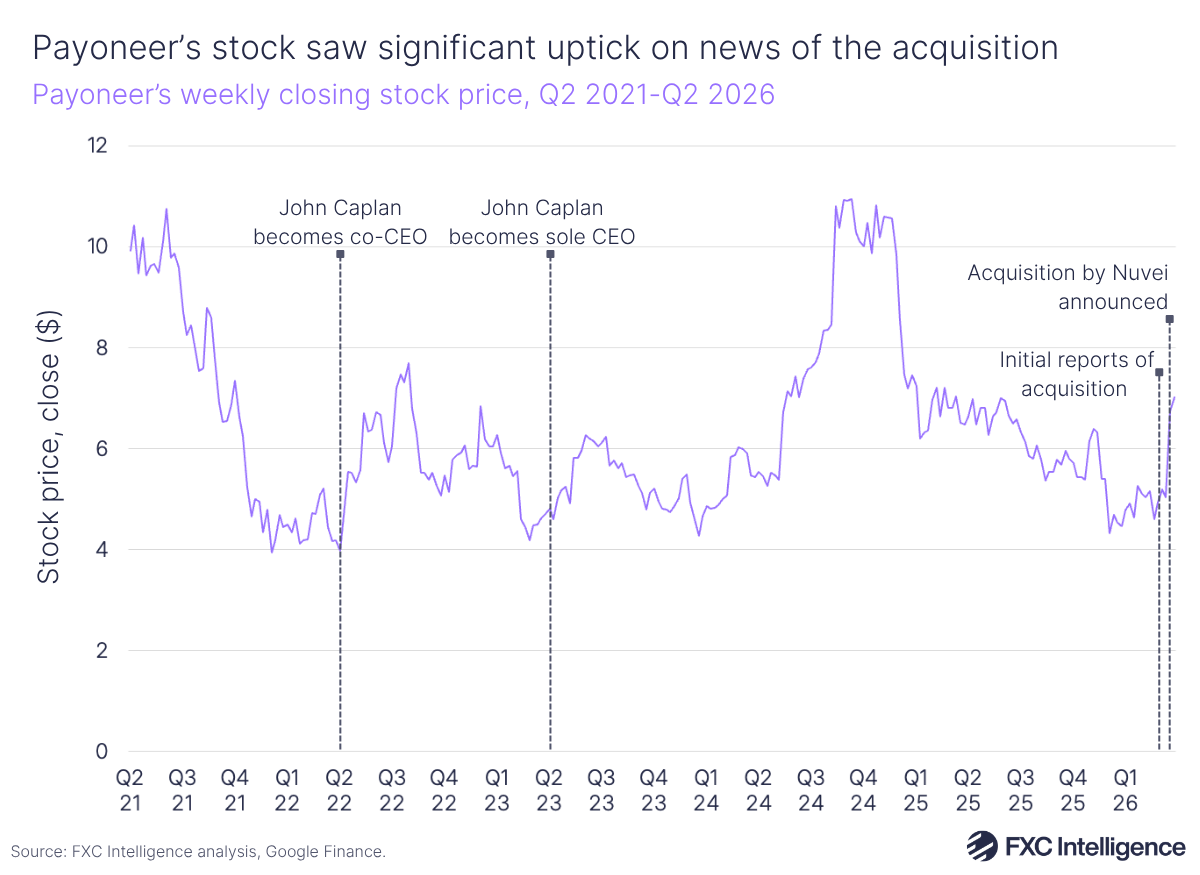
Payoneer’s share price saw a significant uptick after reports emerged about the Nuvei deal, with the price rising to $7.04, up 29% since the first reported close price in 2026. As Caplan highlighted in the post (and has spoken to us about in the past), the company’s growth has not been fully reflected by its share price movement, with Payoneer being part of a wider trend for some SPAC companies of seeing investment move elsewhere.
That being said, he expects the $7.40 share price at purchase to provide “immediate liquidity”, while arguing that private ownership will allow the company to focus on pursuing the B2B payments opportunity quickly and with long-term backing. This has been a common sentiment across other take-private deals, including Nuvei’s own acquisition by Advent International.
Caplan added that the company also expects the deal to accelerate their growth through access to Nuvei’s enterprise-grade capabilities, while also saying that it shares Nuvei’s “culture of execution and focus on impact”, which will help the companies together create a platform enabling businesses to participate in global commerce.
What’s next for Nuvei
Daniel Webber:
Where do you see Nuvei in three-five years?
Phil Fayer:
On our end, payments are going to be the bedrock of any commerce activity. Because we enable commerce and the connectivity between you as a business and your end customer, we’re going to continuously play a growing role in how you connect, transact, manage, reconcile, get paid and handle your FX. I’m excited about how we’ve expanded into that.
Ultimately, two bedrocks are very clear: payments and security. Those are going to continue developing. We look at innovation on a yearly basis, and some have longer-term. From a Nuvei perspective, we have moved from pure-play acquiring into an infrastructure play, which is a massive pivot for us. We’re going to be heads-down executing on that, from an API offering product completeness, expanding Payoneer’s stack beyond just marketplaces into others. We’re really excited about what we have.
The interesting thing for us today with Payoneer is that our ceiling in terms of growth and customer reach has dramatically expanded from us [coming] together. Payoneer on its own was in one sleeve and Nuvei on its own was in the other, but together we could grow to $10bn of revenue. That’s what keeps us excited; we could totally transform the company.
We’re going to be really innovative and heads-down integrating Payoneer because we think that extra sleeve is truly transformational. We’re really going to execute and listen to our customers as we redefine our product roadmap. I think we could be at the forefront of providing infrastructure to enable the commerce of the future. That may be agentic, it may be stablecoin-related or it may be pure-play payments, but we’re going to have a front-row seat because we have those capabilities to execute on.
Nuvei acquisition adds to cross-border consolidation trend
Nuvei’s acquisition of Payoneer is a major cross-border payments acquisition this year, coming after a number of significant acquisitions for the sector taking place in 2024 and 2025. These include Stripe’s $1.1bn acquisition of blockchain infrastructure provider Bridge; Global Payments’ $24.25bn takeover of Worldpay; Mastercard’s $1.8bn BVNK deal and Corpay’s acquisition of Alpha for $2.2bn.
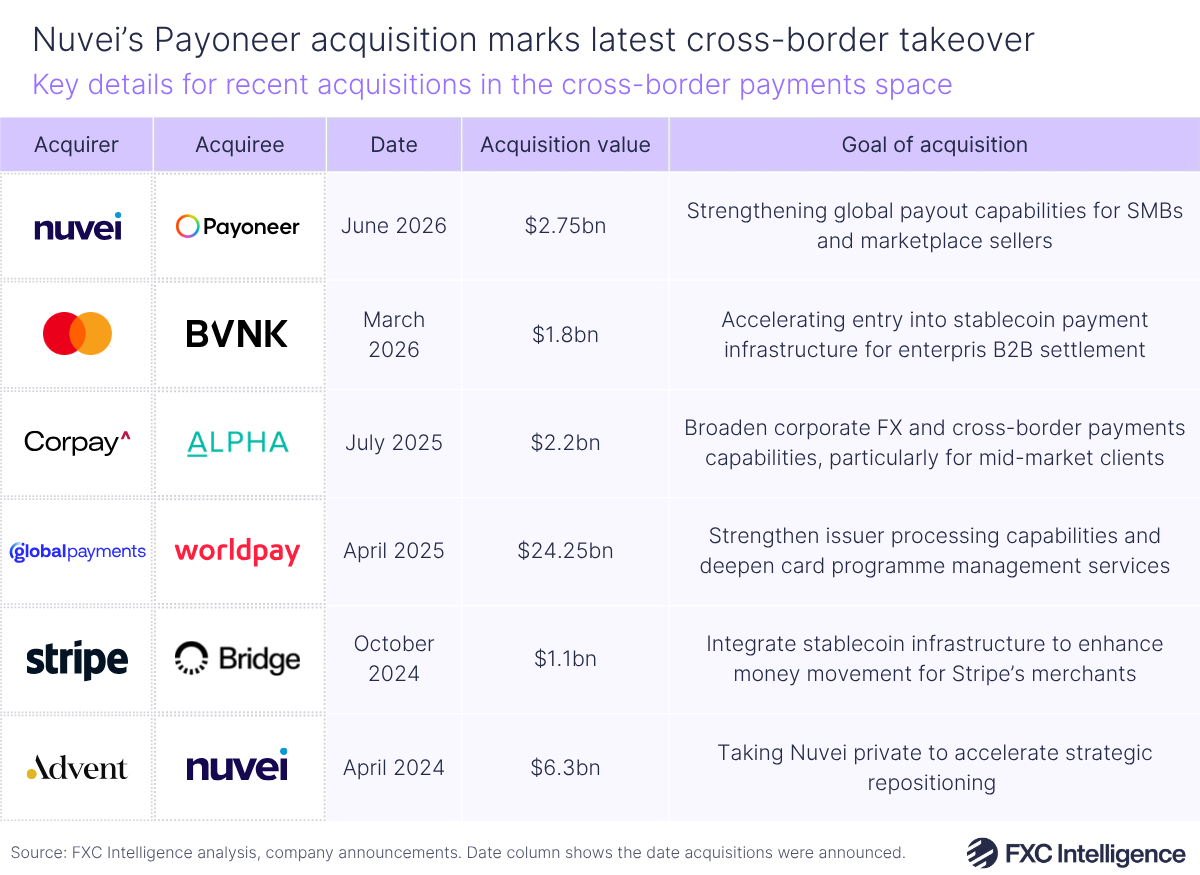
While the different players here are targeting a variety of sectors – across ecommerce, card payments, stablecoin payments and B2B transfers – the common theme has been consolidation to build out infrastructure and fill gaps to enable new capabilities as players in the space increasingly seek to target more of the cross-border opportunity.
How Payoneer going private could “supercharge” growth
Daniel Webber:
Anything else you’d like to mention?
Phil Fayer:
We found in Payoneer a great company and management team with a solid set of leadership capabilities and execution. The combination is really exciting. Forgetting about the financial side, it’s really exciting what we can do together.
Ultimately, taking Payoneer out of the public markets – and we have our own experience with that – lets us really supercharge our growth without being constrained to quarterly specific results.
The last piece is that this transaction is possible because we just did a leveraged buyout in 2024, closing in 2025. Our performance from Nuvei and the team has been exceptional. We delivered aggressively and it allowed us, within 18 months of the take-private, to lever back up to acquire Payoneer with no equity and to continue on that process.
Combined, the execution of Payoneer and the execution of Nuvei coming together has been really exciting. I think the timing is just right for both companies.