

Wealth is becoming more global, but with fiat frictions remaining a challenge for high-value money movement, there are opportunities for digital assets to pick up the slack. In a report produced in partnership with GFTN for Singapore Fintech Festival, we explore the potential and opportunities for stablecoins and tokenised assets in the high-value money movement space.
Around the world, wealth is moving faster and further than ever. Family offices are relocating to Singapore, capital is flowing between Europe and Latin America and investors expect round-the-clock access to global markets.
Yet the high-value transfers that move the most money still run on rails defined by cut-off times, correspondent chains and settlement risk. Digital assets are beginning to change this, with stablecoins, tokenised deposits and tokenised funds providing the potential of near-instant, always-on settlement for large-ticket flows.
However, with their own frictions and regulatory restrictions, they are not guaranteed to provide the same benefits everywhere, and the true extent of their impact remains to be seen.
Produced by FXC Intelligence in partnership with GFTN for Singapore Fintech Festival, this report examines how digital assets are rewiring high-value money movement, where adoption is taking hold and why a small number of hubs are positioning themselves to capture it.
Wealth in motion: The high-value picture
The amount of money that investors hold in other countries, and how these holdings shift over time, acts as a significant proxy for the movement of wealth across borders, requiring large-value transfers. The big picture is that although markets differ in how they invest across borders, overall the nations seeing the highest levels of investment are growing the amount they hold in other countries over time.
As of the end of 2025, IMF data on cross-border portfolio investment shows that cross-border assets reached $103.6tn, a 23% YoY rise bolstered by factors such as strong corporate earnings, AI investment, increased investor risk appetite and easing global financial conditions. Certain countries account for a large share of this total investment, although there is notable variation in the growth rates of the leading investor markets over the past few years.
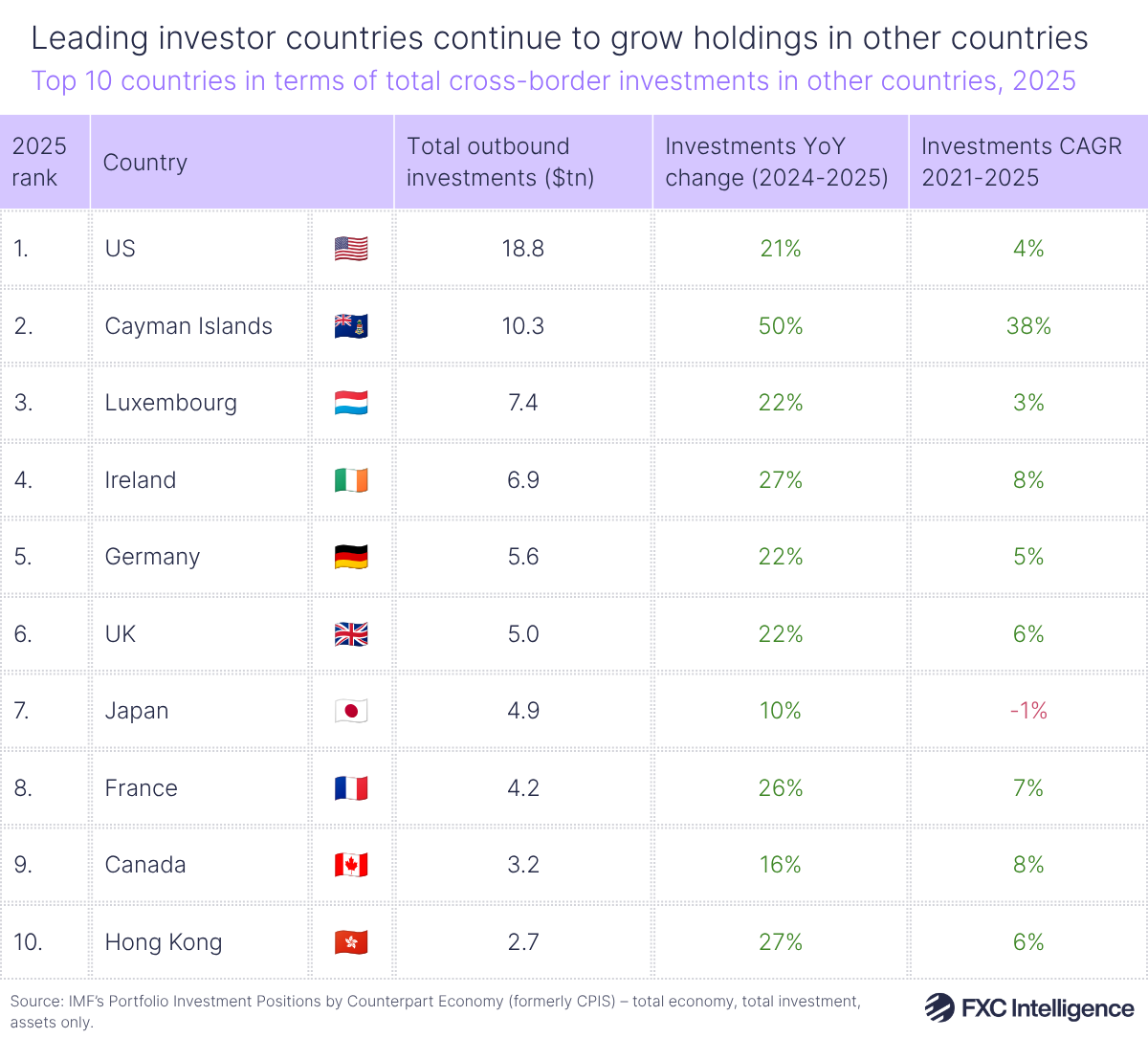
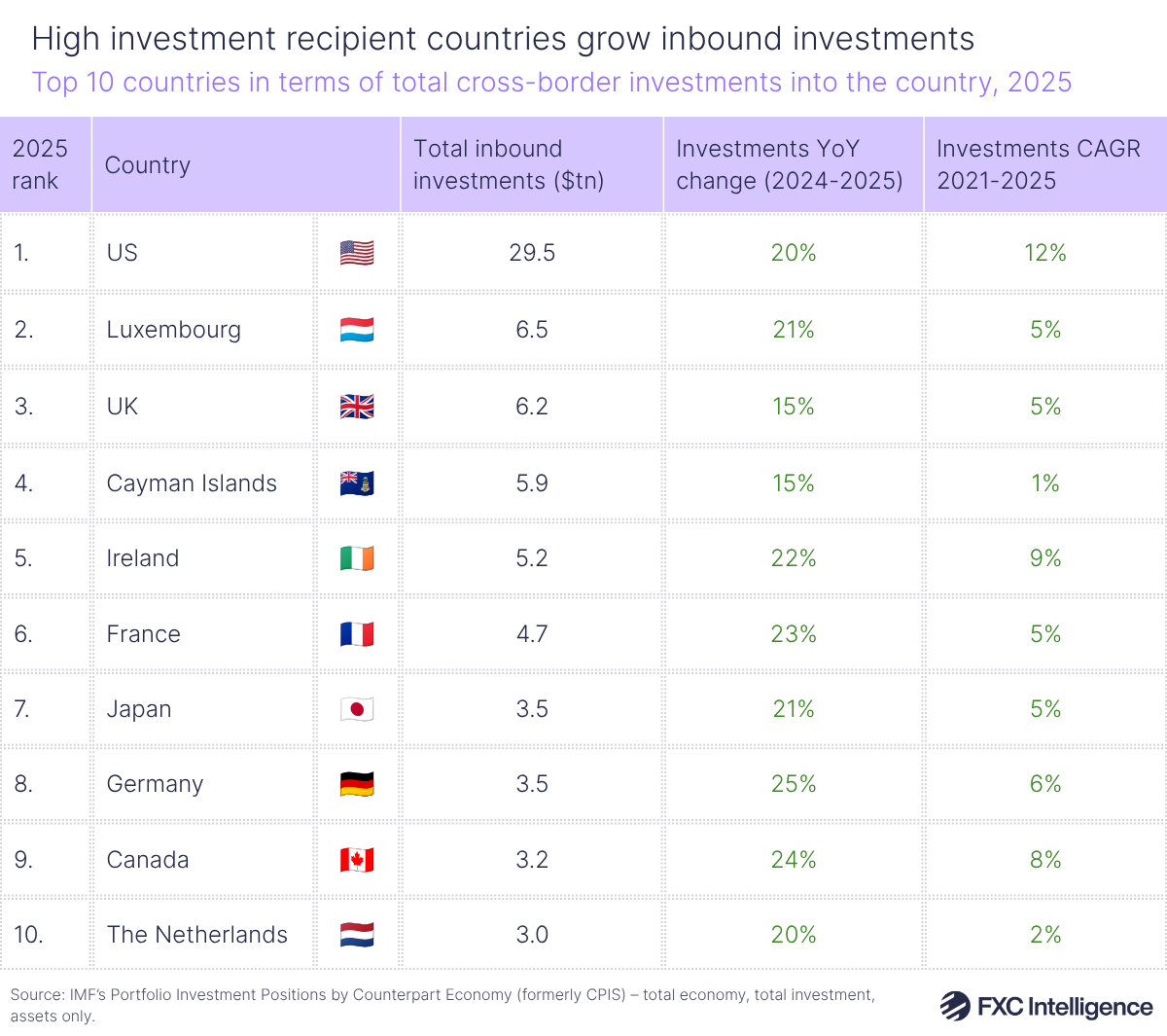
Crucially, the markets investing the most are often the same as those receiving the most investments. Nine of the leading countries featuring in the top 10 outbound investment markets are also featured in the inbound investment market, highlighting the extent to which large-scale investments are centred across a distinct number of geographies globally.
Beyond overall investments held abroad, cross-border household deposits can also serve as a proxy for ‘me-to-me’ payments – i.e. individuals sending money from an account in their home country to one they hold in another country abroad.
Bank for International Settlements (BIS) data from markets that report this datapoint shows that households worldwide moved a net value of $48.8bn into foreign bank accounts in 2025, up from $48.1bn the previous year. And while there have been some years when net flows dipped, particularly following the pandemic, the overall trend is a rise in cross-border investment flows over time.
Looking beyond the global totals, individual markets play different roles in the movement of global wealth, with three examples showing this: Singapore as a major outbound investor to the rest of the world; Spain as a link between Europe and Latin America; and Luxembourg as a connector between Europe and other global markets.
Singapore: A net outward investment hub
Singapore serves as one of the most well known hubs in Asia for wealth management and investment, representing one of the clearest examples of a market primarily sending wealth abroad. At the end of 2025, residents held $1.95tn abroad, up 15% on the previous year and around three times the amount that foreign investors held in Singapore. However, inward investments have been growing at a faster rate, with a 13% compound annual growth rate (CAGR) between 2021 and 2025, compared to an 8% outward CAGR for the same period.
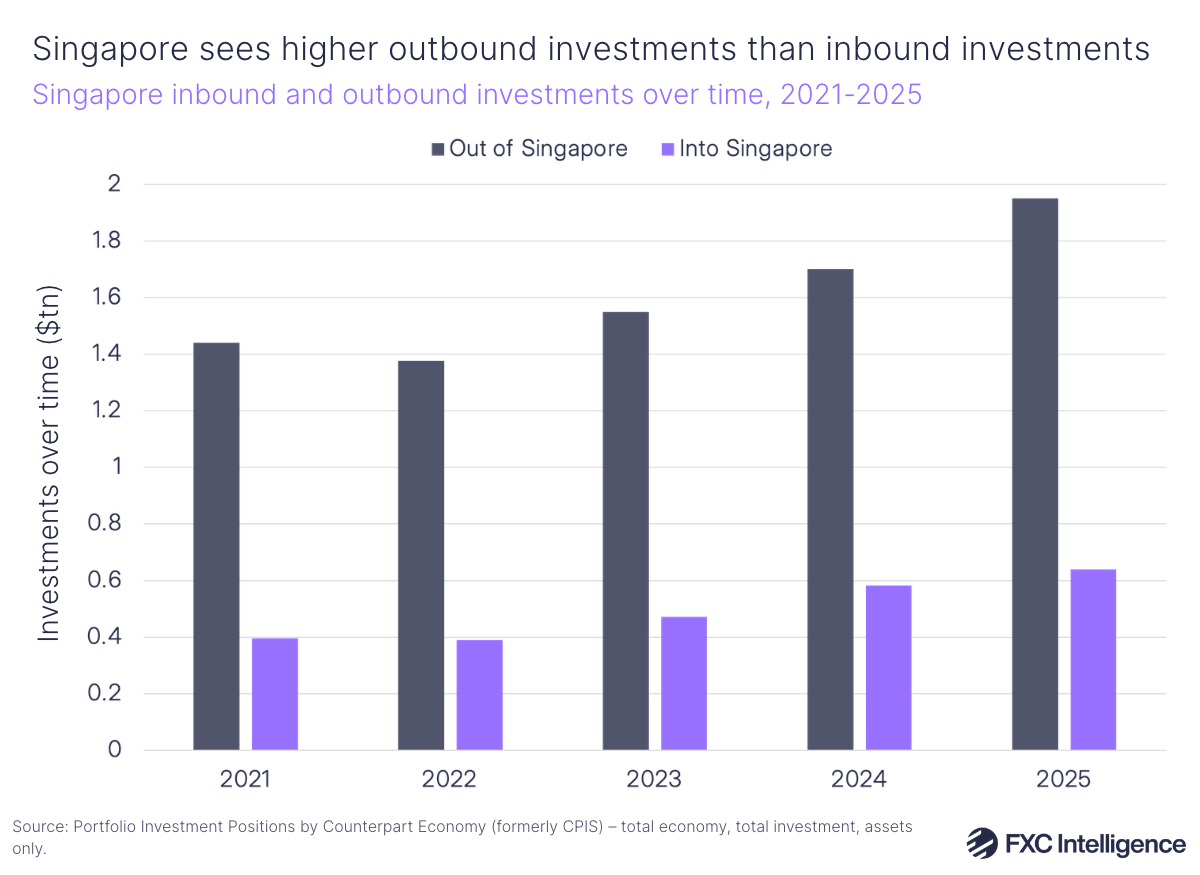
Almost half ($925bn) of Singapore’s outward investment was into the US in 2025, with this market seeing a far faster rate of investment than many others over the past few years, at a 15% CAGR. However, Asian markets are still disproportionately important to the region, accounting for six of the top 10.
Spain: Rapid growth in Latin American investment
Spain serves as an example of how wealth is moving between regions that are linked by historic, cultural and deep economic ties, with long-standing investment into the region that has become more pronounced of late.
IMF data shows that Spain’s total investments in Latin America more than doubled to $20.4bn between 2024 and 2025, led by significant rises in investments into Mexico, Brazil and Colombia from the country. However, this is not one-directional. Latin American investments in Spain also saw a significant rise over the same period, nearly doubling to $12.5bn, driven by Brazil.
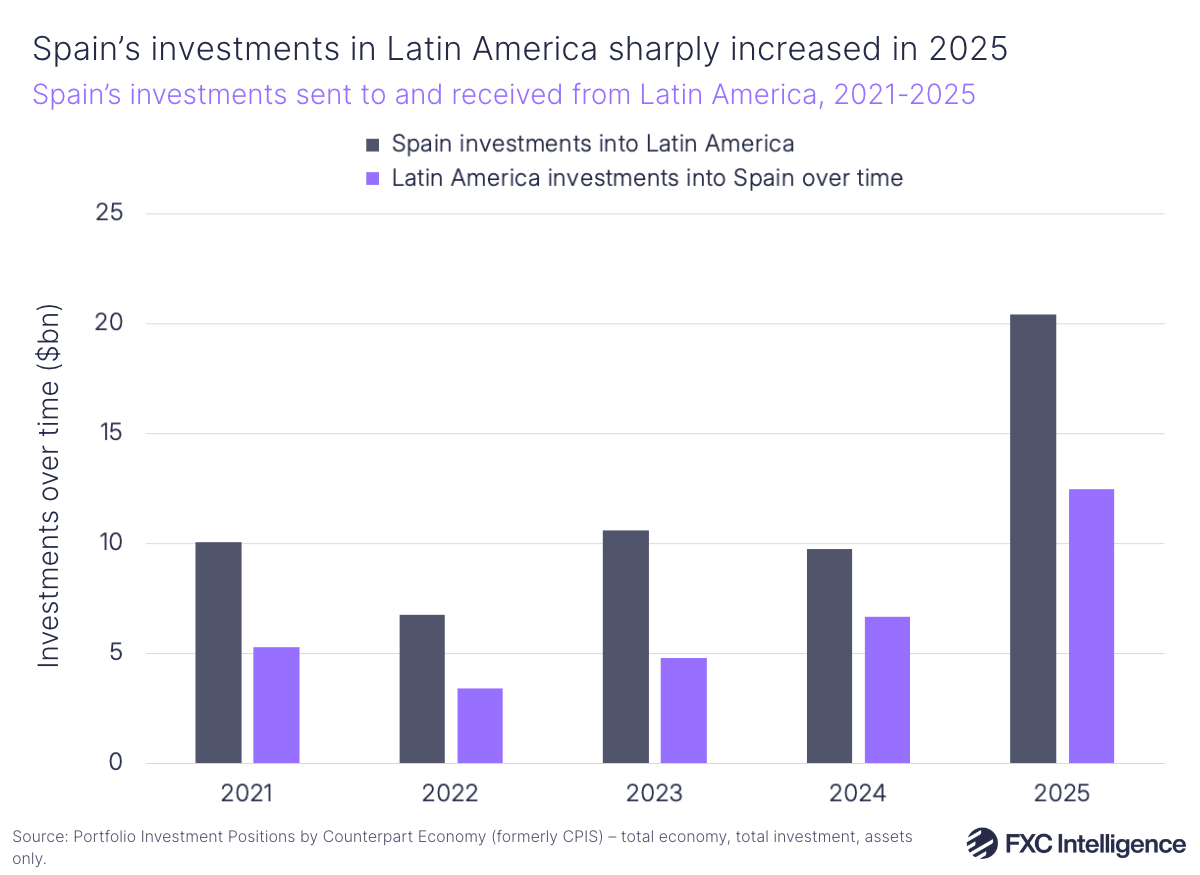
Spain’s households have also increasingly moved money abroad, with 2025 seeing a 335% YoY increase in household net flows to $3.5bn. The country also moved a net $3.8bn in cross-border household deposits in the first half of 2026, more than any other country included in the BIS’s dataset. This highlights Spain’s growing role as one of the most active markets for households moving money across borders, making it a key corridor for large-value personal transfers.
Luxembourg: Europe’s investment hub
Luxembourg, meanwhile, is one of both Europe and the world’s biggest investment hubs, as the third-largest outbound investing country globally and the second-largest destination for portfolio investments. This saw it invest $7.4tn abroad in 2025, while investments into the country totalled $6.5tn.
This highlights its role as a distribution centre, with other countries both in Europe and further afield buying into Luxembourg-based funds that then invest globally.
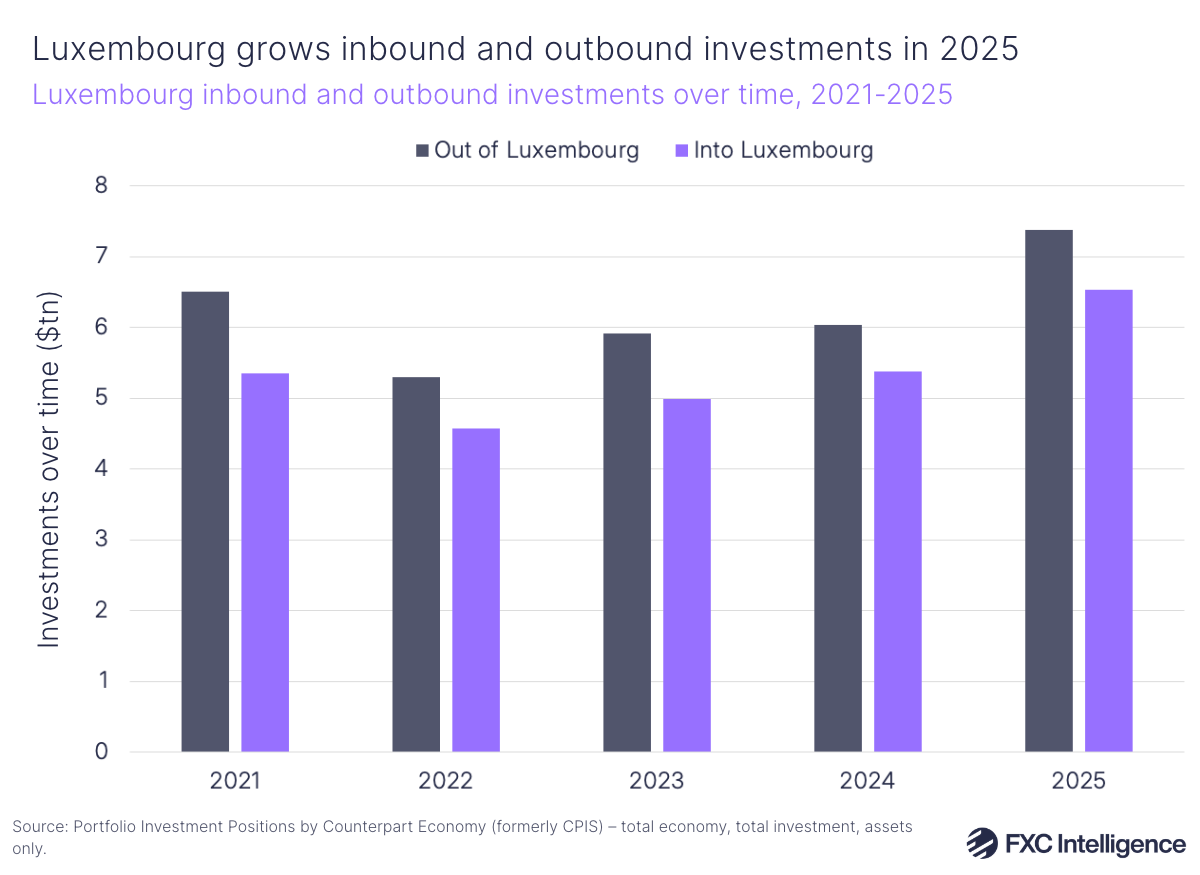
Investments into Luxembourg have largely stemmed from other European countries, with Germany, Italy, France and Belgium together accounting for roughly half of the foreign holdings in the country in 2025. Meanwhile, the US received $2.3tn from Luxembourg – almost a third of its investments abroad – with other significant destinations including France, the UK and Germany.
The impact of friction on large-ticket transactions
High-value cross-border transfers borders can face certain challenges, including cut-off times, long settlement times and long chains of intermediaries that can add delays as a result of increased compliance checks.
The timing of payments through traditional large-value payment systems can be a significant factor for friction, with payment systems often having specific cut-off times or being closed on holidays or weekends. For global transfers that span one region to another, (e.g. money moving across corridors from Asia to Europe or the Americas), cut-off times and differing time zones can significantly delay transfers. In large FX payments, for example, this can result in settlement risk whereby one party has paid out but has not yet received the currency it is owed, leaving it exposed if the other party is unable to complete its side of the transaction.
During Point Zero Forum 2026 (PZF), several panel participants commented on the impact of banking hours and cut-off times. “Yen same-day liquidity [cuts off] at 10am in Singapore,” said Kelvin Li, Head of Platform Tech Business at Ant International during one panel. “Basically, when I get to the office, you will not be able to settle yen on the same day.”
When large cross-border payments go through longer correspondent banking chains, this can create uncertainties about whether payments are going to arrive, with slow settlement often meaning that institutions have to tie up money in advance of payment in accounts around the world. “We’ve lost tens of millions of dollars over the course of our 15-year history because of failures and issues with corresponding banking partners,” said Jonathan Jachym, Global Head of Policy and Market Structure at Payward, during the conference.
One of the key frictions slowing down payments across chains is the need for compliance checks, with banks needing to establish the original source of payments and do compliance checks and screening at each stage of the chain. Sequential know your customer and anti-money laundering compliance checks from each intermediary along a chain of correspondent banks can increase the time and cost taken to make the payment.
“The underlying financial infrastructure has not always kept pace with the needs of global businesses. Differences in banking systems, lengthy settlement times, foreign exchange costs and varying regulatory requirements can make cross-border transfers more complicated and costly than they need to be. Businesses need financial infrastructure that allows them to move money across markets with greater speed, transparency and certainty.”
– Paul Meng, CEO, Sunrate
Digital assets take on wealth management
While there is significant and often growing demand for high-value money movement across wealth management and beyond, there has also been a growing focus on the use of digital assets to combat pain points and speed up the flow of funds globally.
Inevitably, this has translated into the rise of both wealth management products that are explicitly digital asset-based, as well as their use in the delivery of high-value money movement, with stablecoins, tokenised deposits and tokenised money market funds and related investment products all seeing adoption.
For wealth-focused products, these are typically explicitly digital asset-based, however for high-value money movement, the value is often in treasury plumbing accessed via banks or other payment providers, meaning that the role of digital assets may always not be clear to the sender.
Different instruments, different applications
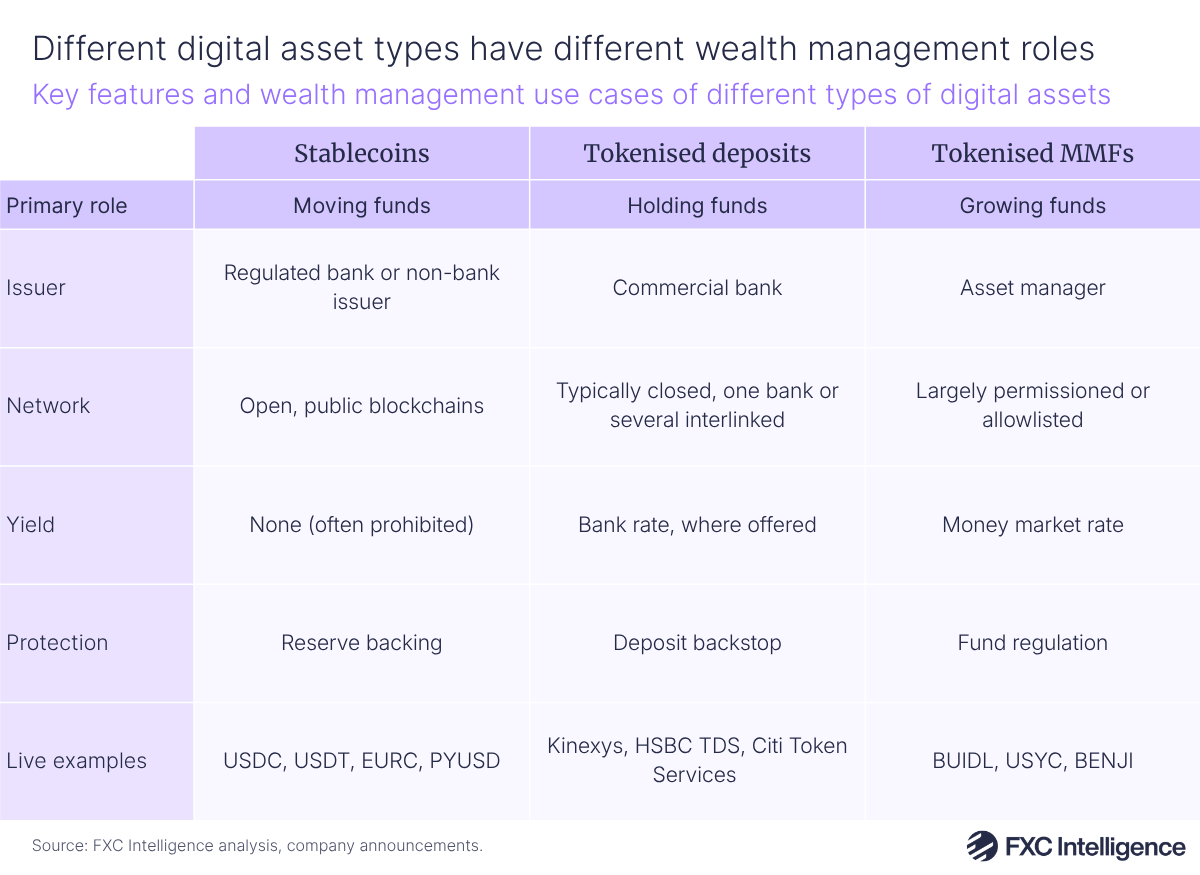
Much of digital asset adoption is driven by a desire to combat friction across wealth and high-value money movement, however that does not mean that the different forms of digital assets that have emerged are all in direct competition with each other. Stablecoins, tokenised deposits and tokenised money market funds all tackle different areas of the wealth landscape, and each has areas where it provides a distinct advantage.
Typically issued by non-bank providers and adopted broadly across different entities, stablecoins are the most open-loop of the three, with the ability to be transferred to any wallet on supporting public blockchains. Stablecoins also settle across borders 24/7, making them an appealing rails alternative for out-of-hours settlement, and, as David Durouchoux, Deputy Chief Executive Officer and Head of Partnerships at Societe Generale – FORGE, put it during Point Zero Forum, can serve a “a kind of glue” in the financial system between the digitised traditional finance world and the on-chain world of digital assets. However, they are less favoured for long-term holding as they typically don’t enjoy the same protections as funds held in a bank.
“There are use cases for deposit tokens, use cases for stablecoins, and we really try to distinguish them along the line of: do they have to be embedded within your banking relationship or do they have to be transferable freely outside? I really think we need both in the future.”
– Dr Alexander Thoma, Head of Digital Assets, PostFinance
By contrast, tokenised deposits are a blockchain-based form of bank money on a bank’s ledger, enjoying the same protections as fiat-based deposits. This makes them a strong option for holding funds or for intracompany movement. However, their movement beyond this is more limited. Many tokenised deposits are only supported by a single bank, although some interoperability projects are improving this across multiple institutions.
Finally, tokenised money market funds and related tokenised wealth-based digital assets such as tokenised equities provide financial solutions for growing funds while keeping them in a blockchain environment. Such capabilities aren’t available to stablecoins and tokenised deposits due to restrictions around how they can be used, and can also build on technical capabilities not found in non blockchain-based products, such as programmability and atomic settlement.
While these three represent very different use cases, and at times are characterised as competitors to each other, particularly in the case of stablecoins and tokenised deposits, they have the potential to fit together as three areas of the same need.
“These are not mutually exclusive forms of money,” said Sergio Mello, Global Head of Stablecoin Solutions at Anchorage Digital, during a PZF session, voicing an opinion echoed by many across the industry who point to how the needs of one type of blockchain instrument can often be met with another.
“The settlement of tokenised assets, where both cash and asset – like a tokenised equity – move together on the same rail, is made possible with tokenised payments,” says Oliver Harris, Global Head of Kinexys by J.P. Morgan.
The result is that entities such as family offices that harness digital assets may well encounter all three types via their financial institutions or providers, be that deposit token via their bank’s own entities, stablecoins for outside counterparties and tokenised funds for growing cash.
Where digital assets are already seeing adoption
While it varies across instruments, the high-level story for digital asset adoption is that it has grown significantly over a relatively short period of time, but that there is still far more growth to come if it is to make a meaningful dent in fiat alternatives.
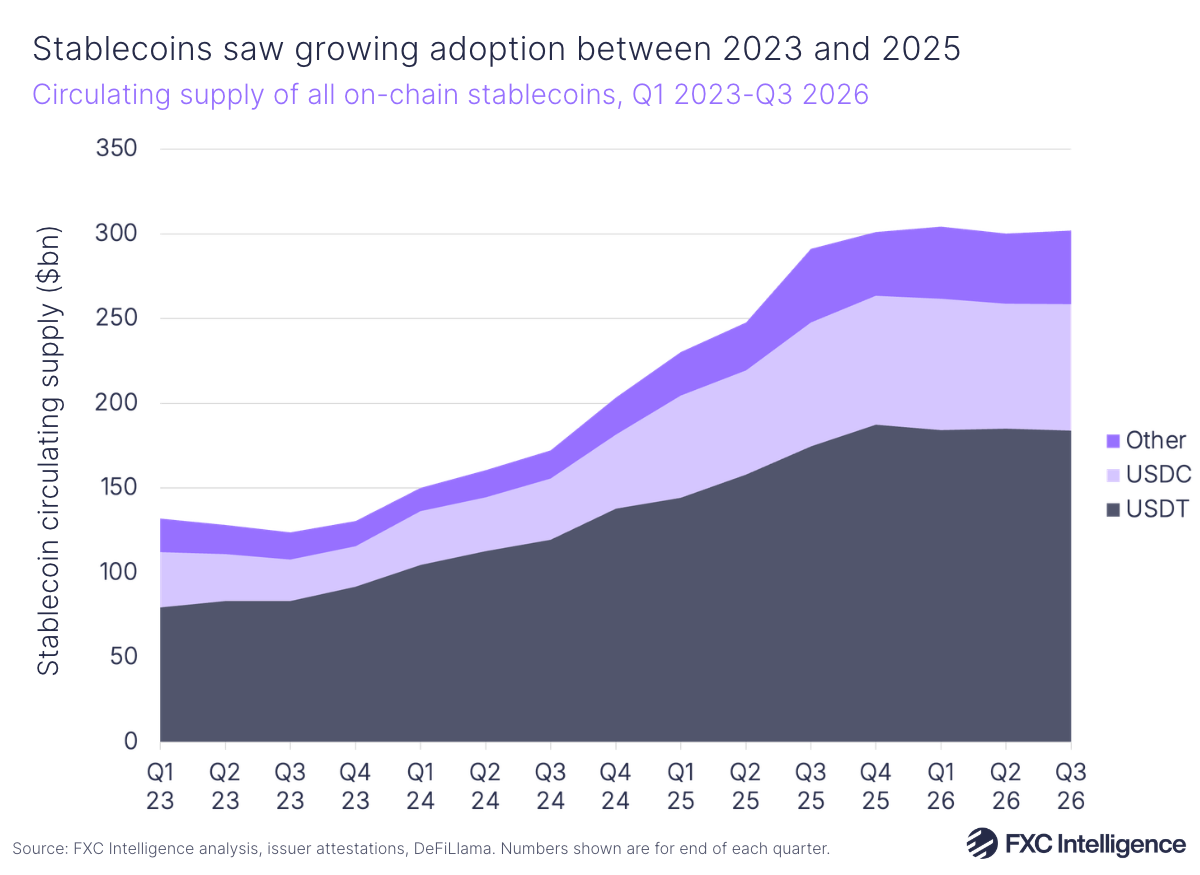
Stablecoins, arguably the most entrenched form of digital assets, at the time of writing have a combined circulating supply approaching $300bn, having reached $302bn at the end of Q3 2026, compared to $124bn three years earlier. However, this is concentrated in a small number of individual tokens, with Circle’s USDC and Tether’s USDT accounting for 86% of the circulating supply as of the end of Q3 2026. Of the remaining 14%, only a small minority is held in stablecoins pegged to currencies other than the US dollar.
While this can cause some challenges for on and off-ramping to other fiat currencies, stablecoins have nevertheless seen growing adoption for a number of money movement applications. Previously published research by FXC Intelligence and Allium shows that an estimated $135bn of non-whole cross-border transactions were completed using stablecoins in 2025, although this represents just 0.31% of total volume, with consumer-to-consumer payments seeing the highest adoption rate, at 0.95%, while business-to-business payments currently see the lowest at 0.19%.
Despite this, many cross-border payments-focused businesses have adopted stablecoins for internal treasury applications, while they are also highly favoured as a proxy for the US dollar in markets where local currency volatility is commonplace.
“Digital assets, particularly stablecoins, are beginning to change how wealth moves globally. They offer the potential to transfer value around the clock, across borders and with faster settlement. The opportunity is not to replace traditional finance, but to connect it to a more flexible, interoperable financial system.” – Mike Cowans, Managing Director APAC & CEO Singapore, BVNK, a Mastercard company
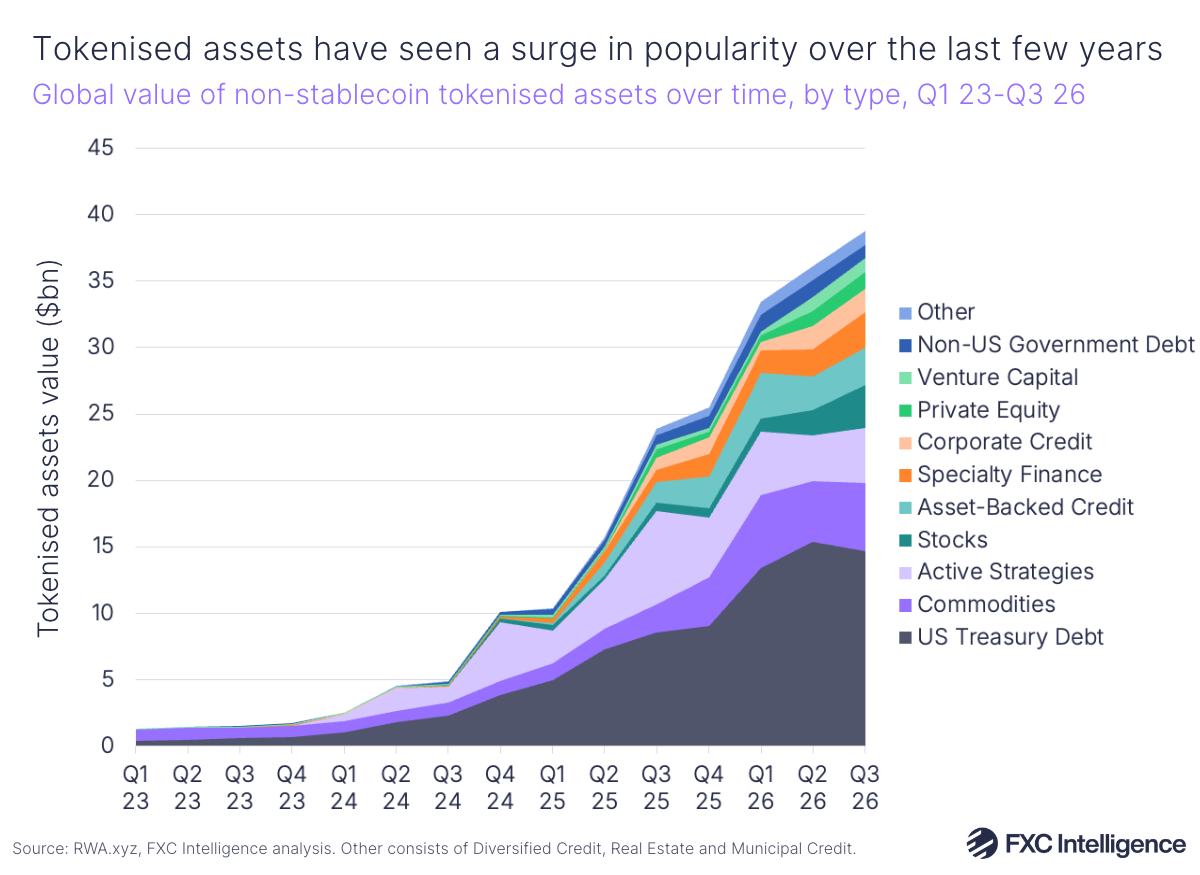
Other forms of tokenised assets, meanwhile, have seen sharper growth in the last few years, with RWA.xyz data showing the combined value of tokenised assets, excluding stablecoins and tokenised deposits, surge from $1.5bn in Q3 2023 to $38.8bn in Q3 2026.
Within this, US Treasury debit, commodities and active strategies represent the largest shares, however stocks have grown particularly sharply over the past year.
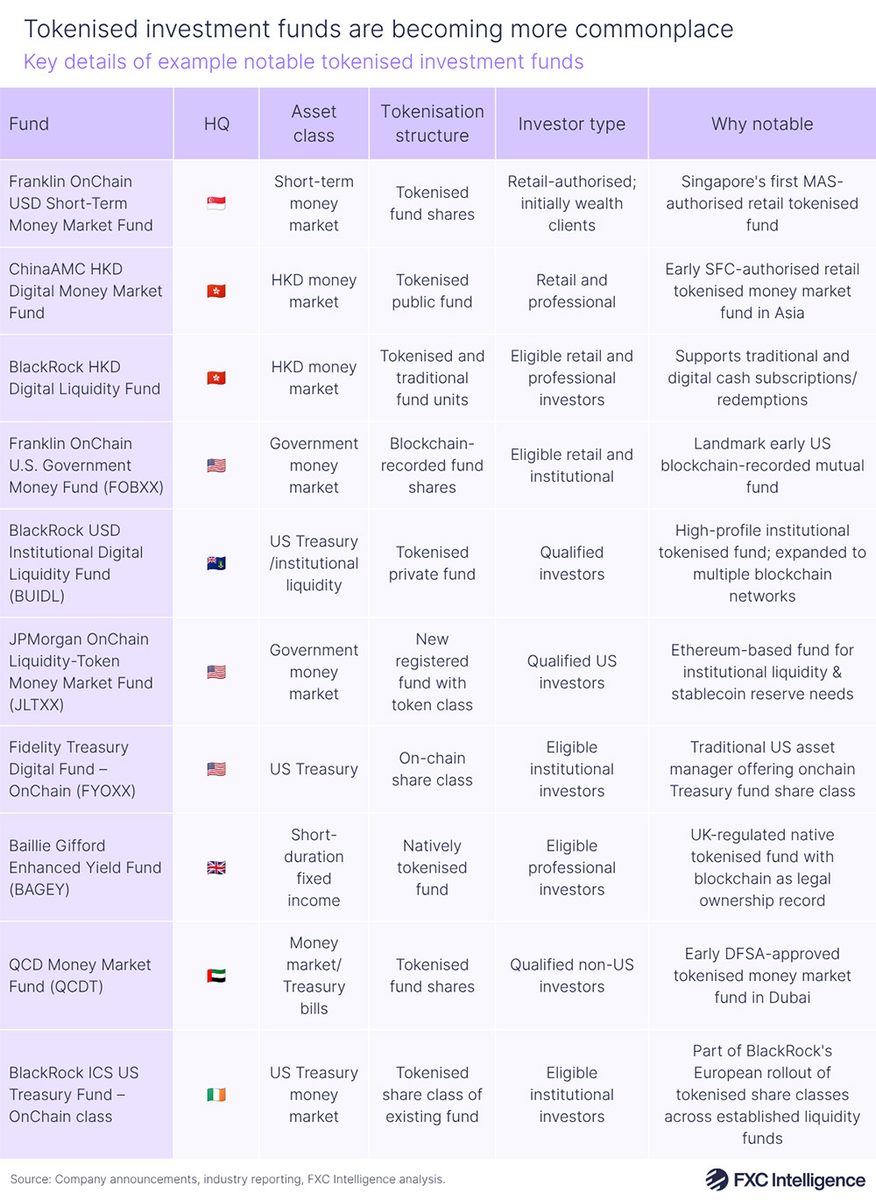
Although still smaller than stablecoins, there has been a proliferation of interest in the space for tokenised treasury and money market products, with many different providers pivoting to meet this growing sector.
Established wealth players such as BlackRock and JPMorgan, for example, have now launched multiple digital-asset-based wealth products across a variety of major markets, often designed to respond to investor demand to engage with the digital asset space. Meanwhile, digital asset providers have also made their own moves in this sector, such as Circle’s launch of its tokenised money market fund USDYC and Robinhood’s Europe-focused Classic Stock Tokens product.
“We’re really using it as a way for our European customers to get access to US-listed equities and ETFs,” explained Nicola White, Vice President, Institutional Crypto at Robinhood and General Manager of Bitstamp, of the latter at PZF.
“We tokenise 2,000 listed equities and ETFs in Europe, so now our European customers have free access to that 24/7 fractionalised access.”
“The next phase of tokenisation isn’t really about creating more tokenised assets. We’ve proved that assets can be brought on-chain, now the next phase is about building the money and settlement infrastructure and allowing that to unlock the promise of digital wholesale markets. So it’s really not just about tokenised assets, it’s about tokenised markets.”
– Michelle Neal, CEO, Fnality
This approach, which is viewed by many as one of their key opportunities, sees digital assets open up wealth opportunities not previously available to particular groups or markets. Geographic reach is one area, but it can also include pre-IPO investments and similar private market investments.
“We’re seeing firms stay private twice as long as they’ve ever done before, and that’s when a lot of the wealth gets generated,” added White. “Historically for retail investors, those investments have been off-limits.”
Meanwhile, tokenised deposits largely run on permissioned bank ledgers, meaning that it is not possible to build an accurate holistic picture of the funds held on-chain now or or in the past. However, it is clear that adoption is growing.
J.P. Morgan’s Kinexys, one of the earliest bank-led tokenised deposit products to launch in the space, reports processing $4tn since its 2020 launch, having passed the $1.5tn milestone in 2024 and $3tn earlier this year. HSBC’s Tokenised Deposit Service and Citi Token services are both likely to be at lower to-date totals, having launched later than Kinexys, but have similarly seen an acceleration as they expand their offerings and reach.
“Where tokenised payments and digital assets bring value is for cross-border, 24/7 movement across currencies without waiting on cut-offs or correspondent chains. At Kinexys, we’ve processed more than $4tn in transactions on bank-led blockchain infrastructure since inception, and markets like Singapore are showing how clear regulation and industry collaboration can help this scale at pace.”
– Oliver Harris, Global Head of Kinexys by J.P. Morgan
These products have generally focused on funds that remain within their respective providers’ ecosystems, although there has increasingly been work to expand how tokenised deposits interoperate. However, what this looks like varies significantly by provider.
J.P. Morgan, for example, launched the JPM Coin Deposit Token on the Base blockchain in 2025, enabling it to be moved and managed in a manner more similar to a stablecoin. Meanwhile, some banks have launched initiatives to cross-collaborate on interoperable deposits, including the UK’s Great British Tokenised Deposit (GBTD), a pilot programme currently involving Barclays, HSBC UK, Lloyds Banking Group, Monzo, Nationwide, NatWest and Santander.
A step up from this are initiatives such as Swift’s 2026-launched shared blockchain ledger, which is designed primarily to support tokenised deposit-based payments between financial institutions and which is seeing initial pilots from around 17 banks globally.
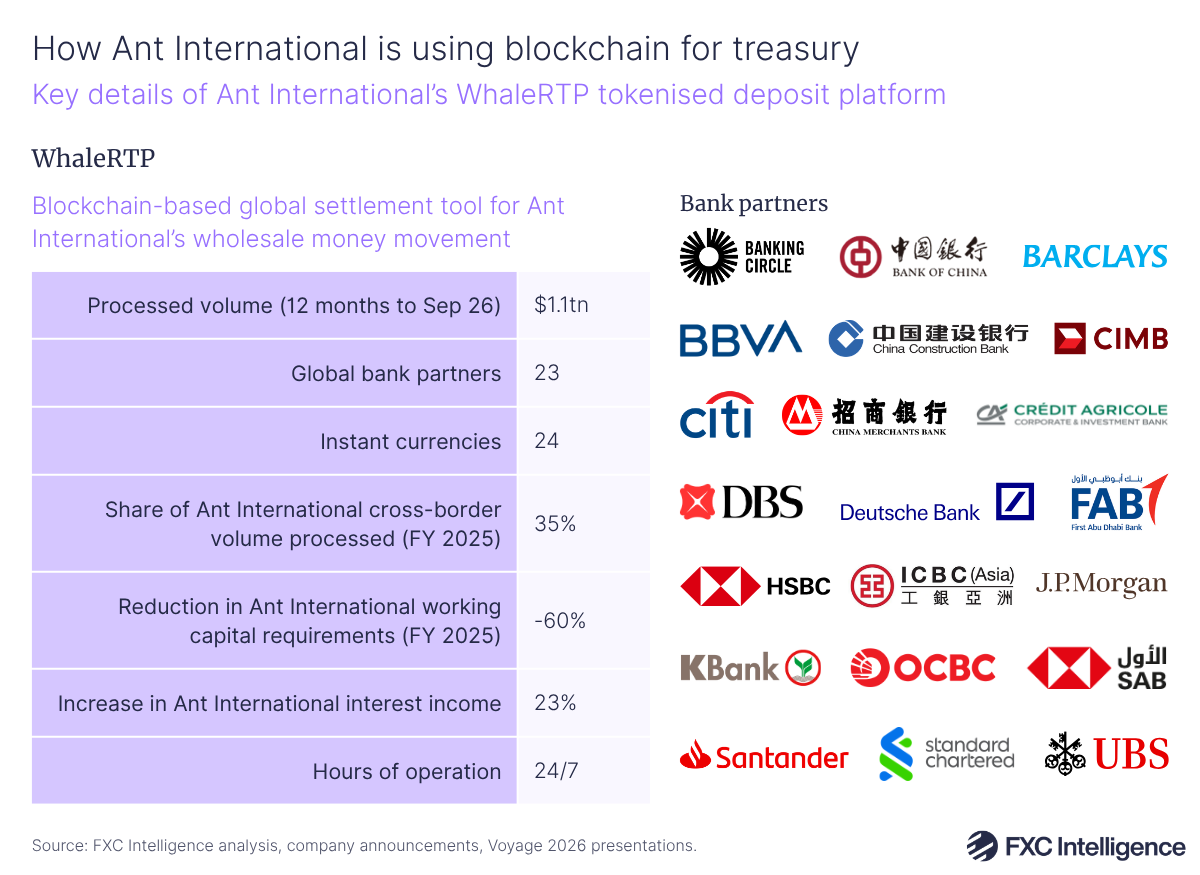
Meanwhile, there are also cross-approaches driven by particular clients. Ant International, for example, has developed WhaleRTP, its blockchain-based global treasury and liquidity management solution that is supported by 23 leading financial institutions and which in 2025 processed 45% of the Singapore-based payments major’s cross-border volume.
Evolving wealth management and money movement applications
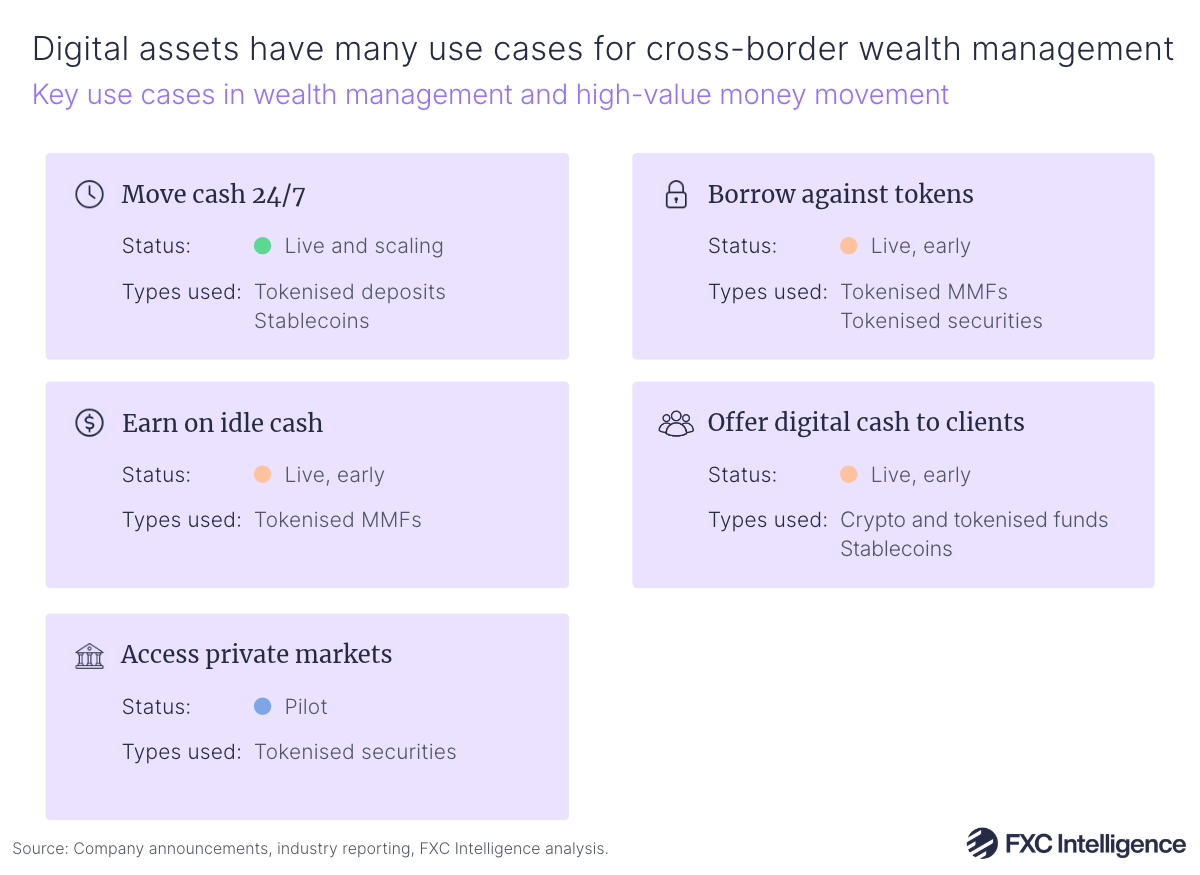
While some digital asset use cases are fairly well established, there are others that are still highly nascent, suggesting that the industry has considerable room to develop ahead. 24/7 global money movement, particularly on the treasury side, has been fairly well adopted across tokenised deposits and stablecoins, while earning on idle cash via tokenised money market funds and similar is newer but also relatively well established.
However, private market access via tokenised securities is newer and still being explored, with regulatory and market frictions still being worked through by some providers. By contrast, borrowing against tokens exists, and has done for some time, but has yet to find its way into the financial services mainstream in the manner other products have, likely in part because this product typically only sees demand once there is a sufficient customer base holding digital assets that can be borrowed against.
Finally, the practice of offering digital assets and in particular cryptocurrencies to clients, is also fairly nascent, although there are a number of live examples as firms look to meet investor demand to engage with the cryptocurrency space.
In general, many solutions so far have focused on removing the need for direct ownership of digital assets due to factors such as their volatility and the regulatory challenges that can come with their adoption. However, as the industry gets more comfortable with digital assets and the regulatory landscape matures, this is expected to change.
Frictions to adoption
While they can be used to overcome frictions in the cross-border payments space, digital assets also come with their own frictions that can both limit their adoption and undercut some of the bolder claims surrounding their relative speed and cost compared to fiat-based alternatives.
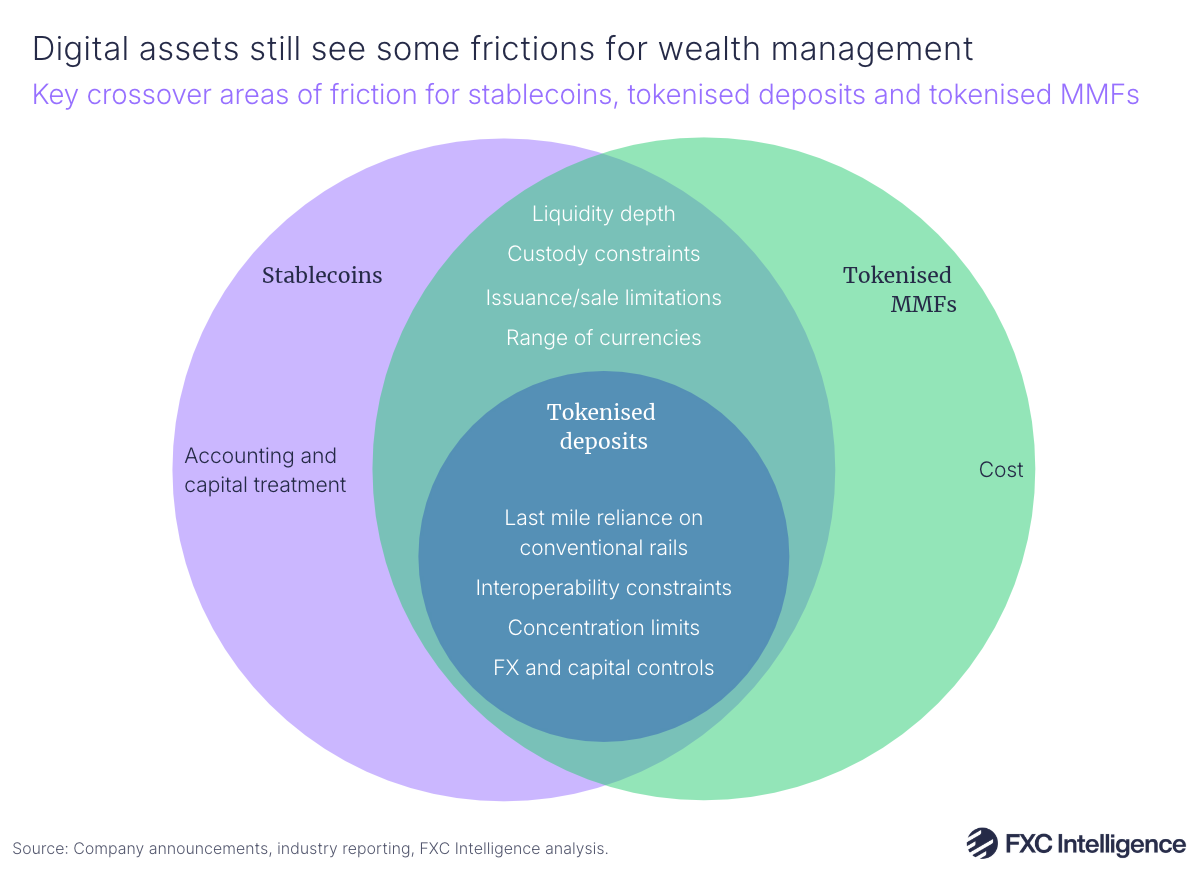
In some cases, these are specific to particular types of digital assets. Tokenised money market funds, for example, currently are typically costlier than their fiat counterparts, according to some experts, while stablecoins remain a challenge for some companies to have on their balance sheet, with the question of their 1:1 equivalence with their tethered fiat currency not being fully settled from an accounting standpoint.
However, in many cases there are crossovers between several or all three that have implications for their use in wealth and high-value payments. Across stablecoins, tokenised deposits and tokenised money market funds, for example, there is still a reliance on conventional rails for the ‘last mile’ part of the payment, where it is on or off-ramped to fiat infrastructure. The rollout of real-time payment networks is mitigating this to some extent, but many have limits that reduce their utility for high-value payments, leaving them exposed to cut-offs and holidays in many parts of the world.
At the higher levels, concentration limits also become a concern, with potential challenges surrounding exposure caps per issuer or bank that require holdings to be spread – a phenomenon complicated by the relatively small number of providers operating at scale, particularly in the stablecoin space. Meanwhile, foreign exchange and capital controls are also a potential challenge, as tokenisation does not bypass exchange controls on the receive side.
Across the board, there is also the question of interoperability. Financial infrastructure is already becoming more complex and multifaceted, and the introduction of blockchain-based rails has only added to this, with every network needing a means to interconnect with every other network if funds are to move smoothly between them. Many organisations are making considerable efforts to tackle this challenge, but this is often a rail-by-rail issue and interoperability is therefore patchy across different tokens and networks.
“Digital assets are creating new possibilities for how businesses move and manage money across borders. The technology has the potential to make transactions more efficient, improve settlement processes and introduce greater flexibility in how financial assets are held and transferred. However, for these developments to gain wider adoption, they need to work alongside existing financial systems and be supported by reliable infrastructure, clear regulatory frameworks and proper compliance controls.”
– Paul Meng, CEO, Sunrate
For digital assets not tied to bank deposits, i.e. stablecoins and tokenised money market funds and similar, liquidity depth can be a concern, particularly when it comes to non-US dollar denominations, as it can impact off-ramping into local currencies, and there is also a question of funding out-of-hours redemptions. Custody challenges can similarly create friction, with many corporate treasuries being reluctant to handle on-chain custody of digital assets directly, requiring the involvement of third parties to manage wallets and therefore introducing potential risks and complications.
Across all of these, however, is the question of regulatory maturity. While there have been considerable moves to regulate some parts of the market, including – on the stablecoin side – the GENIUS Act in the US and MiCA in Europe, regulatory oversight of digital assets and their use across money movement, custody and investment is immature compared to their fiat counterparts, and in some parts of the world is missing entirely.
“Regulation, market structure and institutional adoption are the three things that need to work together to move from pilot to scale,” said Michelle Neal, CEO of Fnality, at PZF, making a point echoed by many panels across the event.
“That’s the real unlock here,” echoed Robinhood’s White. “We don’t have a regulatory framework that works globally for tokenised assets. And until we get that, we’re probably not going to see it scale.”
The hubs competing for digital wealth
Not every region in the world needs digital assets to tackle wealth needs, either because the fiat landscape is sufficiently strong that digital assets offer little improvement, or because the demand for wealth-focused solutions is not high enough.
However, there are regions that are better placed than others to meet the needs of the growing sector, and which in some cases are actively positioning themselves to effectively capture this nascent market.
The global digital assets landscape
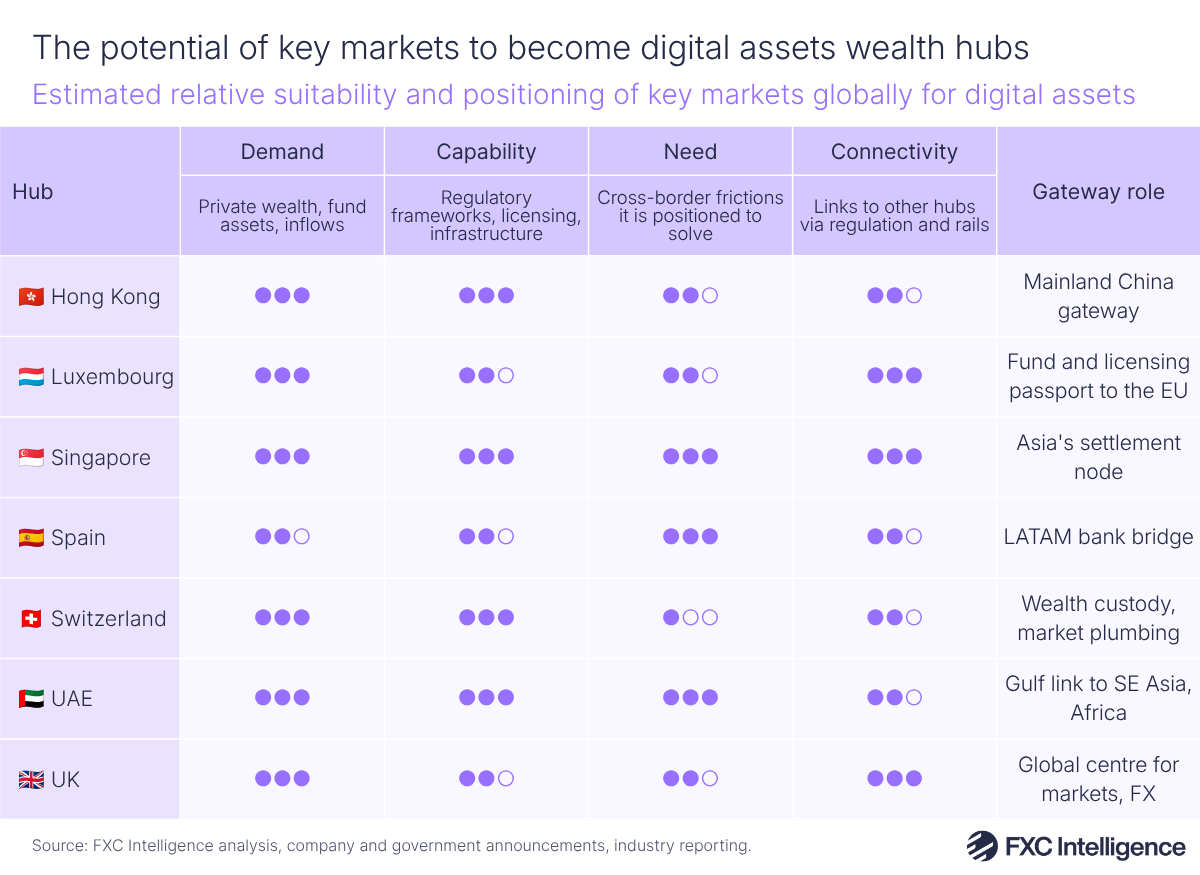
Globally, hubs that are emerging as key players in the digital assets wealth landscape realise a balance of four key factors: demand, capability, need and connectivity.
Demand is the level to which there is already an established need for wealth products and high-value money movement to and from the market in question, while capability refers to the extent that the market can use digital assets to meet that need, speaking to the extent to which regulation – including relevant licensing frameworks – and infrastructure are in place.
Need, meanwhile, refers to the extent that digital assets tackle an unmet need in the market, as if a market already has very good fiat solutions in place, the case for blockchain-based solutions is less strong. Finally, connectivity covers how much a market is connected to or set up to interoperate with others, both in terms of interlinked or aligned regulation and local rails.
In this sense, not all markets with strong wealth offerings are as well placed for a digital assets surge. Switzerland, for example, is a very strong player in terms of demand and capability, but its need is low due to the sophistication of its fiat-based solutions.
“Financial centres recognise that their future competitiveness will depend on their ability to embrace digital assets while maintaining the trust, regulatory certainty and financial safeguards that underpin global wealth management. The next challenge is ensuring these markets remain connected, creating interoperable infrastructure that allows capital to move seamlessly between jurisdictions and between traditional and digital forms of money.”
– Mike Cowans, Managing Director APAC & CEO Singapore, BVNK, a Mastercard company
However, there are many markets that have the potential to evolve into powerful hubs due to their unique positioning and balance of these four factors. Hong Kong, for example, combines relatively mature stablecoin licensing and an unparalleled role as a gateway to mainland China, while the UAE is being buoyed by global links to key emerging markets and a fast-moving regulator.
Singapore, Luxembourg and Spain provide three very distinct case studies, with each emerging as a promising digital assets hub but for quite different reasons, although in all cases their roles as gateways plays a critical role.
Singapore: Asia’s digital-friendly wealth hub
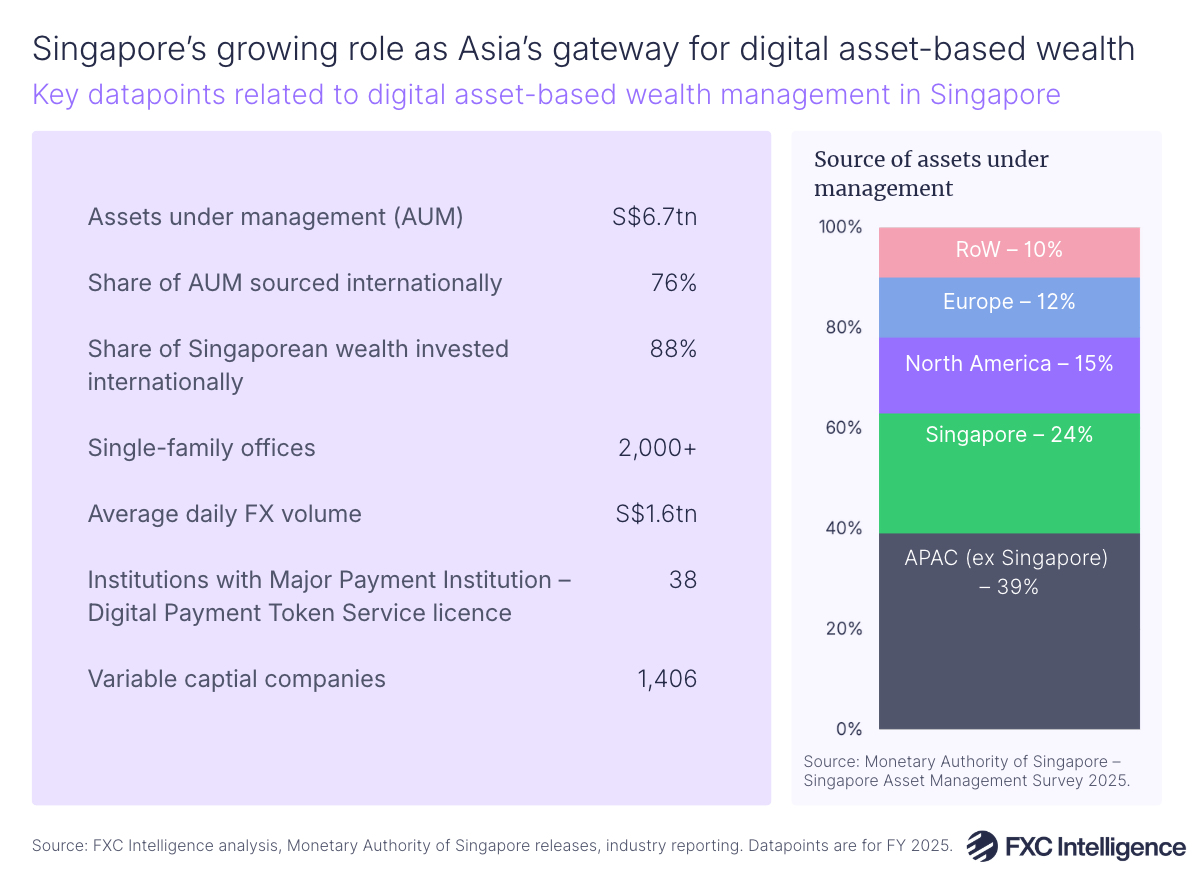
With a S$6.7tn asset base, three quarters of which is foreign-sourced, and one of the most robust and wide-reaching regulator-led digital programmes in Asia, Singapore combines a long-standing position of financial might with technological innovation that is naturally making it a strong player in digital assets-based wealth.
For many cross-border payments players, Singapore is the gateway into Asia, and this remains true with digital assets involved. This has seen the market’s regulator, the Monetary Authority of Singapore (MAS), take an active role in the development of the space, through initiatives such as Project Guardian, a multi-year sandbox programme focused on applying asset tokenisation to use cases including asset and wealth management, fixed income and foreign exchange. It is also currently in the process of finalising a regulatory framework on stablecoins, which is expected to be embedded into existing payments law within the next year or so.
MAS is also looking to harness cross-border connectivity using digital assets. A key example of this is Project BLOOM, which sees involvement from the central banks of Malaysia and Thailand, as well as industry players including Airwallex, Stripe and Visa, to explore harnessing tokenised deposits and stablecoins for domestic and cross-border settlement.
This focus on inter-market initiatives has also seen Singapore taking leadership on global connectivity, with Alvin Tan, Minister of State, Ministry of Trade and Industry and Ministry of National Development and Board member of MAS, making the case for increased collaboration during a keynote at PZF.
“To scale tokenisation, we must prevent fragmentation. Progress across the broader financial sector remains uneven, and where this unevenness tips into fragmentation, the path to scale is blocked,” he said.
“Tokenised assets must bridge different asset classes, currencies and networks, remaining fully interoperable with existing systems. Building this seamless global financial ecosystem requires deep public-private collaboration, which is already bearing fruit.”
Luxembourg: Strong in wealth, growing in digital assets
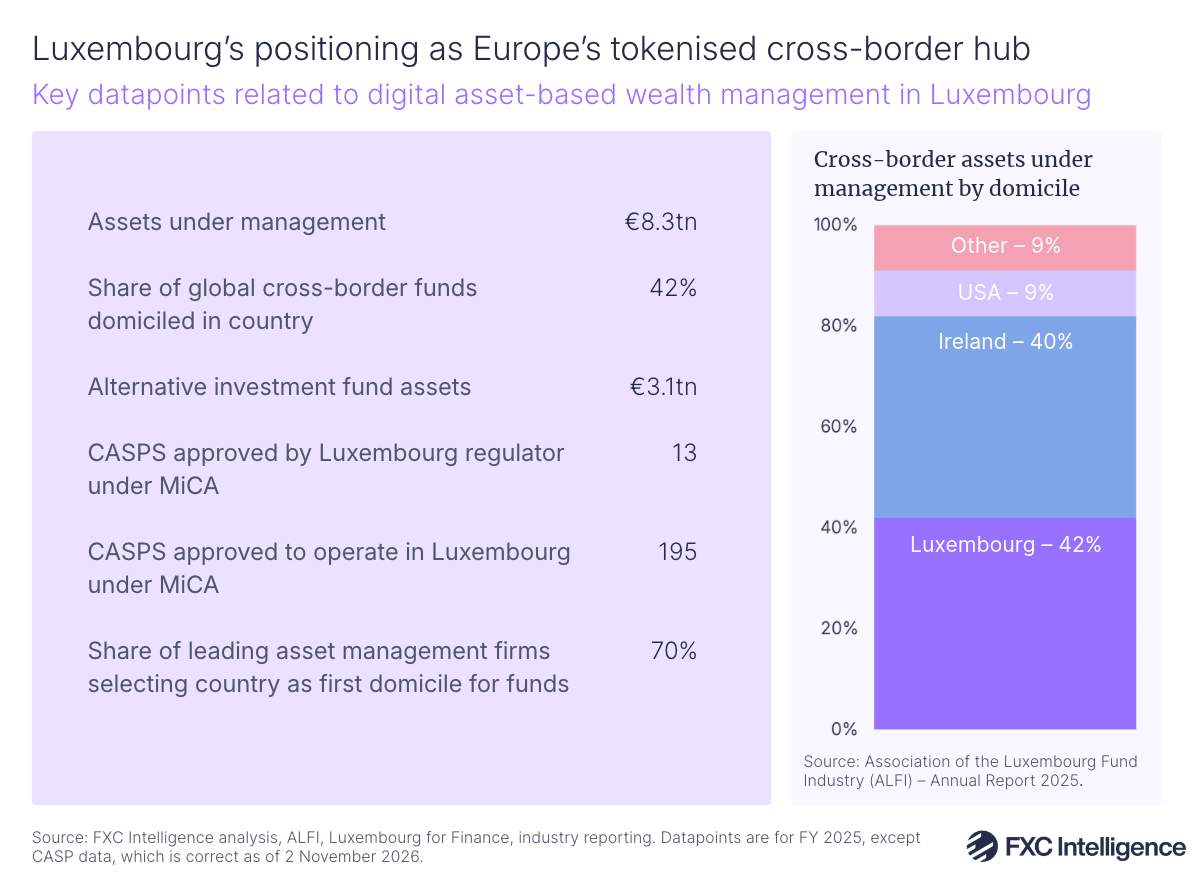
Luxembourg, meanwhile, is also a strong established wealth market, holding 42% of the cross-border fund assets globally, and is now building strength in tokenisation that spans regulatory, infrastructure and product-based offerings.
As part of the European Union (EU), Luxembourg is part of the MiCA digital asset licensing regime, which enables crypto asset service providers (CASPs) to be licensed in one market for operation in the rest of the bloc. Having only come online this year, this has already seen 195 CASPs approved to operate. Of these, 13 have gained approval from Luxembourg’s Commission de Surveillance du Secteur Financier (CSSF) directly, including major providers across both digital assets and traditional finance, including Coinbase, Standard Chartered and Ripple.
The CSSF has also been active in supporting the development of tokenised funds, aided by the passing of Blockchain Laws I–IV and successive approvals of a variety of providers in the space, including most recently the approval of Clearstream as a control agent for tokenised fund shares.
This comes as there has been growing pressure on the fund industry to modernise distribution and settlement, while non-EU players in the growing digital asset space have been looking for a regulated EU gateway, both of which put Luxembourg in a strong position.
However, there are some areas where it is weaker. The country’s domestic crypto ecosystem is smaller than some other European players, which may hinder its adoption as a digital asset wealth hub, while the complexity of MiCA versus some other regulatory frameworks may ultimately limit how much Luxembourg can become a global hub, versus a European entry hub, for tokenised assets in particular.
Spain: Building on banking might and LatAm connectivity
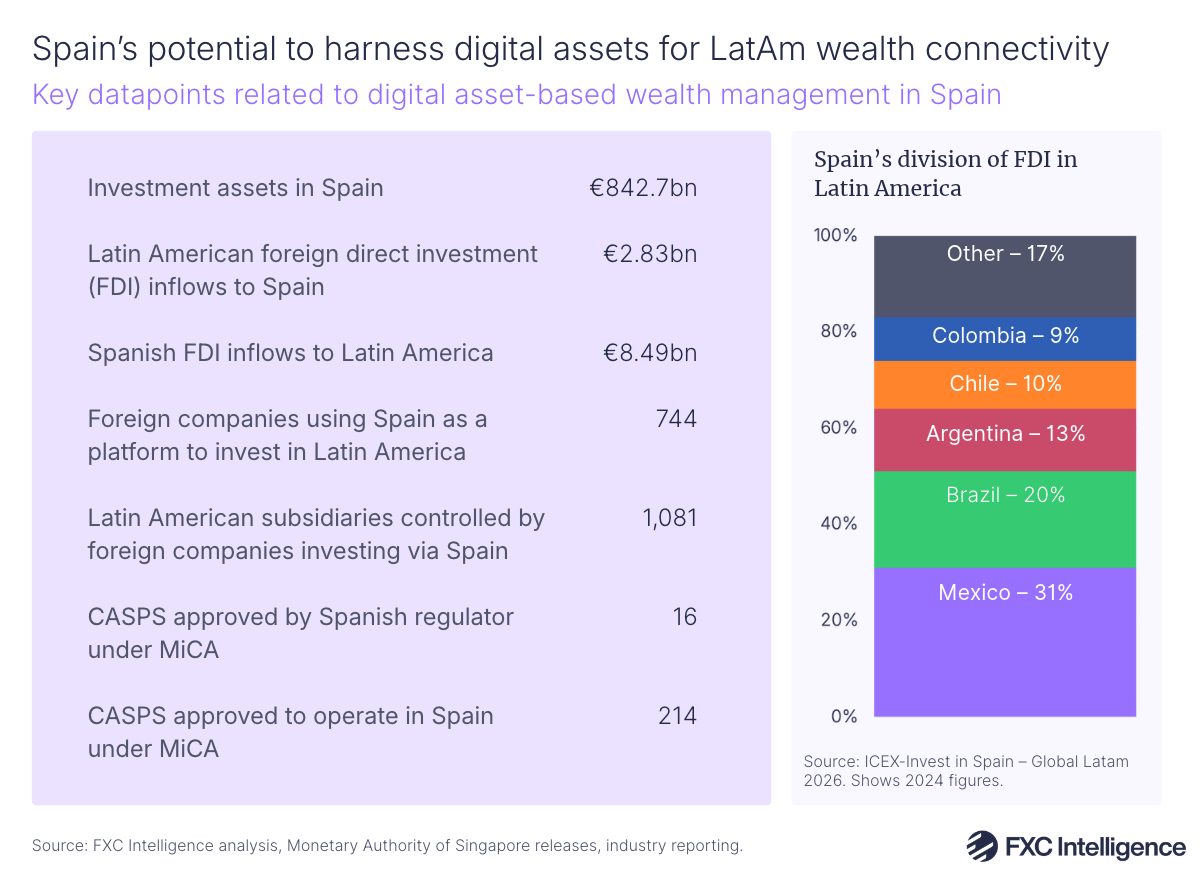
Spain has less of a reputation as a hub for global wealth, and so is less likely to be top of mind for many when thinking of hubs for wealth management and high-value money movement. However, it has a relatively unique combination of factors that put it in a quietly strong position to become a leader in digital asset-based wealth in particular.
The country has extensive long-standing connections to Latin America that have long seen flows of funds move between it and the region, both in terms of investment and money movement. Meanwhile, it has a wide-reaching banking sector that has flourished in part for the same reason.
This makes it a key connection point for wealth into and out of Latin America at a time when the region is seeing rapid digital transformation and the proliferation of financial services, however this is particularly significant from a digital assets perspective.
Regions with older and therefore more mature financial infrastructure have seen less adoption of digital assets for money movement in particular, due to the limited benefits they can bring versus existing fiat rails. By contrast, stablecoins and other tokenised assets have seen stronger adoption in and between emerging markets where they can not only bring greater improvements to cost and settlement speed, but also due to their ability to serve as a US dollar proxy where access to fiat dollars is more limited.
Latin America in particular sees strong demand for dollars and although it has increasingly strong domestic connectivity via local networks such as Brazil’s Pix, there are ongoing opportunities for improvement in cross-border connectivity. It is therefore well placed to see above-average adoption rates for digital assets, and as a key connecting node with the region with its own robust digital asset regime, in particular via MiCA, Spain is in a strong position to capitalise on this.
Remapping the global wealth landscape
Wealth is becoming increasingly global, with growing expectations around the speed and efficiency of global money movement. Meanwhile, the last few years have seen the emergence of digital assets with powerful potential for both the global movement of money and its management from a wealth perspective.
These are early, and are by no means an outright replacement of every aspect of the fiat system, however they do have the potential to become powerful influences in their own right, particularly as they bring new capabilities to the management and movement of wealth.
Effective capitalisation of this opportunity requires a balance of technological capabilities, demand for solutions and, crucially, a regulatory landscape that both fosters digital assets innovation and creates the guardrails for traditional financial institutions to engage.
While much of this work still lies ahead, many areas are emerging as key hubs for the use of digital assets in high-value money movement and wealth, competing on different gateway models and balances of need and demand.
Across all of this, connectivity is a crucial deciding factor in both the extent to which digital assets ultimately dominate adoption and which areas of the global wealth landscape shift in dominance. While digital assets are unlikely to radically redraw global lines of wealth, they have the potential to be a powerful rebalancing factor in some regions, particularly those where wealth opportunities are still emerging or shifting.
It is highly unlikely that the end path is a single harmonised system. As with the rest of the financial landscape, digital assets are complex, multifaceted and often divergent by region. However, this makes interoperability all the more important and puts hubs that are leading on projects to enhance this, in particular Singapore, in a critical position for ongoing development.
As we look to 2027 and beyond, the digital asset landscape is still being drawn: tokens, initiatives and regulatory frameworks are still being developed and many use cases for the technology are still being realised. However, the opportunity for wealth is there – it just remains to be seen how much it is capitalised on.