Mastercard Market Sizing Data and Custom Research Report Case Study

How Mastercard combined Market Sizing Data with a Custom Research Report to show banks and fintechs why SME cross-border payments have become a battleground for loyalty in Latin America and the Caribbean.
Mastercard is one of the world’s leading payments networks. Through Mastercard Move, its portfolio of money movement capabilities, it enables banks, corporates, non-bank financial institutions, digital players and governments to send and receive funds domestically and across borders.

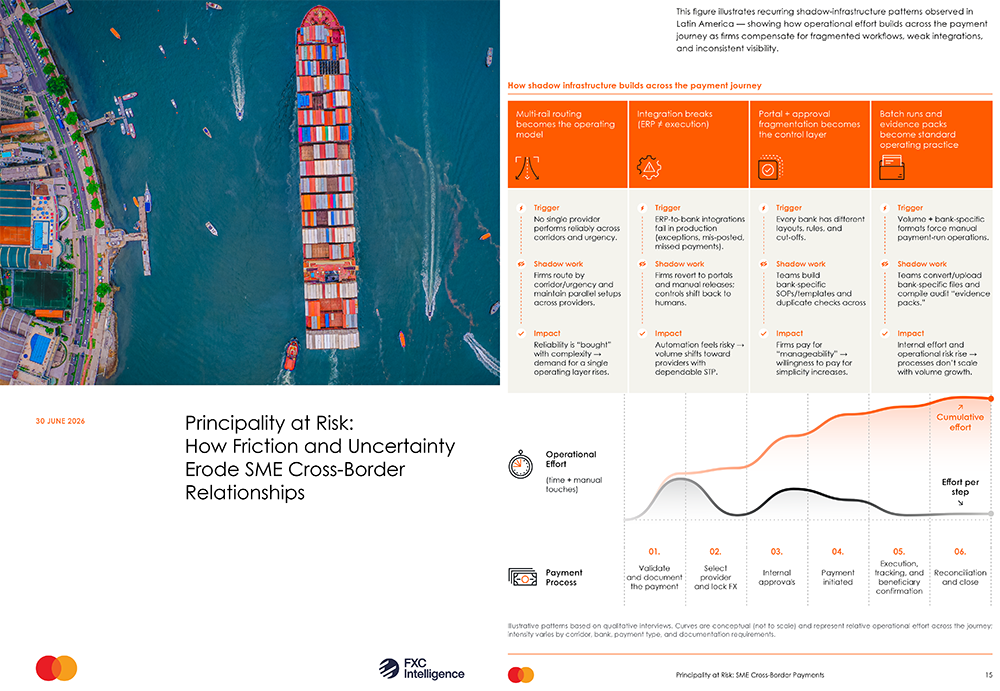
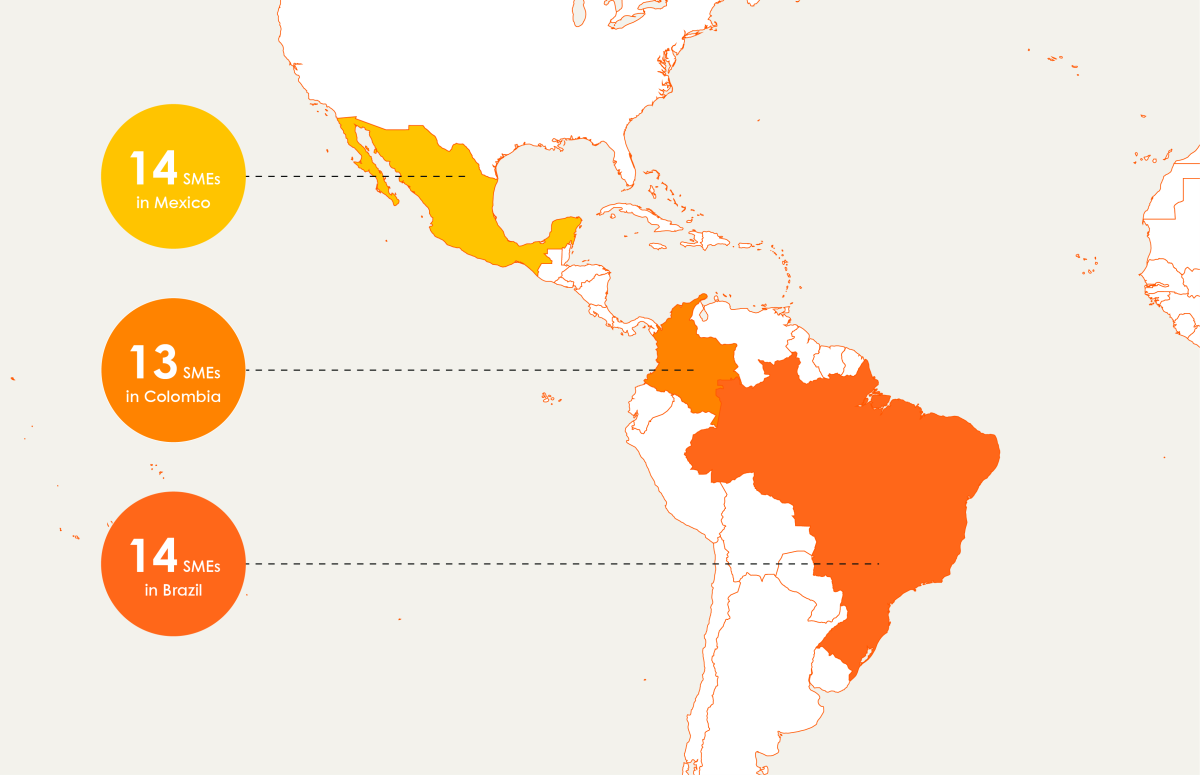
Mastercard partnered with FXC Intelligence to produce ‘Principality at Risk: How Friction and Uncertainty Erode SME Cross-Border Relationships’, a white paper on SME cross-border payments in Latin America published on 25 June 2026. The research combined FXC Intelligence Cross-Border Payments Market Sizing Data with in-depth interviews with SME decision makers in Mexico, Brazil and Colombia.

The challenge

Following a previous white paper, Mastercard wanted to go deeper and show how that friction was experienced inside the businesses making the payments, and to put a commercial value on it.
It also wanted to make the commercial stakes clear for banks and payment providers. Describing SME frustration was not enough on its own. Mastercard needed to show how large the SME cross-border revenue pool was, where it was concentrated and how much was at stake if SMEs moved their payments elsewhere.

The solution

FXC Intelligence brought together two of its services: market sizing and custom research.

The first was its Market Sizing Data. Using its data on payment flows and on the FX fees and margins charged by banks and payment providers in the region, FXC Intelligence estimated the size of the Latin American SME cross-border payments and FX revenue pool, broke it down by market and modelled the revenue impact of different market share shifts. FXC Intelligence market sizing also showed that SMEs made over 40% of all import payments by value in Latin America, with SME import payments forecast to grow by around 25% by 2030.

The second was Custom Research. FXC Intelligence conducted structured interviews with SMEs across Mexico, Brazil and Colombia, speaking to the people involved in initiating, approving, executing and resolving cross-border payments, from CEOs and CFOs to treasury, compliance, procurement and operations teams. Respondents walked through a typical international payment process from invoice to reconciliation, allowing the research to identify where manual work, errors and delays arose and how much internal time each payment consumed. The panel was qualitative, designed to surface recurring patterns across the businesses interviewed.

From this evidence, FXC Intelligence developed the report’s three-part framework: Shadow Infrastructure, the manual workarounds SMEs built around fragmented bank processes; the Uncertainty Tax, the cost of not knowing when a payment would arrive or how much would land; and Principality Risk, where those operational frustrations gradually turn into wallet-share erosion as SMEs move cross-border volume away from their main bank.

The result

The Principality at Risk white paper gave Mastercard a data-led case for why banks and fintechs needed to modernise their cross-border offering for SMEs, backed by figures banks could apply to their own business.
FXC Intelligence market sizing put the Latin American SME cross-border payments and FX revenue pool at around $23bn in 2025, with Mexico accounting for around $10bn and Brazil around $4bn. Every 1% shift in SME flows between providers would put approximately US$230m in annual revenue at stake for banks and payment companies across the region.
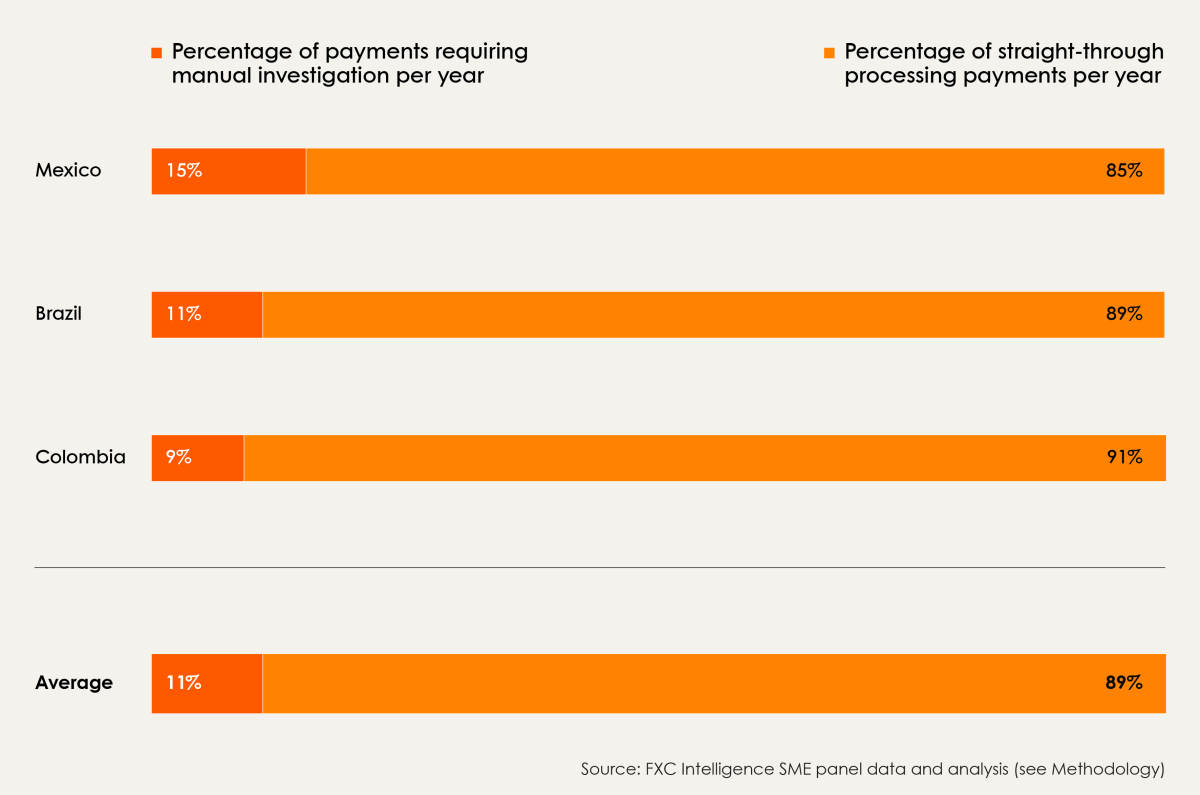
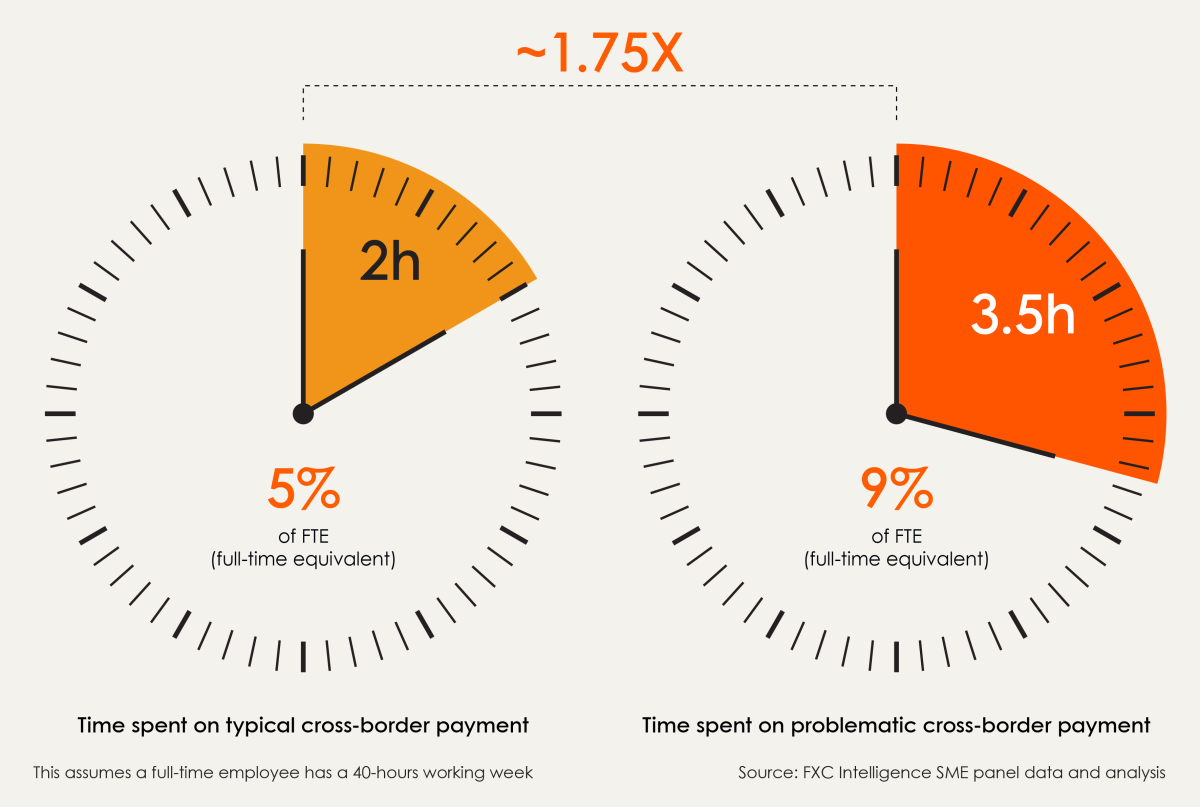
The interviews showed why that revenue was contestable. 90% of SMEs said they would consider changing their cross-border payments provider, and those open to changing said they would consider moving around 70% of their cross-border volume. A typical cross-border payment took around two hours of internal handling time, rising to around 3.5 hours when something went wrong, and around one in nine payments needed investigation, repair or status chasing.

Read ‘Principality at Risk: How Friction and Uncertainty Erode SME Cross-Border Relationships’ in full on Mastercard’s website.

Cross-border payments are no longer just a transaction. They are a decisive moment in the customer relationship. This new research sends a clear signal to banks and providers. When SMEs cannot rely on predictability and visibility, they begin to reallocate payment flows. When that shift starts, it can extend beyond payments into the broader banking relationship.

Walter Pimenta

Executive Vice President, Commercial and New Payment Flows, Latin America and the Caribbean

Our clients are industry leaders

We work with a diverse set of clients across multiple industries, from banking and payments to investment firms, funds, technology companies and fintechs. Our clients include:
The logo for Pitchbook

Get in touch

Get in touch to learn more about how our Market Sizing Data and our Custom Research Reports can benefit your business
Data-led products for the cross-border payments industry.
Newsletter
Join the world’s leading cross-border payments newsletter – delivered straight to your inbox
Follow us
Stay up to date daily