
Spring by Citi, Citi’s end-to-end payment service, recently began enabling stablecoin payments acceptance for merchants through an extended partnership with Coinbase. We caught up with Vineeth Subramanyam, Global Head of Spring by Citi, to find out how merchant expectations are changing, as well as the impact of stablecoins and other trends on ecommerce payments.
Merchants are facing an ever-changing payments landscape, from the addition of new alternative payment methods to the rise of digital assets and AI agents. Within this landscape, payment service providers aim to make it easier for merchants to get paid no matter where the customer is or which payment method or currency they use.
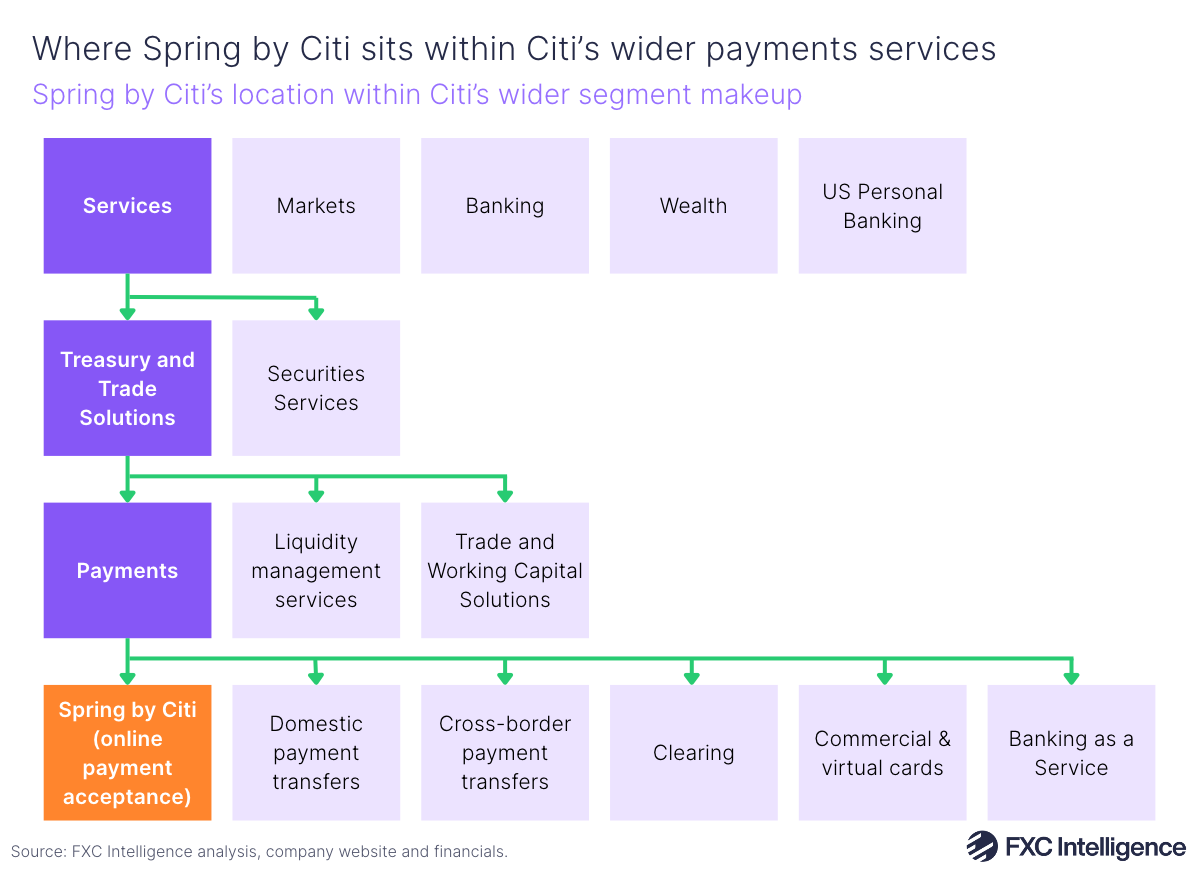
Banks are also capitalising on this need, providing payments services that integrate with their wider financial services to offer a complete, trustworthy offering. This is the ethos behind Spring by Citi, the US bank’s merchant acquiring and digital payments service enabling ecommerce and B2B payments for corporate customers. The service allows these companies to receive online payments from customers via preferred methods, including cards, instant payments and now stablecoins, and settle these directly into their Citi account. Over time, the solution has grown its reach to customers in around 25 markets across Asia Pacific, North America, Europe and Latin America.
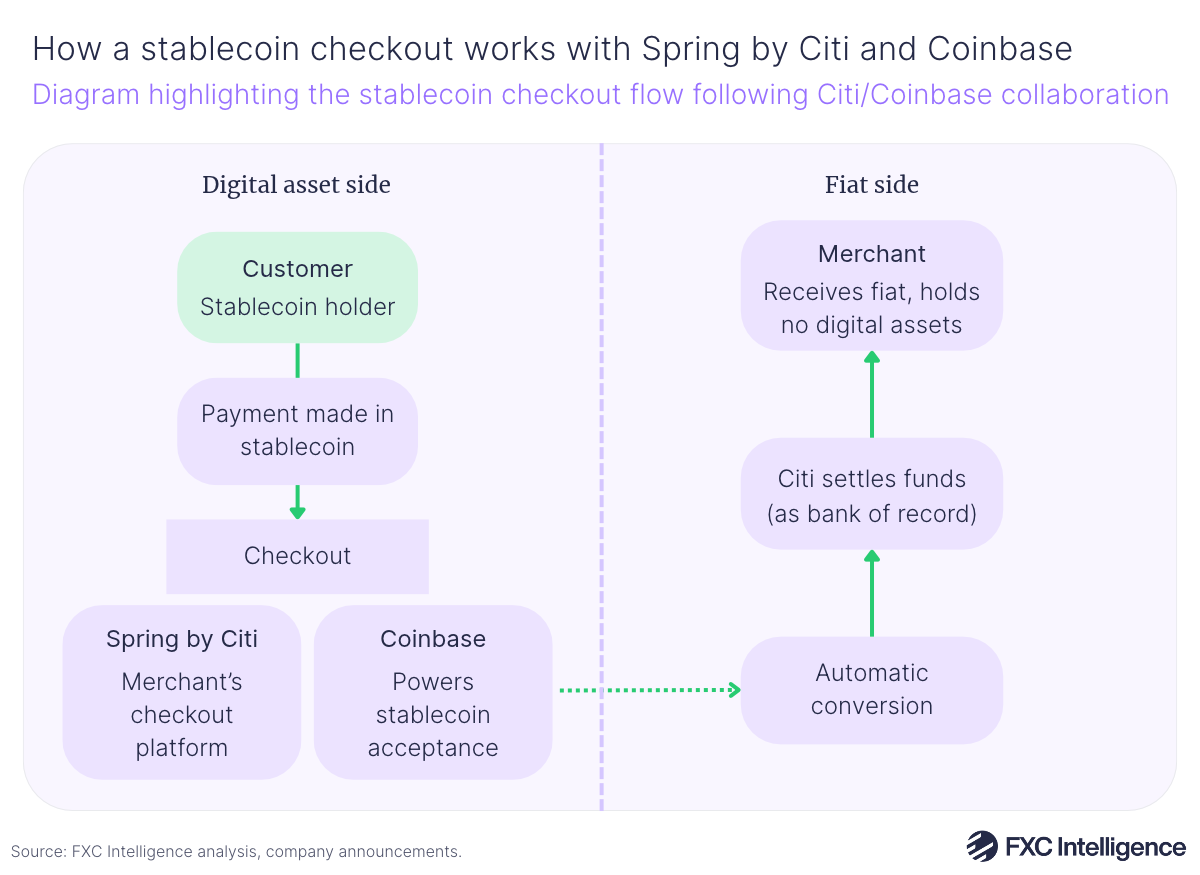
In September 2026, Spring by Citi began using Coinbase’s payments infrastructure to enable the bank’s institutional clients to accept stablecoin payments at checkout without having to hold or manage stablecoins directly. Coinbase also chose Citi’s Virtual Account Wallet product to power its Virtual Accounts, giving customers the ability to accept funds as fiat and convert it to stablecoin as well as pay out using Citi’s regulated banking infrastructure.
As the industry’s interest in stablecoin has continued to rise, a consistent challenge has been enabling businesses and consumers to use and move stablecoins seamlessly in alignment with traditional payment systems. The partnership with Coinbase, initially announced in October 2025, is an example of how banks are working with leading digital asset providers to help bridge this gap.
We caught up with Spring by Citi’s Global Head Vineeth Subramanyam to discuss key trends in merchant acceptance, how merchants’ expectations are changing and the trends that will have the biggest impact on ecommerce payments. You can watch the video of our interview here, or read the full transcript below.
Spring by Citi’s partnership with Coinbase
Lucy Ingham:
Spring will soon let merchants accept stablecoins at checkout through Coinbase. What demand are you seeing from merchants, and where do you see the most compelling use cases today?
Vineeth Subramanyam:
We have been quite excited about this. We announced the partnership with Coinbase, and we’re going to enable merchants to accept stablecoins, but they’ll see the settlements coming in fiat currency. This has been really key, because there’s a lot of merchants that came up to us and said, “Look, we do want to accept stablecoins, but we don’t want to re-architect everything in the backend around settlements and reconciliation and all of that.” So, having that acceptance come in fiat currency is great.
The demand has been coming and is still emerging. It’s been coming from a few different segments. We have got clients in the education space, for instance, where you have a global customer base that is looking to pay, maybe from countries where stablecoins are used more than some of the other countries. The insurance space is another one where it’s always relevant to increase the channels where payments can come in. But we’re starting to see use cases in other segments as well.
Addressing changing merchant expectations
Lucy Ingham:
As the payments landscape becomes more diverse, merchants are looking to simplify the way that they manage acceptance across markets and payment types. How are merchant expectations evolving, and how is Spring helping businesses create a more seamless payment experience?
Vineeth Subramanyam:
There are a lot of different payment types that have come in over the past five to 10 years. When you’re thinking about this, it’s not just cards. There’s non-card payment types, alternative payment methods, pay-by-bank, account-to-account, instant payments, stablecoins certainly, and there’s several of those.
When you’re thinking about what a merchant wants, they do want to increase the aperture of payment types that are coming in, but they don’t necessarily want to go and sign up with 15 or 20 different providers out there. So, one immediate way to simplify is to consolidate the relationships that they have.
So with Spring, we’re present in about 25 markets around the world. We bring all the assets of the bank together. So if you’re thinking about the issuing side, if you’re thinking about the FX side, if you’re thinking about treasury; rather than all of these things being different, separate relationships that clients have, they have the ability to just bring everything together, and that’s the way that we think about simplification.
Lucy Ingham:
As digital commerce continues to grow, how are merchants managing security, compliance and customer experience? And what role can payment providers play in helping address those challenges?
Vineeth Subramanyam:
Security, compliance, trust – all of these things are table stakes. It’s really one of those things that clients just assume is there. At the end of the day, what clients want to do is run their business. They don’t really want to worry about payments, and they want to get a provider that can really come in and do that for them.
And so the way that we think about it is, with Spring being a part of Citi, we are both a payment service provider (PSP) and a bank. And we bring all the good, bank-grade technology and compliance and regulatory posture – all of that – and couple that with everything that we’re doing on the PSP side. So that really helps.
Navigating an evolving ecommerce landscape
Lucy Ingham:
Ecommerce acceptance is shifting from cards towards local and instant account-to-account methods. How is the role of the bank acquirer changing, and where do banks partner with fintechs rather than compete?
Vineeth Subramanyam:
Payment types are really proliferating, there’s a lot of different types out there. The way that we think about it is we have access to a lot of instant payment rails. We have an open posture towards this where, depending on what merchants want, what clients want, we will enable them for what they want.
And the partnership with Coinbase is a great example of that, where there are certain merchants that came to us and said, “Well, we want stablecoins”. So we’re always open to co-creating, collaborating with different fintechs out there where we can bring our assets and their assets together and build that connective tissue that can really make it easy for our clients to consume both assets.
Lucy Ingham:
Merchants today are navigating a rapidly evolving payments landscape, from digital assets and instant payments to new consumer payment experiences and preferences. Looking ahead, what trends do you think will have the greatest impact on commerce, and how is Spring by Citi positioning itself to help merchants adapt?
Vineeth Subramanyam:
It’s a good question. The biggest thing that comes to mind is payments is really moving from being a cost-centred conversation to being a revenue-centred conversation. We hear it multiple times from clients that, while maybe the conversation about 10 years ago was about, “How do I reduce the cost of my acceptance?” – that is still really, really important, of course – but the conversation has shifted now to talking about, “How do I increase my revenue from payments?”.
Payments, after all, really represents the front door where the money is flowing in. You really want to make sure that you keep that door wide open to allow a lot of different payment types to flow in, and when they’re coming in, remove all the blockers, remove all the hindrances to make sure that these payments are actually getting through, so they’re not getting blocked, they’re not getting declined; they’re getting accepted, they’re getting approved.
So, anything that we can do to bring the different assets of the bank together to really create that story and think of this as not like a technology or an infrastructure problem, but think of it as a revenue question that clients have: “How do I increase my revenue?”
That’s the way we think about it. We collaborate with a lot of different parts of the bank to bring everything together so we can make it easy so clients don’t have to go and form those various relationships where it makes sense to them.
Lucy Ingham:
Vineeth, really appreciate your time today. Thank you so much.
Vineeth Subramanyam:
Thank you so much.