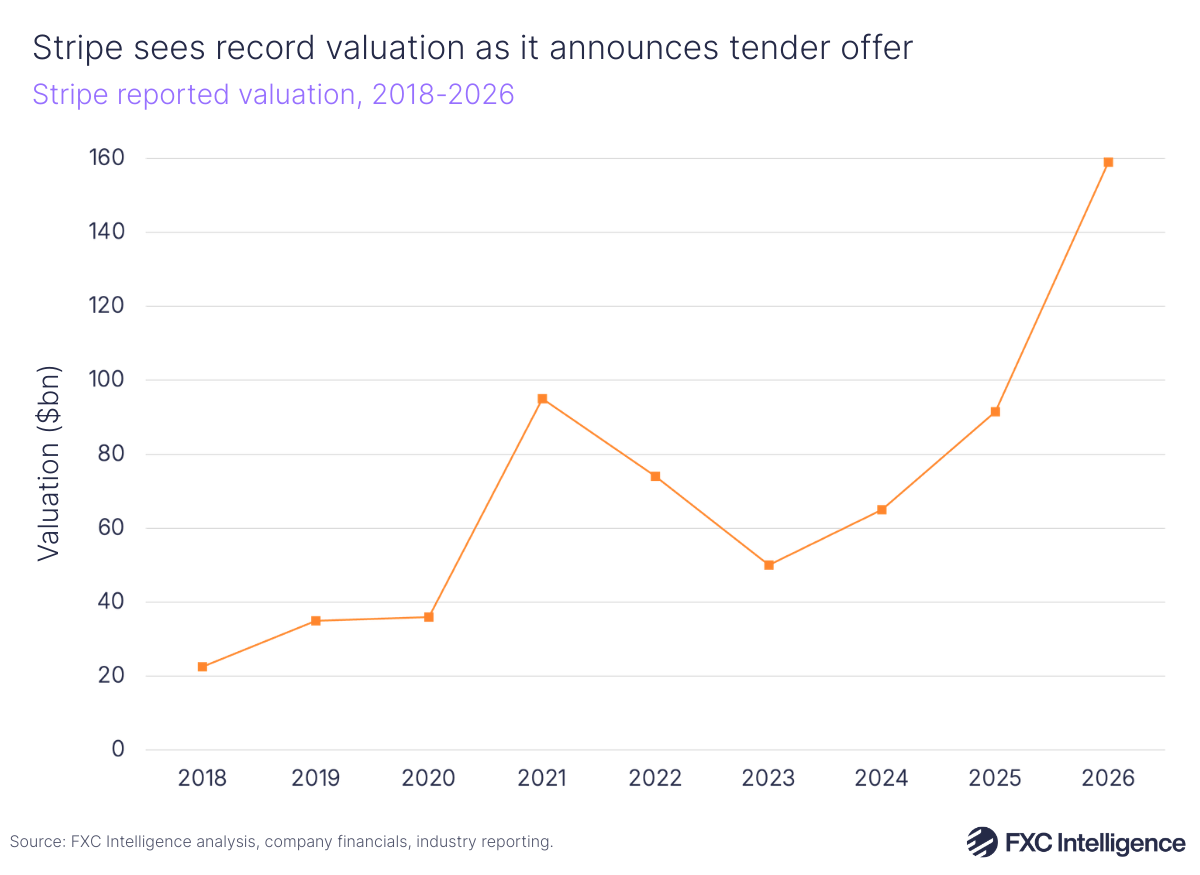
Stripe has published its annual letter, which showed how new customer growth, stablecoins and AI are driving its volumes. The processor also announced a share sale to current and former Stripe employees that raises its valuation to $159bn, up 74% from its value after a previous tender offer announced in February 2025.
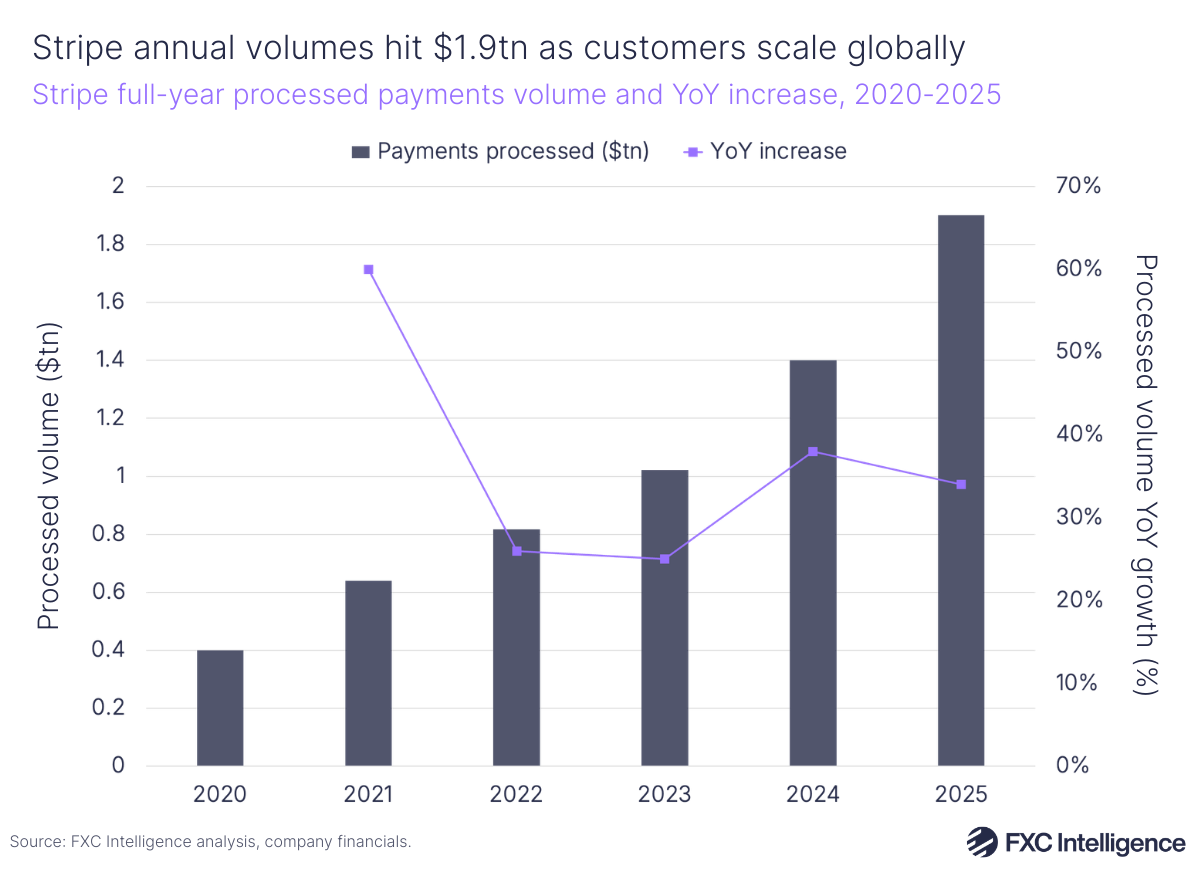
Stripe saw a 34% rise in total payment volumes to $1.9tn in 2025, and now powers more than five million customers directly or via platforms. The company remained “robustly profitable”, helping it deliver more than 350 product updates last year and make acquisitions including crypto wallet Privy and billing provider Metronome.
Stripe added more businesses than ever before in 2025, with 57% of new businesses based outside the US, and also said that its new business cohort had grown around 50% faster than those joining its network in 2024.
The company said it sees more companies going “global by default” as a result of expanding digital services. Among Stripe businesses with mostly international revenue, 30% of this revenue comes from countries that are neither their home market nor one of the top 10 global economies.
Stripe positions itself as global infrastructure aiming to support this trend, having enabled businesses to launch localised checkout solutions in more than 100 countries and facilitating payments through more than 120 payment methods. It also launched its Financial Accounts solution last year, allowing businesses to send, hold and receive funds globally.
The move to enable more localised payment methods was similarly seen in Checkout.com’s annual letter, released this week. Checkout also reported 64% growth in annual volume to over $300bn, with alternative payment volumes growing 104% in 2025.
Stablecoins have already been a strong driver for Stripe, with newly acquired stablecoin orchestration platform Bridge seeing volumes more than quadruple in 2025. Stripe gave examples of how stablecoins were enabling enterprise payouts and pay-ins to SaaS platforms, while a partnership between Bridge and Visa has enabled stablecoin-based card payments.
Stripe also provided an update on Tempo, its payments-focused blockchain expected to launch soon. Currently, Tempo is being tested by Visa, Nubank and Shopify across several use cases, including global payouts, embedded finance and remittances. Klarna, meanwhile, has launched its stablecoin on the Tempo testnet to enable enhanced cross-border settlement.
Stripe also sees potential for Tempo in supporting transactions for agentic commerce – shopping carried out by AI agents on behalf of humans. Stripe has already developed a shared language protocol for agentic AI platforms alongside OpenAI, as well as tools to support businesses selling on AI storefronts and a tokenisation system for payments.
Having worked with OpenAI to power shopping through ChatGPT, Stripe is now doing the same with Microsoft through Copilot. While Stripe didn’t make any specific forecasts about the impact of agentic commerce on its volumes, it said that the area “had the potential to be generationally impactful”, though its success will be “contingent on universal interoperability”. Other processors are moving on this trend, with Checkout.com noting that it expects to be supporting agentic flows through dozens of its largest enterprise merchants by the end of 2026.
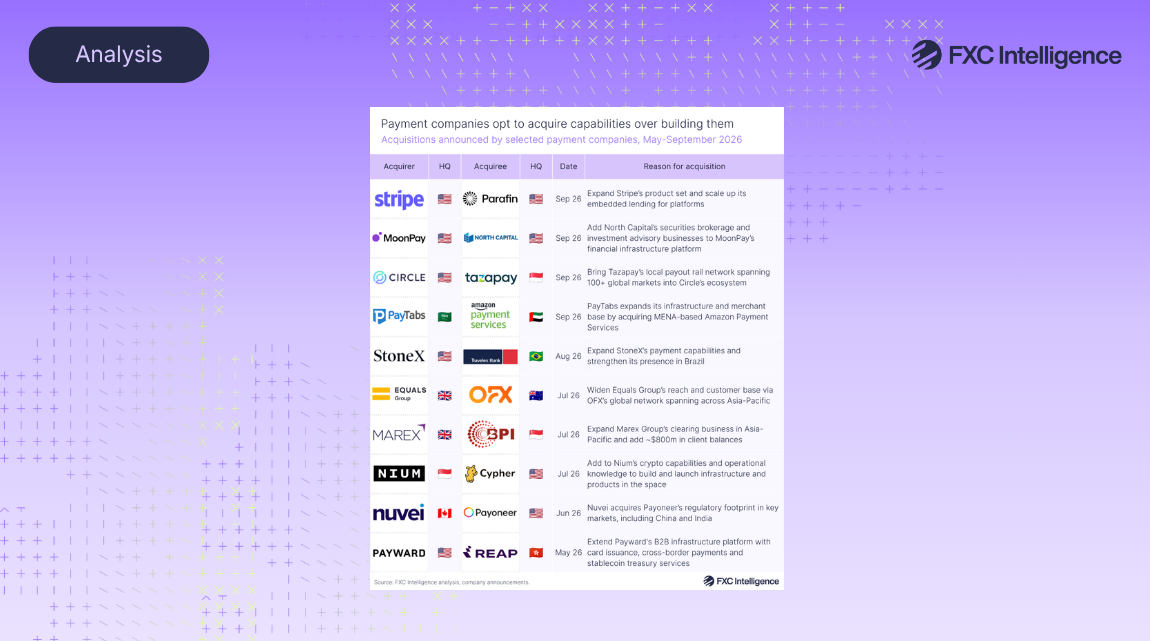
Outside of Stripe’s annual letter, Bloomberg reported this week that the company was considering acquiring some or all of PayPal, citing people familiar with the matter. However, this has not been confirmed by Stripe or PayPal.
Many see the tender offer as a signal that Stripe’s IPO will not be happening soon. This aligns with comments from Stripe’s senior leadership, with Stripe co-founder John Collison telling Bloomberg in January the company was “still not in any rush” to go public. From a growth perspective, Stripe is continuing to deliver strong results as it positions itself as a global payments infrastructure – keeping pace with stablecoin and AI developments.