This week we were on the ground in Singapore, at GFTN’s policy-focused Insights2040 forum as well as the sprawling Singapore Fintech Festival, taking the pulse of global cross-border payments from the perspective of one of Asia’s most important markets.
Drawing attendees from across the world, with particularly strong representation from Asia, the Middle East, Africa and Europe, Singapore Fintech Festival and its policy-led sibling Insights2040 provide a critical perspective on global priorities for cross-border payments.
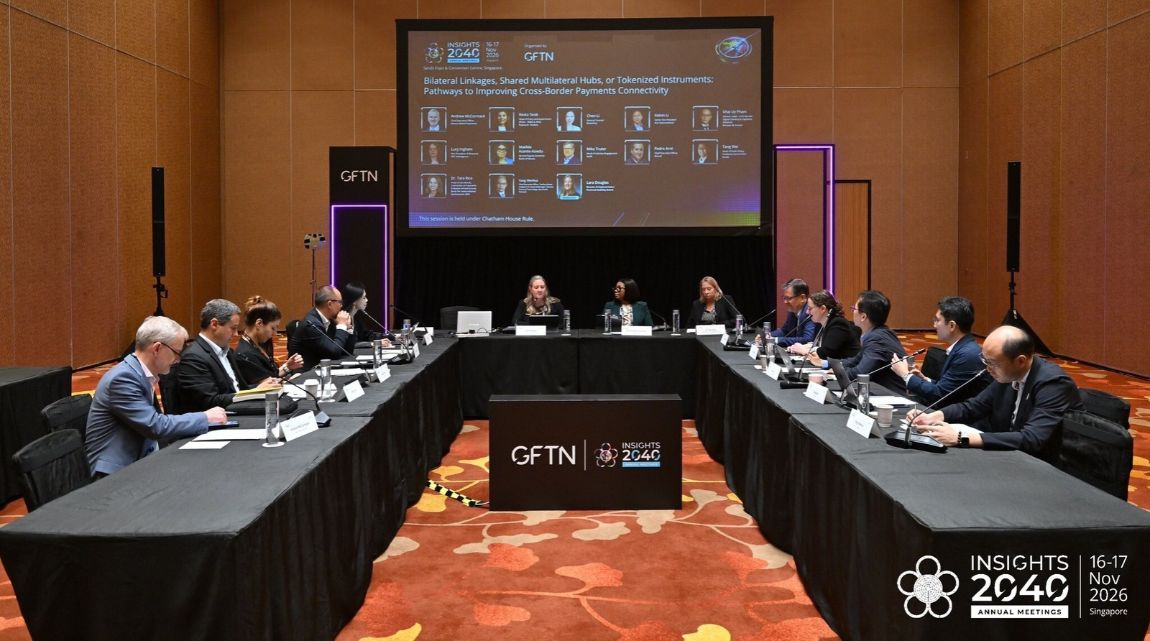
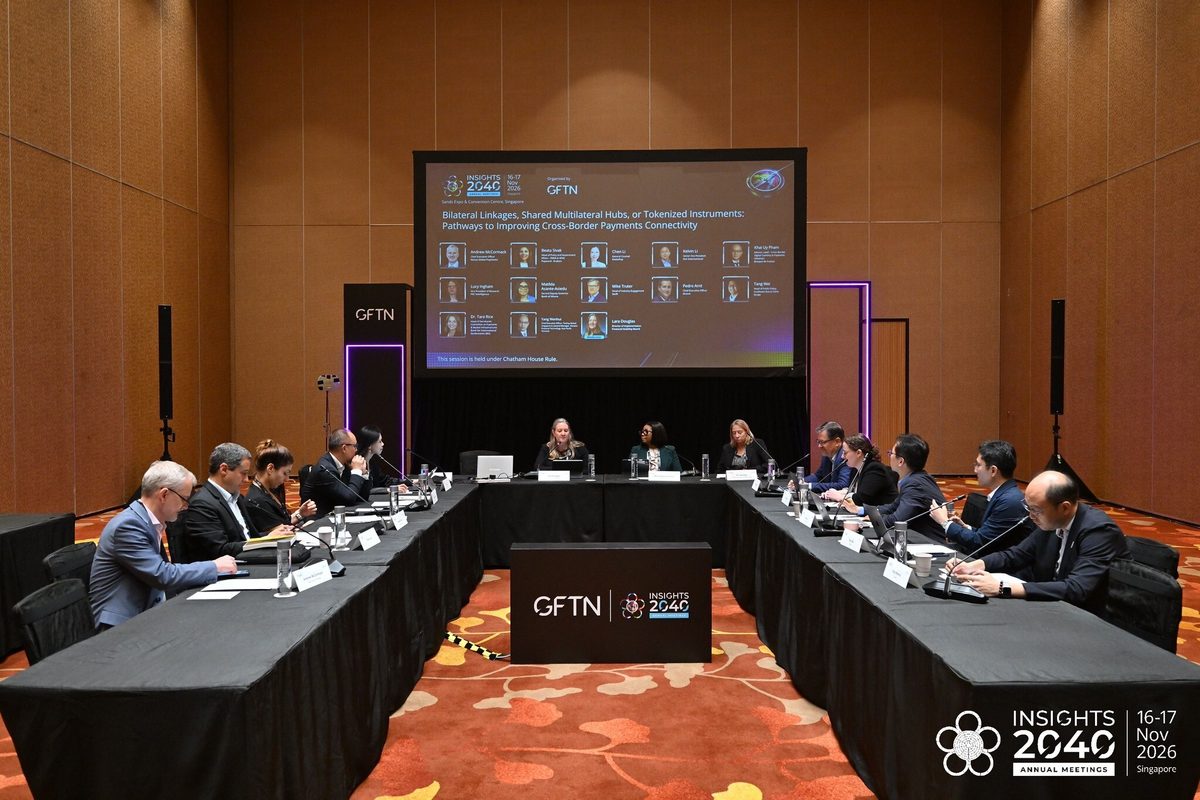
From a talks and sessions perspective, cross-border payments was well represented, as a key focus of around a fifth of talks at Insights2040, and around one in 20 of the hundreds of sessions at Singapore Fintech Festival. This included an in-depth session at Insights2040 on cross-border payments connectivity and the FSB’s G20 Roadmap, held under Chatham House rules, which our VP of Research Lucy Ingham participated in alongside leaders in fintech, policy and beyond.
Cross-border payments was an even stronger presence on the show floor, with stablecoin-based solutions, local payments connectivity, merchant gateways and networks being particularly well represented. Doing business between regions, particularly corridors connecting Asia with key emerging markets, was also a common focus, as companies look to increasingly unlock the opportunities in these fast-growing areas.
Stablecoins and other digital assets were inevitably a particularly widespread topic, being mentioned in 37% of Insights2040 sessions, and 61% of those with a cross-border focus, as well as 20% of SFF sessions, although the focus has shifted from initial opportunities to deeper interoperability and cross-interaction with fiat networks, as well as a greater regulatory alignment globally, particularly between key markets.
However, an even bigger focus was AI, and in particular agentic payments, with a growing number of companies now treating some kind of agentic product as table stakes for operating in the sector. While there is still hesitancy about trust, it is clear that the rapid development of many AI models is unlocking confidence in how the technology can be harnessed, and in particular how it can be used to support the increasingly complex interplay between different networks and operational layers at speed.
Interoperability continues to be a theme at the heart of initiatives across the space, while there is also an increasing alignment of wealth and payments, as we explored in our report with GFTN for the event.
Key announcements from Singapore Fintech Festival
The event also saw many announcements from companies in cross-border payments and the wider fintech space. Here are some of the ones that caught our eye:
- Visa launched Scan to Pay with Ant International’s Alipay+, which enables cardholders using supported card-funded wallets to pay via QR codes in Southeast Asia. Harnessing this, Google Wallet also announced the launch of Traveler QR, which will enable travellers to make local QR payments in key markets from cards saved in their Google Wallet, starting in Singapore.
- Visa Direct also announced plans to enable eligible Asia-Pacific-based clients to use stablecoins to fund cross-border payouts.
- Thunes announced a number of key moves, including a partnership with global acquiring, collection and payout player PayerMax, as well as the expansion of its Direct Global Network into Bhutan.
- The Monetary Authority of Singapore and the Association of Banks in Singapore published a roadmap for phase 2 of domestic real-time payments network PayNow to become a “multi-rail, multi-functional and multi-service payments architecture”.
- Nium announced the signing of Woori Bank, one the leading South Korean banks, in a partnership that will see the network power Woori’s P2P payouts.
- FOMO Pay announced a partnership with US digital asset bank Anchorage Digital, to connect US stablecoin infrastructure with payment and settlement applications in the Middle East and Asia.