This year has seen a number of cross-border payments providers upgrading their B2B payments offering with AI agents – AI-powered systems that are able to work independently, planning and making decisions without human input, generally based on pre-established controls.
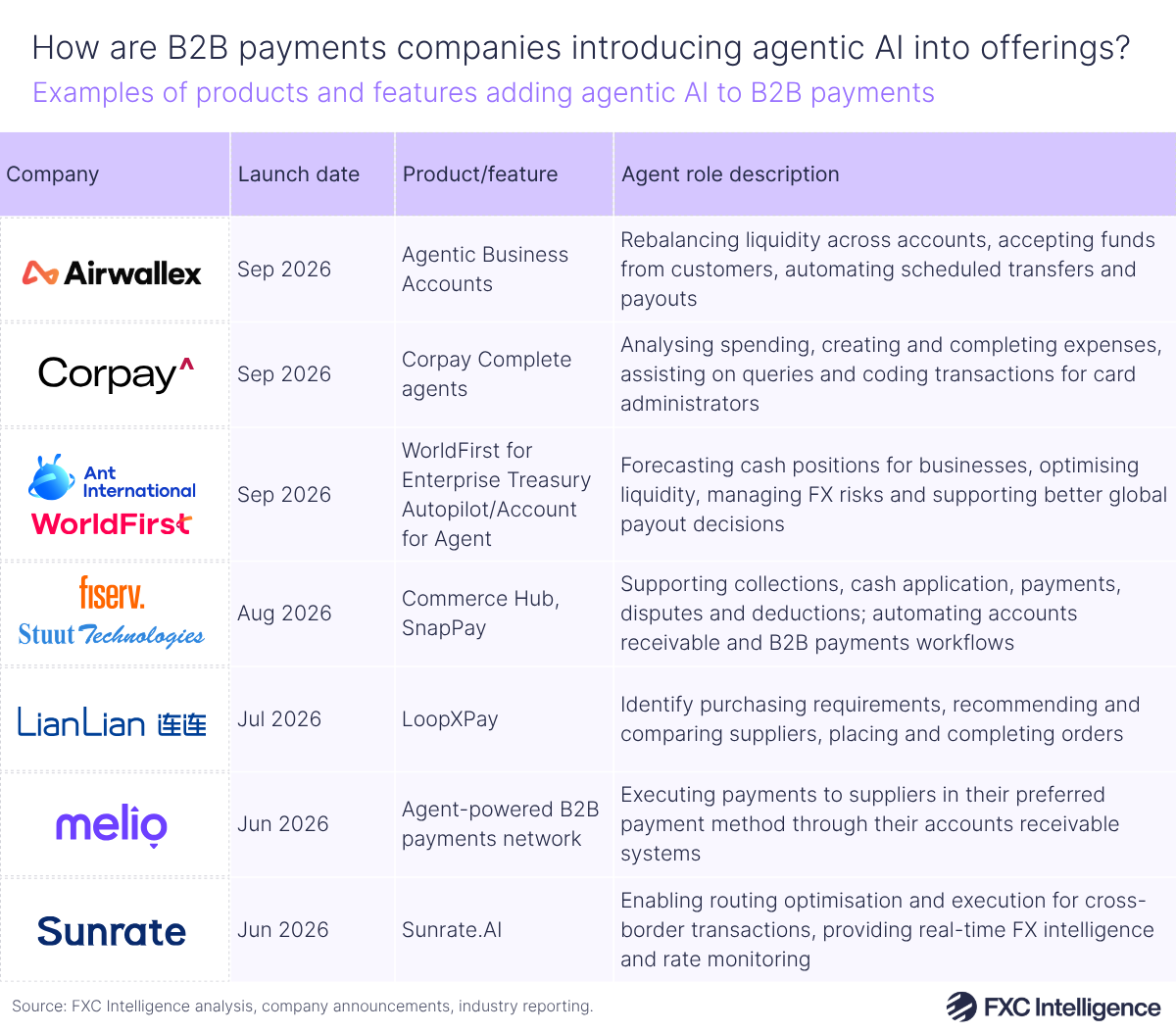
Companies have launched a number of products and features to address issues such as costly currency conversion, manual invoice processing and approvals, slow onboarding in new markets, compliance checks and payments that may fail because of missing or incorrect details.
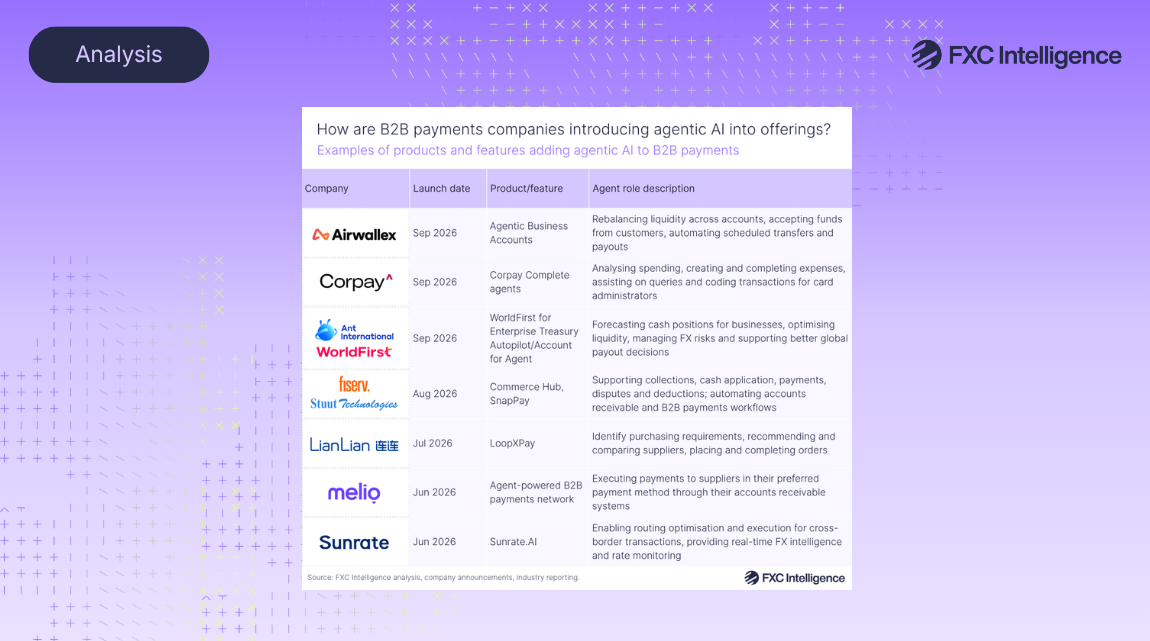
One key use case is helping businesses ensure they are not losing money converting currencies at the wrong time. Last week, Airwallex introduced Agentic Business Accounts, which allow AI agents to autonomously open local currency accounts and orchestrate transfers globally, based on rules set by the user. This allows users to instruct an agent to anticipate upcoming liquidity needs in certain currencies and timing conversions to manage currency exposure, removing the need for this to be done manually.
Notably, some of the big steps in agentic are being taken by Asia-focused companies. Last month, Ant International launched a suite of AI solutions, including WorldFirst for Enterprise Account for Agent, which allows autonomous AI agents to hold and manage financial assets, alongside AI and FX features such as predicting cash flow, liquidity and FX positions over time. In June, Sunrate released Sunrate.AI, a new payment infrastructure product including agents that optimise payment routes and execute payments, provide real-time FX insights to treasury teams and also monitor transactions for anomalies.
Other use cases are on the accounts payable/receivables side, specifically solving the challenges involved with reading invoices, matching them to orders and making payments. In July, LianLian Digitech partnered with Visa to complete its first B2B agentic transaction with LoopXPay, its AI agent that is able to recommend suitable suppliers, place orders and execute payments based on pre-defined spending rules. In June, AP systems provider Melio introduced an agent-powered B2B payment network that allows buyers to make payments to log in to suppliers’ AR systems to identify which payment methods suppliers tend to use and execute payments using these methods.
Banks have also stepped into the agentic arena, though some of the offerings remain at early/pilot stages, or are focused more on improving internal operations. HSBC completed an agentic payment between a corporate buyer and an ecommerce supplier through Mastercard’s Agent Pay solution in May, and in September launched a new AI-based Smart Checking system designed to process, trace and check trade finance documents. BNY uses “digital employees to help fix payment errors” (e.g. missing country codes or incorrect addresses), while Deutsche Bank and BNP Paribas have both partnered with Google Cloud to bring AI agents into their corporate banking teams. As we saw in a recent report, AI is boosting productivity across a wide range of banking operations, though this hasn’t always been meaningfully reported.
The launches this year suggest agentic AI is moving from the concept stage to products, with a strong focus on tight rules set by businesses and human oversight. For corporates looking to make large-scale B2B payments, being able to trust providers is a key factor in their selection, meaning the emergence of more legislation and protocols around B2B payments specifically will be crucial as agents move beyond the early stages. With agentic AI still at a relatively early stage, it remains to be seen whether the promise of many agent-led products translates into strong adoption by businesses.