
Digital assets have been on the radar of policymakers for some time, but this year has seen them become a central priority like never before. From tokenised assets to stablecoins, we explore the state of policymaker perceptions, expectations and action through the lens of Point Zero Forum 2026.
The last year has seen digital assets, and in particular stablecoins and tokenised assets, become an unprecedented focus for the cross-border payments world. But one area that often sees less focus is how policymakers globally are engaging with the topic.
While stablecoin regulation, and in particular the GENIUS Act in the US and MiCA in the EU, has been critical to driving mainstream industry attention, policymakers are often absent from ongoing industry discussion about the technology and its place in the payments landscape.
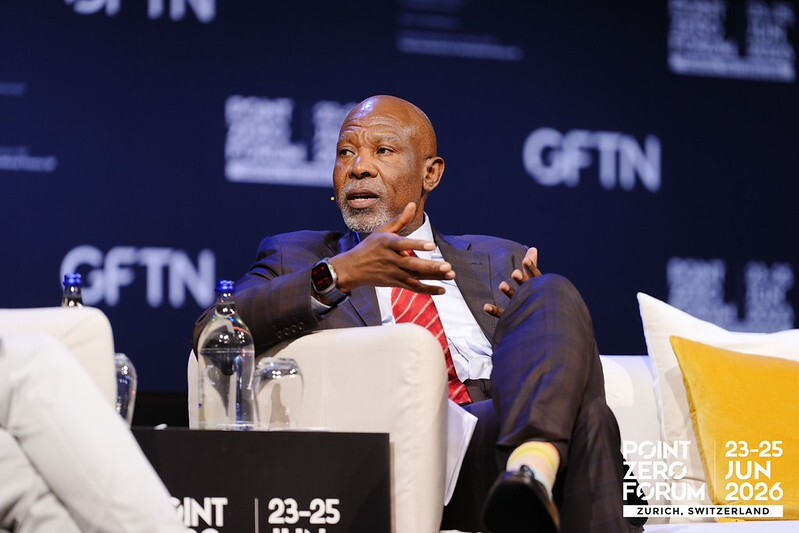
This was not the case with the latest Point Zero Forum. Held in Zurich at the end of June, this annual conference sees key figures from across the policymaker landscape come together to discuss strategic priorities, challenges and inflection points shaping the payments policy agenda.
While digital assets have long had a place in the discussion, this year they dominated the agenda like never before, providing an invaluable view into how they are being seen within a payments context, particularly by the many markets globally where the regulatory landscape is still being formed.
In this report, produced as part of a partnership with Point Zero Forum’s organiser Global Finance and Technology Network (GFTN), we unpack some of the trends, takeaways and topics surrounding the current digital assets policymaker discussion to get a sense of how the space is developing and how opportunities may ultimately evolve.
From fringe to framework: How digital assets took centre stage at Point Zero Forum 2026
While attended by a wide variety of stakeholders, Point Zero Forum – as well as other events run by GFTN – has a focus on policy that is not seen at other high-profile industry conferences. This is reflected by the number of people attending who focus on this area, but also by the range of individuals from central banks, governments and other key institutions attending as speakers.
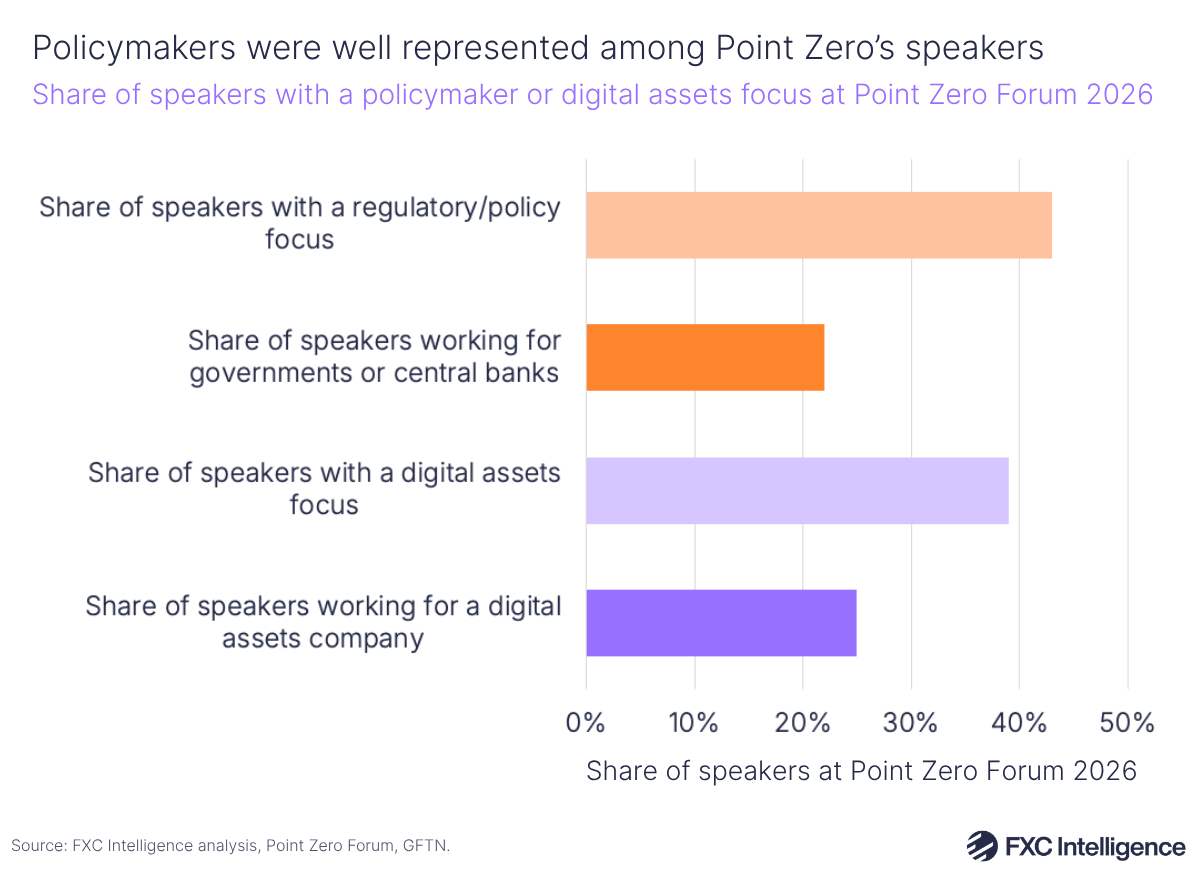
Among the event’s speakers were representatives from 22 different central banks, with 22% of speakers representing a government or central bank. More broadly, 43% of speakers had a direct policy or regulatory focus, while many more were in roles that saw them work closely with these areas.
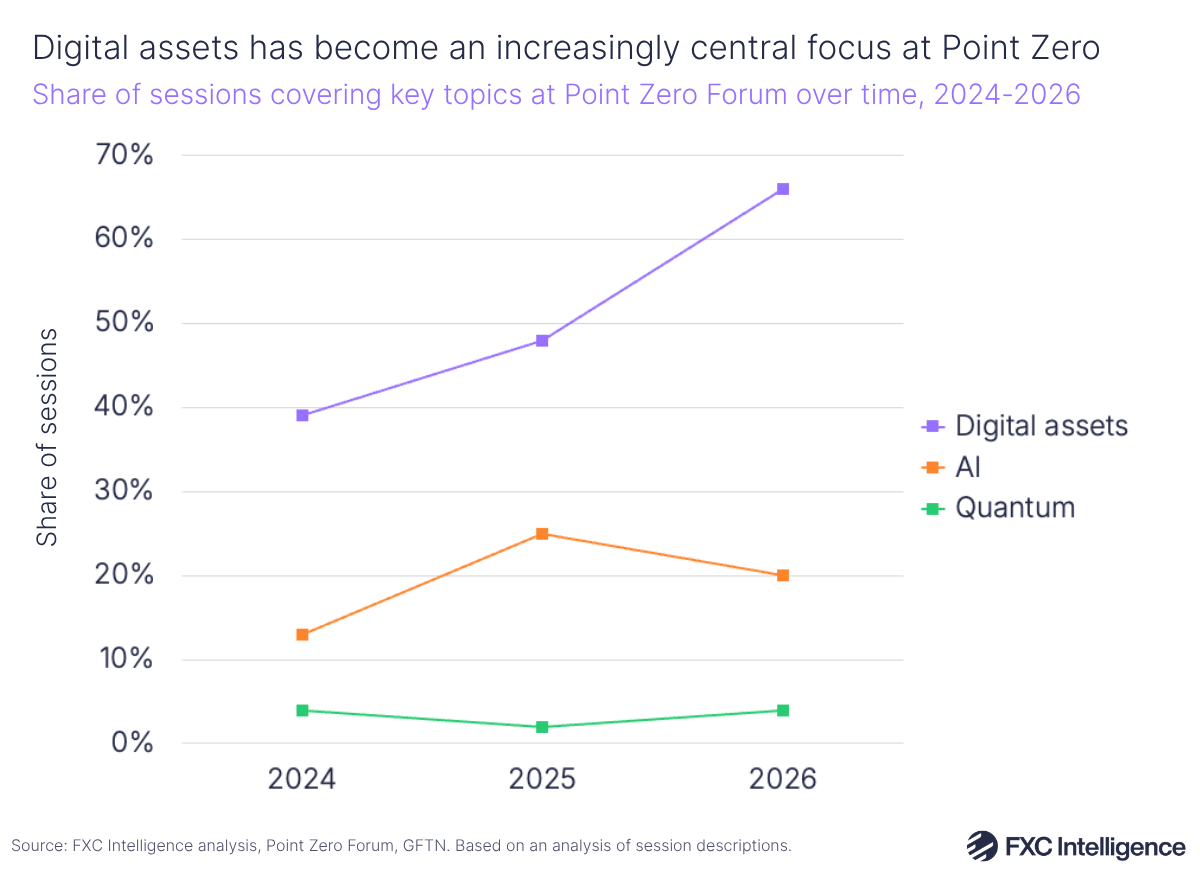
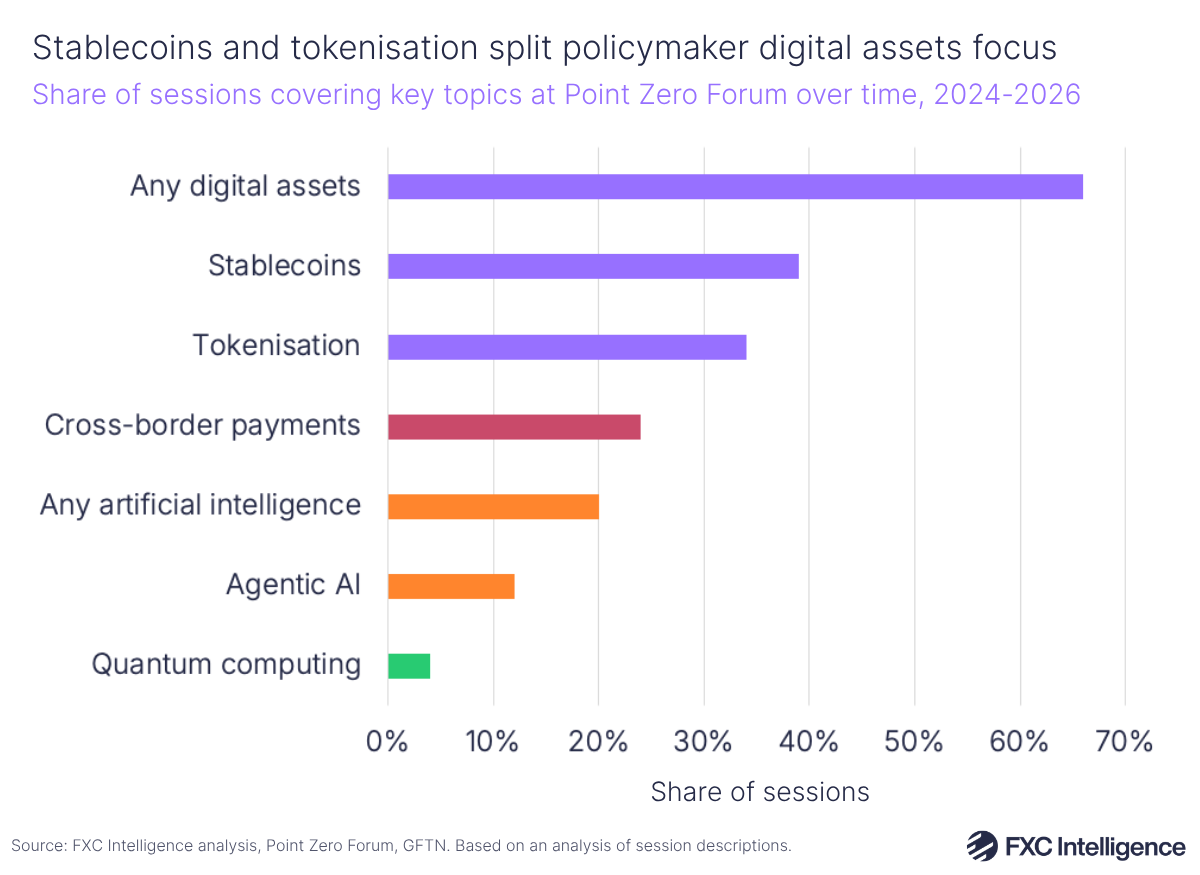
Although they have been on the radar of policymakers for some time, digital assets were notably more present this year than they have been previously. While interest in the area has been rising steadily over the past few years, it dominated sessions in 2026, with 66% of the event’s 101 different sessions mentioning stablecoins, tokenisation or a related digital asset technology in their title or description. Crucially, this does not include many of the event’s keynotes, all of which saw the technology being a key point of discussion, meaning that the number of sessions that focused on the technology is still higher.
This is a notable uptick on previous years, rising from 48% of sessions in 2025 and 39% in 2024, and is also an interesting comparison to AI, the next most-discussed topic at the conference. Seeing discussion in 20% of sessions, AI has seen a drop versus 2025, while quantum, which remains a relatively nascent technology, saw a modest increase.
Agentic AI was notable for being a focus in most of the sessions where AI was discussed, while in digital assets both stablecoins and tokenisation – arguably the two most dominant commercial solutions being explored in payments – both saw a sizable share of focus. 39% of sessions saw stablecoins mentioned in their session title or description, while the same was true for tokenisation in 34% of sessions.
This reflects a wider mood among policymakers. Marlene Amstad, Chair of the Swiss Financial Market Supervisory Authority (FINMA), was among the keynote speakers to highlight current interest in the technology.
“There is one use case that globally stands out, and this is digital assets,” she said. “This is where the interest of authorities most clearly outpaces their current activity, and this case keeps growing in importance.”
Others echoed a notable change in institutional assets, with Fernando Vázquez, President, Capital Markets at Chainlink, declaring that “innovation theatre is over”.
“For many years, I was dealing mainly with innovation departments, R&D, you name it. But now we are dealing mainly with P&L owners that have a mandate from their boards,” he explained.
There were also several speakers that pointed back to Libra, the now-abandoned digital currency announced by Facebook in 2019 that kicked off central banks’ exploration of the technology.
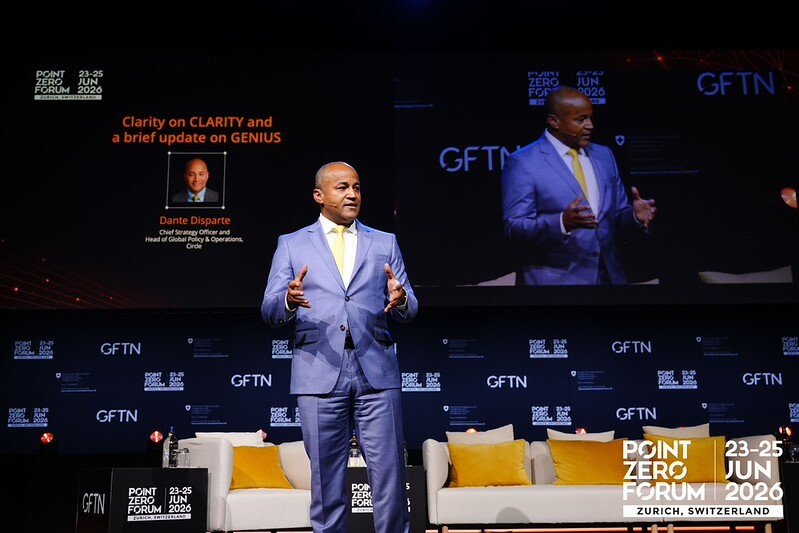
“A lot of what I’m hearing all over the world – you can brand it tokenisation, you could recast it as DLT – but it still looks and feels Libra-like,” summarised Dante Disparte, Chief Strategy Officer and Head of Global Policy and Operations at Circle.
Where policymakers see digital assets impacting cross-border payments
While a few years ago many policymakers spoke with hesitancy around the impact and potential of digital assets, that has changed. While there was certainly still scepticism about the extent to which the technology could play a role from some, there was widespread acceptance that the technology is a part of the payments infrastructure landscape – and would only become more so in the future.
Alvin Tan, Minister of State, Ministry of Trade and Industry and Ministry of National Development, Singapore and Board member of the Monetary Authority of Singapore, Government of Singapore, highlighted several recent developments as “major milestones”. These included the passing of the GENIUS Act; the delivery of the BIS’s wholesale tokenisation initiative Project Agorá’s pilot; and the European Central Bank’s publication of the Appia roadmap for a tokenised financial ecosystem. However, he also highlighted challenges echoed by many others across the event.
“These milestones signal momentum. But to scale tokenisation, we must prevent fragmentation. Progress across the broader financial sector remains uneven, and where this unevenness tips into fragmentation, the path to scale is blocked,” he explained.
“Tokenised assets must bridge different asset classes, currencies, and networks, remaining fully interoperable with existing systems. Building this seamless global financial ecosystem requires deep public-private collaboration, which is already bearing fruit.”
Others highlighted specific areas where digital assets had the potential to impact cross-border payments specifically, including Arjun Varma, General Manager at GCash International, who argued that blockchain technology in particular had the potential to help with lower value cross-border payments.
“Today it’s very easy to move $100m between two different continents, but moving $100 is not as simple because the associated bank fee, the FX and the transaction charges at every point of the value chain erode a significant portion of the livelihood of these foreign workers,” he said.
Meanwhile, Shriyanka Hore, Managing Director of Swift Corporate Office and Global Head of Industry Engagement and Insights at Swift, argued that shared ledgers, such as those being launched by the financial messaging major, “tackle the main friction, which is FX risk”.
“It is about that 24/7 ability, the programmability that comes with distributed ledger technology to unlock 24/7 markets,” she added.

Stablecoins and tokenised assets: Competing or complementary?
While many sessions saw both stablecoins and tokenised deposits discussed as part of a wider whole, the two are distinct technologies that have their own applications, supporters and detractors. In his keynote session, Simon Taylor, GTM at Tempo, characterised a common perceived difference between the two and how they are being deployed in payments:
“Stablecoins are fundamentally money that moves, and [tokenised] deposits are money that wants to stay still,” he said.
The case for stablecoins
Issued by private, albeit highly regulated companies, stablecoins have previously been framed as a challenger to the established financial landscape, and a potential existential threat to central banks. However, there are those in the policy landscape that regard the instrument as a beneficial addition.
A notable example is the Georgian government, which in May announced plans to launch GEL₮, a stablecoin pegged to the Georgian lari, in partnership with Tether, the issuer behind leading stablecoin USDT. In a session that also featured Natia Turnava, Governor of the National Bank of Georgia, Marco Dal Lago, Chief Expansion Officer of Tether, described the stablecoin as solving structural economic inefficiencies, including wire fees, FX markups and working capital costs that drive up the cost of goods.
“The features of stablecoins are helping us to lower the cost for the final merchant and so the final price,” he said.
While the cross-border impact of stablecoins is a key part of their perceived benefit, Circle’s Disparte went further to frame the technology as removing the distinction between domestic and cross-border payments.
“We think cross-border payments is the wrong phrase, because you don’t send a cross-border email: you send an instant message to a trusted counterparty,” he said.
“Why stablecoins are a breakthrough in payments, is for the first time we’re marrying the settlement asset with the messaging instruction.”
Tokenised assets: Deposits and beyond
By contrast, tokenised assets are a newer concept but have drawn considerable attention due to the ease with which they can be retrofitted to the existing financial infrastructure, providing what Kirit Bhatia, Chief Digital Assets Officer, Banking Circle, described as a “digital twin” for the equivalent fiat asset – be that a deposit, bond or other financial instrument.
Tokenised money has already seen considerable adoption, with platforms such as J.P. Morgan’s private blockchain Kinexys already having settled more than $3tn in transactions since its launch. But some see the impact reaching far further than just payments alone.
“The next phase of tokenisation isn’t really about creating more tokenised assets. We’ve proved that assets can be brought on-chain,” said Michelle Neal, CEO of Fnality. “It’s really not just about tokenised assets, it’s about tokenised markets,”
Within payments, however, one of the biggest focuses for both tokenisation and stablecoins remains on the treasury side, with Tony McLaughlin, CEO and Founder of Ubyx, arguing that the technology has the potential to provide significant further efficiency benefits.
“You get companies who believe they are efficient who end up with 3,000 bank accounts in one company, and companies who think they’re efficient but have billions of dollars sitting in demand deposit accounts,” he explained.
Can CBDCs still play a role?
The third form of digital asset has long been central bank digital currencies (CBDCs), which are similarly blockchain-based instruments, but crucially are managed and issued by central banks, rather than companies. First proposed as a response to the existential concerns surrounding Libra, CBDCs had been the instruments that policymakers would most commonly make the case for. However, as stablecoins – and to a lesser extent tokenised deposits – gained increasing focus, adoption and, most crucially, regulatory attention, CBDCs have become less central, and there are those that question their purpose.
“Are CBDCs a solution to a particular problem, or are they a solution in search of a problem?” asked Lesetja Kganyago, Governor of the South African Reserve Bank, adding that there was a distinction between retail CBDCs and their wholesale counterparts.
“Central banks should be focusing on efficiencies, and in central banking CBDCs can do that, but what would a retail CBDC be solving?”
Some also see retail CBDCs creating their own problems.
“You might have deposit flights in a crisis which could endanger stability,” said Dr Roman Studer, CEO of the Swiss Bankers Association. “Also in Switzerland with our direct democracy, privacy issues are high on the agenda.”
For others, however, there is a strong case for retail CBDCs. Piero Cipollone, Member of the Executive Board, European Central Bank, highlighted the value of the digital euro, a retail CBDC that he has played a key role in architecting.
“We live in a world where we risk discriminating against central bank money at the retail level – because the technology to pay with cash, the only form of central bank money at retail, is disappearing,” he said. “This is the core reason we are building the digital euro: to preserve the role of public money.”
Ulrik Nødgaard, Governor of Danmarks Nationalbank, the Danish central bank, similarly argued that CBDCs had a clear benefit, pointing to the digital euro in particular, but said that for a small currency such as the krone they didn’t make sufficient sense.
“I think it’s pretty obvious that a retail CBDC can improve not only sovereignty – which is a strong case in relation to the digital euro – but also resilience,” he said. “[But] for the time being, we don’t see any clear use cases that would make a valid argument to shift to a digital krone.”
However, the case for a retail euro CBDC also remains in question, with Sir Howard Davies, Chairman of the Supervisory Board, Qivalis, and former Chairman of NatWest Group, sharing an experience he had with students in a class he was recently teaching on global financial regulation at Sciences Po Paris.
“One of the questions I set last term was, ‘Do you think the ECB should issue a digital Euro?’ The majority of them said, yes, they understood the logic of the ECB issuing a digital Euro,” he said. “Then I said to them, having looked at all of these papers, I said, ‘Well, how many of you expect to use it?’ They went, ‘Why would we use it?’”
Where CBDCs are seeing far greater traction is in wholesale applications, with multiple initiatives focusing on this use case, including Project Agorá, an initiative led by the BIS that is exploring the use of wholesale CBDCs with multiple central banks and commercial financial institutions.
“There is room and need for CBDCs when it comes to large ticket cross-border payments, to support smoother, more affordable cross-border trade, and we see that many other peer countries in the region are already piloting, bilaterally, multilaterally, and also so with BIS,” said Natia Turnava, Governor of the National Bank of Georgia.
“That’s why we’re saying that wholesale CBDCs for cross-border will be the next development for us.”
Complementary or competing instruments?
While there are applications where institutions have a choice between stablecoins and tokenised deposits, across many of the sessions there was a clear sense of the two both having their role to play on the retail side, with CBDCs largely entering the landscape at the wholesale level. However, the ECB’s Cipollone argued that retail CBDCs also have a role to play alongside other retail-focused digital assets.
“Both tokenised deposits and stablecoins will benefit from the entering of tokenised central bank money. We don’t see them competing; we see them reinforcing each other,” he said.
“Tokenisation will occur only if there [is] enough central bank money in that space. And if this market grows, then there will be space for everyone: for central bank money and for private money, including stablecoins and tokenised deposits.”
Meanwhile, several organisations discussed using or planning to use different digital assets for different parts of the process, with systems to interoperate between them as required. Part of this approach is to avoid concerns over tokenisation creating walled gardens, which the use of bank-issued tokenised deposits alone could risk.
“We don’t get into a situation where we digitise what we have already today. What we really need to get to is a situation where you have programmability outside the bank’s control,” said Frederik Gregaard, CEO, Cardano Foundation. “If you [keep it inside], the efficiency gains are just not sufficient.”
However, the path to a scenario where different instruments see widespread and harmonious use is not necessarily smooth.
“In the short term [we will see] more fragmentation, because paradoxically, as more and more institutions and governments are taking this seriously, there will be differences in the approach,” said Elif Bilgi Zapparoli, Head of International Client Strategy at Bank of America.
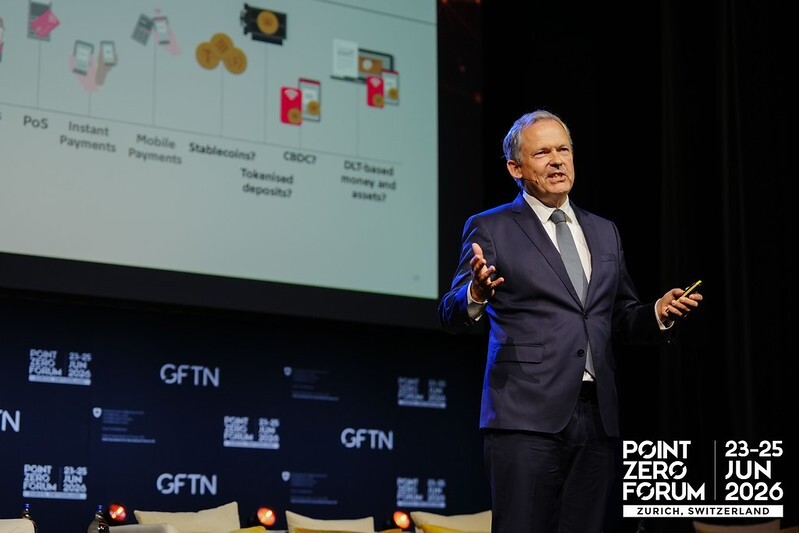
Concerns around scaling and fragmentation are commonplace for tokenised markets, with Burkhard Balz, Member of the Executive Board, Deutsche Bundesbank, observing that while many tokenisation projects had shifted from “technical experiments to real world applications”, they were now facing new challenges as they increasingly interface with the wider financial landscape.
“Current solutions often struggle to achieve a sufficient scope,” he said. “Many of those innovative solutions are emerging, [but] that’s definitely a risk of fragmentation due to varying technical setups, limited standardisation and also a complex legal and regulatory environment.”
Meanwhile, Sarah Breeden, Deputy Governor of the Bank of England, questioned what regulatory deference would look like for tokenised markets as well as highlighting potential interoperability issues. She pointed to the Bank of England’s newly published rules for a systemic stablecoin regime as an example of a system set up for cross-market use.
“It gives stablecoins strong foundations to be used as money by households, businesses and financial markets, and we can use those all around the world as they’re inherently cross-border,” she said, adding that this would require working out how other central banks could “get comfy” with their citizens using these digital assets.
“If we’re to realise the potential of this technology, it’s what we need to do. Now, we’ve done that with Mastercard, we’ve done that with Swift. We don’t have to have a crisis. We can work together to work out what a regime would look like that understands how different coins are operating.”
However, she and others highlighted how much work is involved in ensuring that these different systems can and will interoperate effectively, and that remains a crucial challenge for the industry as a whole.
“We have a lot of discussions about CBDCs, stablecoins and tokenised bank deposits without betting on which one will be the winner,” added Leong Sing Chiong, Deputy Managing Director, Markets & Development, Monetary Authority of Singapore.
“More likely than not, 5-10 years from now, all three will continue to coexist and as they coexist, how do they actually interoperate and what protocols need to be in place to make sure that 5-10 years from now, we don’t end up with an even more fragmented ecosystem? And that requires work to be done today.”
The state of the digital asset policy landscape
While high-profile laws including the GENIUS Act and MiCA have drawn significant industry attention, there is still a long way to go for global policy around digital assets and their use for cross-border payments to be fully mature. Almost two-thirds of countries worldwide do not yet have any form of regime to licence and monitor virtual asset service providers (VASPs) or their equivalent, and where laws are in place there is variation in requirements, meaning organisations need to tailor their approaches to different markets.
“Coherence, convergence, it’s still a long way off: that’s not a reality today,” summarised Lesley Chavkin, Head of Policy at Ribbit Capital. “If you want to be successful, if you want to operate globally, then you have to design for divergence.”
MiCA forms a part of this challenge. While initially seen as a strong model for legislation globally, some now see it as creating its own obstacles, with concerns around implementation guidance being either insufficient or falling behind, as well as questions over competitiveness for issuers. This has also been contrasted with the US, whose GENIUS Act is seen as more friendly to international issuers.
“The GENIUS Act says, ‘Look, if you’re a foreign issuer and you come in and you meet our minimum standards or floor, you can issue your stablecoin and you can have your stablecoin trade in the US.’ The EU urgently needs clarity on how that is going to work,” argued Stu Alderoty, Chief Legal Officer, Ripple.
“Protecting customers through disclosure regimes or reserve standards or AML or BSA rules, that’s table stakes. But when regulation is designed to keep foreign competitors out or to protect incumbents, that’s protectionism, and in a global economy protectionism is going to fail across the board.”
Across the event, many made the case for increased harmonisation of the legal landscape globally, if only for practical reasons.
“Imagine a world if SocGen’s payment stablecoin was not conversant with rules in the United States of America. What good then would this be?” asked Circle’s Disparte.
However, there was also a recognition of how immensely complicated this can be, and that the sector has already come a long way in just a few years.
“My positive is crypto’s getting regulated here in Europe, in Singapore, in Japan, in America, without a financial crisis. That’s never happened before,” said Justin Slaughter, VP of Regulatory Affairs at Paradigm.
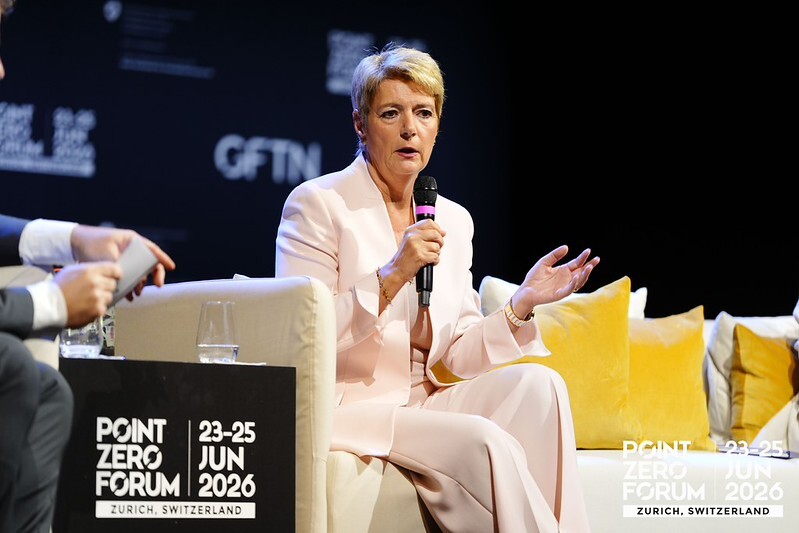
For organisations looking to innovate in markets where the regulatory landscape had not yet caught up, however, Karin Keller-Sutter, Federal Councillor & Head of the Federal Department of Finance, Switzerland, had some surprising advice, speaking not just to digital assets, but to broader financial innovation as a whole.
“I would tell them not to wait for the government and just do it,” she said. “There are lots of good ideas, there is a lot of innovation.”
Architecting trust in a digital asset financial system
At the heart of the ongoing policy conversation around digital assets is the question of trust, and how that is realised across the many layers of the technology’s implementation and management. At the highest level, as South Africa’s governor Kganyago reminded attendees, it is a question of maintaining the ‘singleness of money’.
“If you are having stablecoins, they better be stable and be what they are, because if they break the buck, then you can no longer talk about singleness again,” he said, with others also arguing that poorly regulated stablecoins not only threatened the economic systems they were used in, but also their well-regulated counterparts.
Reserves and their management is a critical part of this, with some making the case for simplicity in reserve design and arguing that more complex collateral structures introduce vulnerabilities.
In some of the more technical sessions held under Chatham House rules, participants also highlighted a tension in the design of reserve pools. While the core purpose of a stablecoin reserve is to guarantee fast redemption at par, they argued that in cases where same-day redemption was required this forced issuers to keep reserves in commercial bank deposits, which complicates liquidity risk management.
The question of redemption design also drew attention, with speakers highlighting that different rules require stablecoins to be redeemed across a wide variety of timescales, from strict, same-day redemption up to five-day windows. Key to considering this is a practical reality: direct issuer redemption isn’t an individual practice, but is more common with high-value, institutional values, with speakers arguing that regulators should focus more on standard market interactions rather than extreme edge cases.
However, ensuring trust is not simply a matter of reserves alone. Others also argued that a holistic stability framework must look beyond reserve quality to include governance, legal frameworks, redeemability, technology and track record of issuers.
The future of digital assets in payments: A policymaker view
Across Point Zero Forum 2026, it was clear that there is immense work being done to build the regulatory framework for the future of cross-border payments, amid a period of significant change.
“It used to be that payments was the boring part of banking,” said Denmark’s Nødgaard. “That is really not the case anymore, there’s so much happening in this space.”
While many were keen to proceed with awareness of the risks, if not caution, there was also an acknowledgement that action needs to be taken – in a way that is not always the case in the sector.
“Society punishes bad outcomes because you can see bad outcomes. But society does not punish for the failure to actually do something that would have been good but was not done,” observed South Africa’s Kganyago. “You then have this bias of bureaucrats becoming risk-averse and not quite embracing technology.”
Looking to the future, for many the focus is on a globally interoperable mix of digital assets, enabled by an increasingly harmonious digital landscape, However, some see digital assets beginning to converge with other technologies such as agentic AI, with Salim Dhanani, CEO of Pave Bank, describing the convergence of AI and on-chain finance as “the holy grail” where “layers of software will be controlling global infrastructure”.
Ultimately, however, there was a clear sense that the future will be enabled by a regulatory landscape that is not just constraining, but enabling.
“We should see regulation as an enabler,” said Tim Moncrieff, Managing Director of Visa Payments & Currencycloud & VP, Strategic Initiatives & Execution, Visa Direct at Visa.
“It is often seen as a sort of barrier, something that we have to overcome. We should see it as a foundation, as a bedrock, as the kind of minimum acceptable standard that we should all go and seek.”