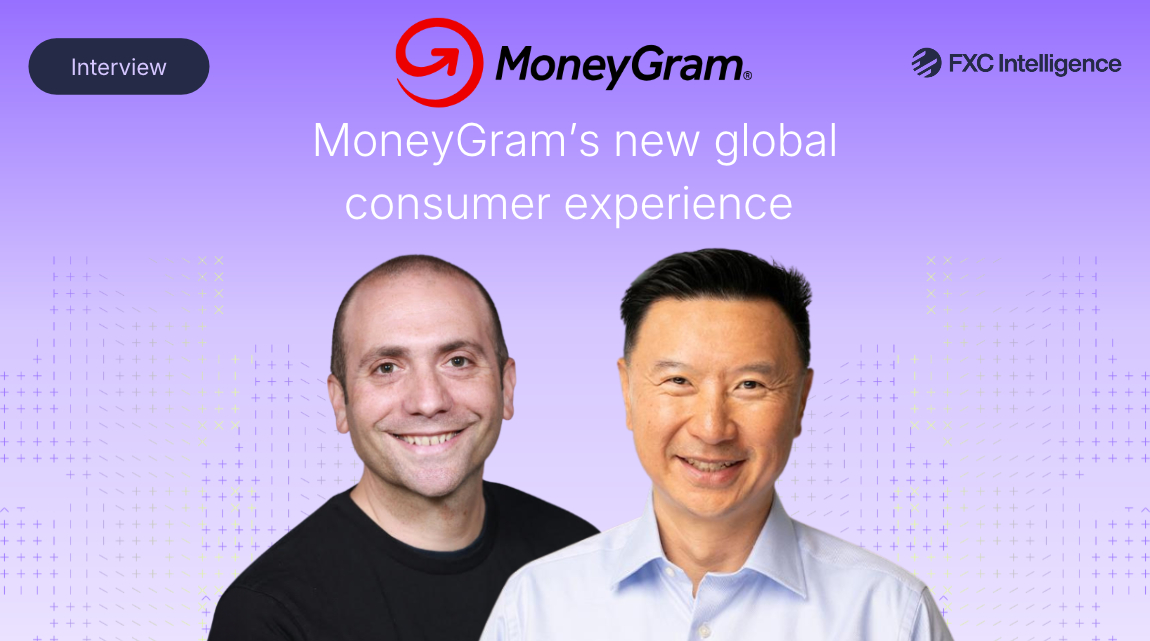


MoneyGram has relaunched its app and website to combine send, receive and holding capabilities into one platform, encouraging users throughout the payment lifecycle to use and engage with its platform.
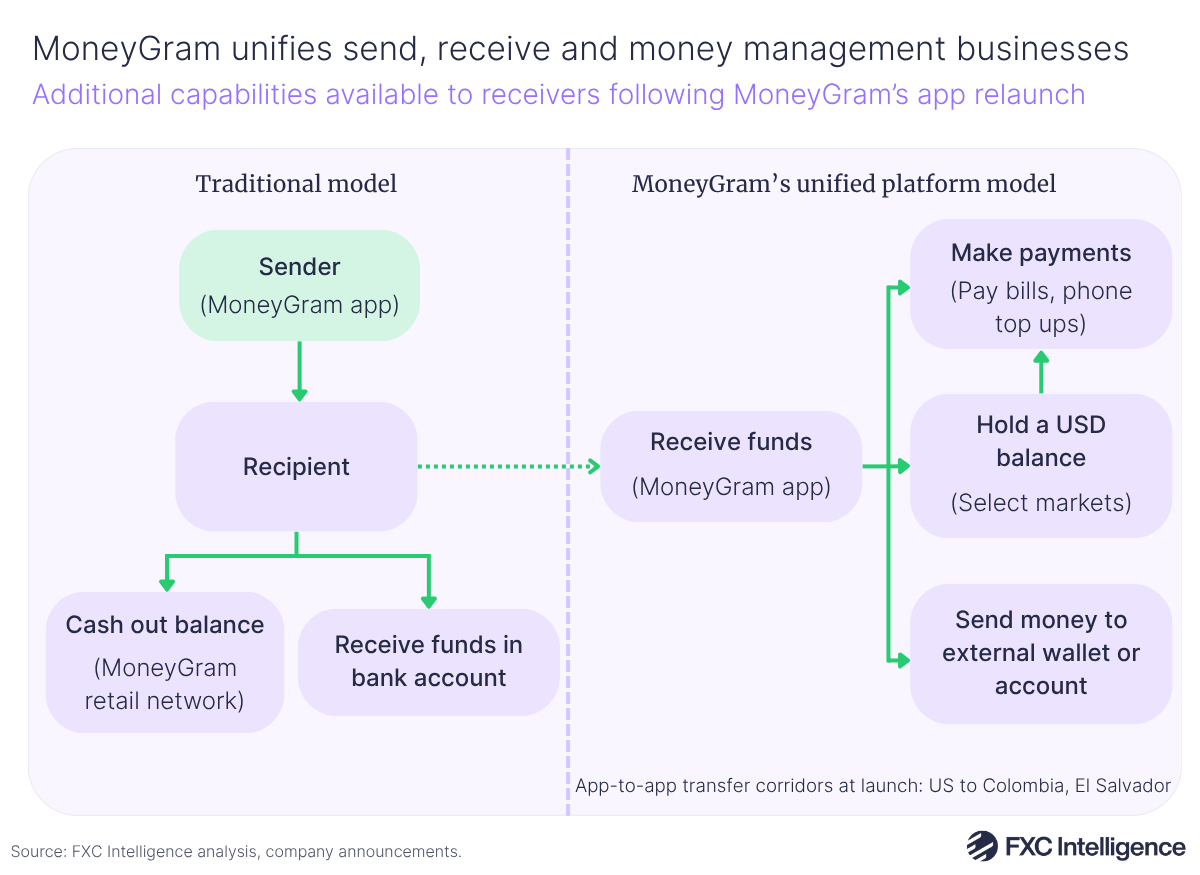
This week, MoneyGram updated its app and website to revamp its customer experience, giving consumers more ways to send, receive, hold and use money across borders. Through this initiative, the money transfer giant plans to widen its core focus from simply sending money to people based in other countries to include how recipients can manage their money digitally, opening up services that will enable them to pay bills and top up mobile phones directly from its platform, while maintaining the option for them to access cash via MoneyGram’s global retail network.
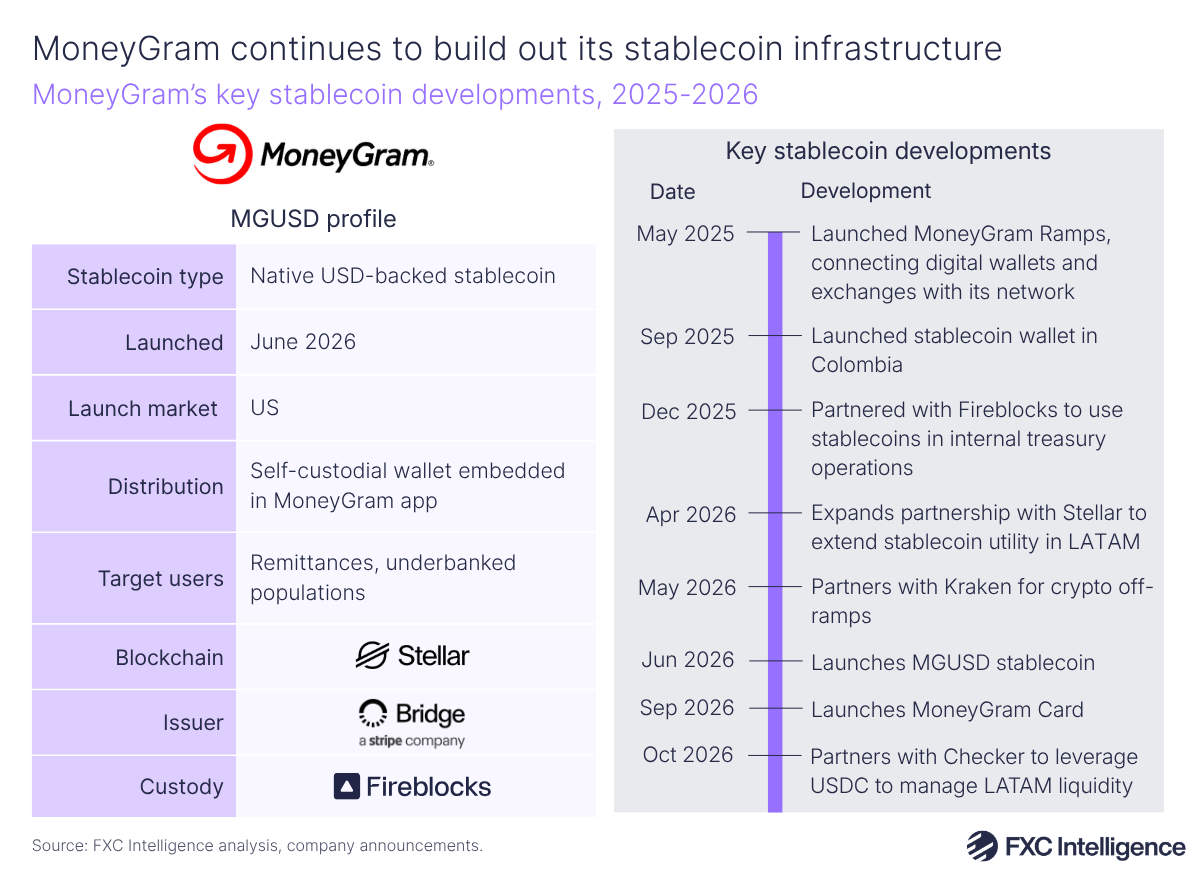
Several of the services MoneyGram is offering are powered by stablecoins, with the company also enabling consumers to hold a balance in a USD-denominated stablecoin. In September, it launched its MoneyGram Card, a stablecoin-backed card enabling customers to spend their digital balance wherever Visa is accepted.
This week, stablecoin infrastructure network Checker also announced it has partnered with MoneyGram to bring stablecoins into the money transfer company’s treasury and FX operations. This partnership will look to enable MoneyGram to overcome several challenges associated with funding payout accounts globally, including reducing fees from correspondent banks and enabling a greater number of transfers outside of traditional banking hours.
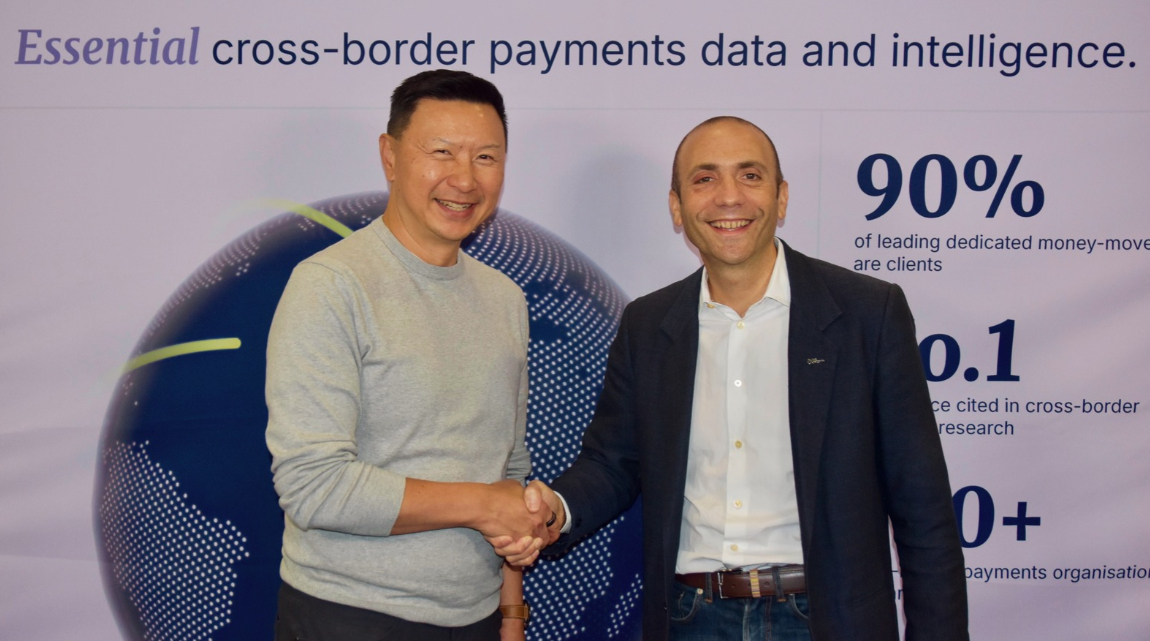
We caught up with CEO Anthony Soohoo at Money20/20 USA in Las Vegas to discuss how MoneyGram is unifying the products and services it offers to senders and receivers, how it is leveraging stablecoins, achieving personalisation with AI and what it thinks about wider remittance trends.
Inside MoneyGram’s new unified platform
Daniel Webber:
Big announcement from MoneyGram this week: you unified your platform. Not a small task. Talk us through that.
Anthony Soohoo:
Yeah, I think one of the first things we wanted to do as we were refounding – we wanted to be much more of a digital-led or tech-first business – is that we needed a platform to be able to enable us to do that.
The big thing about this unification is that we’ve combined our money transfer business with our bill pay business, our receiver wallet business and our card spend business – all onto one unified app so we have an ability to offer one experience for our customers in one app. And that’s a really big deal.
When we originally looked at doing this, it was going to take years, and I’m really proud of the team for getting everything together to be able to pull it off in about 18 months since we said go. So it’s a big jump.
In addition, for our partners, it’s going to allow them to connect to our systems and our platform in a deeper way where they can access our APIs once to be able to unify and connect to all MoneyGram services over time.
Daniel Webber:
You’ve now connected the sender and receiver together effectively. How does that start to change the business model and what’s possible?
Anthony Soohoo:
Well, I think the biggest thing is that they both have a consistent experience. You know, maybe on an elementary level, one of the biggest customer questions for customer support is ‘where is my transfer?’ and the status of it. Now that becomes very apparent when they’re both on the same unified system and they can access the same app to be able to track what they’re sending and receiving.
Beyond that, we’re opening up new lines of services for our consumers, so that if you receive funds, now you can pay bills through it, you can store a balance, as well as you can spend with it. And I think this is just the first step of other things we built.
The reason we opened up and built ramps and our APIs is we can’t imagine all the financial services that customers want in each individual market, because as we know, payments is global, but it’s actually very local too. I think this is going to enable our developers to be able to develop on this network and be able to access our MoneyGram network around the world in their unique ways.
Expanding MoneyGram’s stablecoin capabilities
Daniel Webber:
You’ve been one of the leaders in integrating digital assets and stablecoins. How are you seeing that continue to evolve now?
Anthony Soohoo:
Yeah, we’re very excited about this. To take a step back, just to anchor everyone: besides being able to help our customers send and receive money, we also want to help them manage it. But the underlying thing is we want to build an open network.
When we think about the transformation, it comes down to, as we’re building out services, we want to provide our customers with more access; we also want to lower the costs in terms of our costs to operate so we can pass lower prices to our customers; and the third one is intelligence. When you think about cost, access and intelligence across all three, there’s elements of either AI or stablecoin that helps us do that.
The specific thing about stablecoin is that I think it allows us over time to be able to provide more access to people in currencies that they want – a stable access to a US stable dollar. In addition, it allows us to be able to lower the costs of operating as we build up more scale. Both of those are great things. And then with AI and stablecoin, I think we’ll have more data on our customers to be able to personalise the experience for them however they want.
Leveraging AI to personalise customer experiences
Daniel Webber:
Your app and product is now in 40 languages and markets and growing. How much is AI coming in and enabling that personalisation?
Anthony Soohoo:
Yes, localisation is a form of personalisation. I think that, right now, we want to localise in the basic sense of being able to give the language our customers want, but also we want to speak to them in the voice or tone they want.
So besides the 40 different languages, I think over time where we see AI going is that they will be able to get tonal differences, because people who live in the south of a country might be different from how the northerners speak; the west is slightly different than the east. I think we can curate an environment where people feel safer, more approachable and more personalised for them.
So I just gave you a few examples of that. But if you could do that also – if you think about marketing offers and pricing and everything else – you really develop a system that’s personalised to exactly how the customer wants. And in some respects, we’re trying to build the Netflix personalisation engine for payments.
Cross-border payments evolution
Daniel Webber:
Thinking about how fragmented the cross-border and global payments industries are, how do you see that fragmentation changing over the next year or two?
Anthony Soohoo:
So, I would say that there’s certainly going to be more services across the board. We believe that banks are still going to be the primary points of contact for a lot of the standard consumers that you and I know. But across the world, there’s about two billion people that are underbanked and they’re going to be introduced to services that introduce them to the digital economy in a way that they’ve not experienced up to this point.
I think the exciting part is that we can bring people that were underbanked or unbanked into the digital economy. So it goes towards things like commerce, in terms of ecommerce now that they can access. They could be in any country being able to buy from places like Amazon, let’s just say, and ship it to them. But in addition, they’re going to be able to access financial tools that are a lot more sophisticated than they’ve got in a standard cash society. And that’s all exciting.
When you think about that with AI, they’re going to have a lot more intelligence in terms of helping them manage their spends as well. All of that kind of underlies for me this idea of taking it beyond just a money transfer and helping our customers manage their money in deeper and more meaningful ways.
Daniel Webber:
If we think about what’s coming in 2027, what do you think is not going to change in this space?
Anthony Soohoo: The fact that customers are going to want things at the lowest cost, in the fastest amount of time and [in the] most reliable [way]. If you build services that are reliable, low-cost, and timely in the fastest speeds as long as they want it, I think those are the areas you kind of build around.
That goes towards what we want to do, which is when we talk about our goals, we want to be able to help our customers save time, effort and money.
MoneyGram’s plans for the future
Daniel Webber:
What else should we be excited about with MoneyGram over the next six to 12 months?
Anthony Soohoo:
I think that with the unification, we’re looking at the experience for our customers in a deeper way. I wouldn’t want to sit here with you and say I know exactly how it’s going to play out, except that the exciting thing is that I believe we will build deeper, more meaningful relationships with our customers.
That hopefully will lead not just to a better business for us, but allow us to deliver better services and products to our customers that they want, because we’re thinking beyond just being an MTO and being much deeper in terms of thinking about what are the services they need, and based on the products we have, how can we solve their financial problems.
Daniel Webber:
Anthony, thank you.
Anthony Soohoo:
Thank you.