

Shortly after securing its full UK banking licence, Revolut has reported its full-year 2025 results – with the neobank now setting its sights on further global expansion.
Revolut has released its annual report for FY 2025, revealing significant progress across several parts of its business and providing a strong foundation for future growth.
In 2025, the neobank officially opened its new headquarters in Canary Wharf, London and committed to investing £3bn in the UK, while also establishing a new headquarters for Western Europe in Paris. While it plans to bolster growth in these regions with continued investment, global expansion in other parts of the world is also a key priority for the company.
Having secured a UK banking licence following a years-long process, Revolut now hopes it can accelerate progress towards its long-term goal of acquiring 100 million daily active customers across 100 countries by breaking into new regions such as North America.
Here, we take a look at Revolut’s 2025 results, analysing where it has seen success and its plans for the future.
Revolut’s 2025 revenue growth
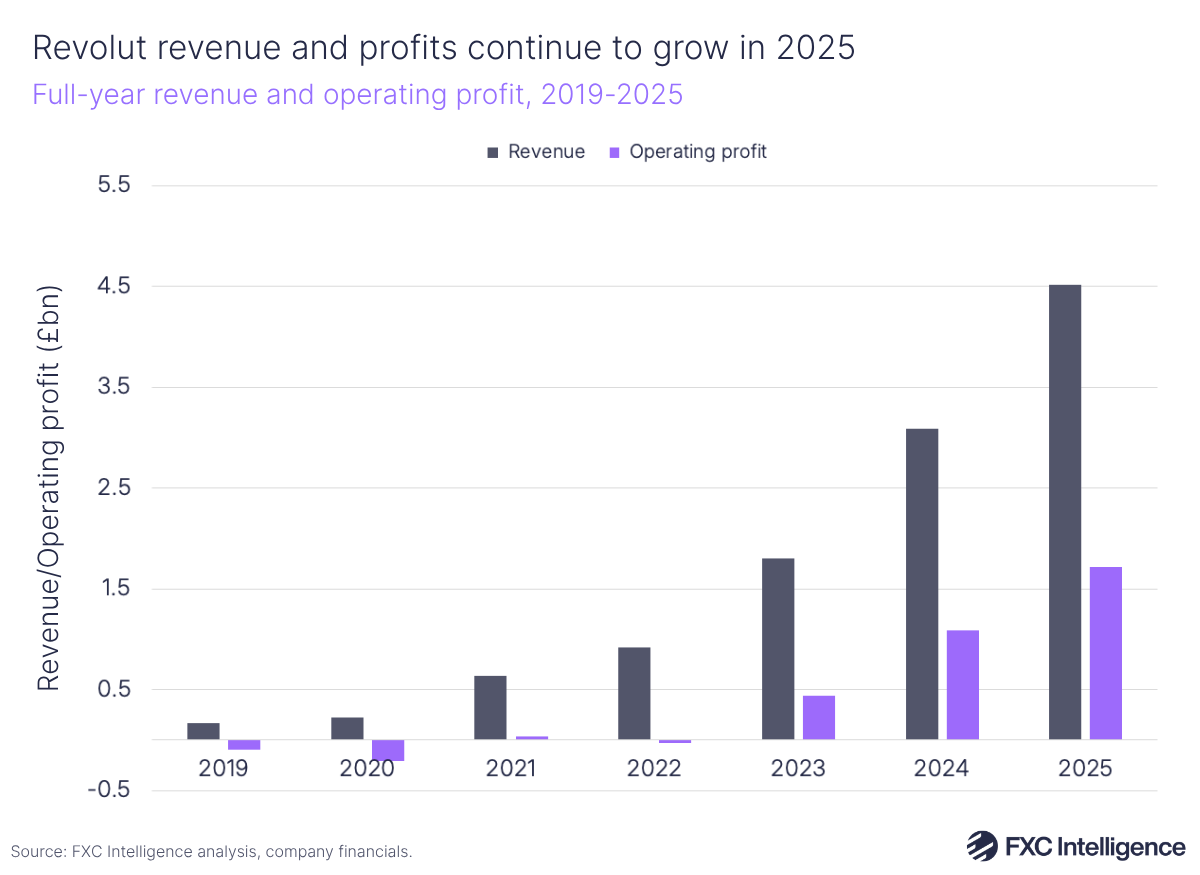
Revolut saw its revenue increase 46% YoY to £4.5bn in 2025. While this represents the slowest revenue growth for the company since 2022, this remains a strong rate of growth, particularly as the company matures and further diversifies its income.
It also reported a third straight year of operating profit, growing 57% YoY to £1.7bn. Meanwhile, Revolut saw its fifth consecutive year of net profitability in 2025, rising 65% to £1.3bn.
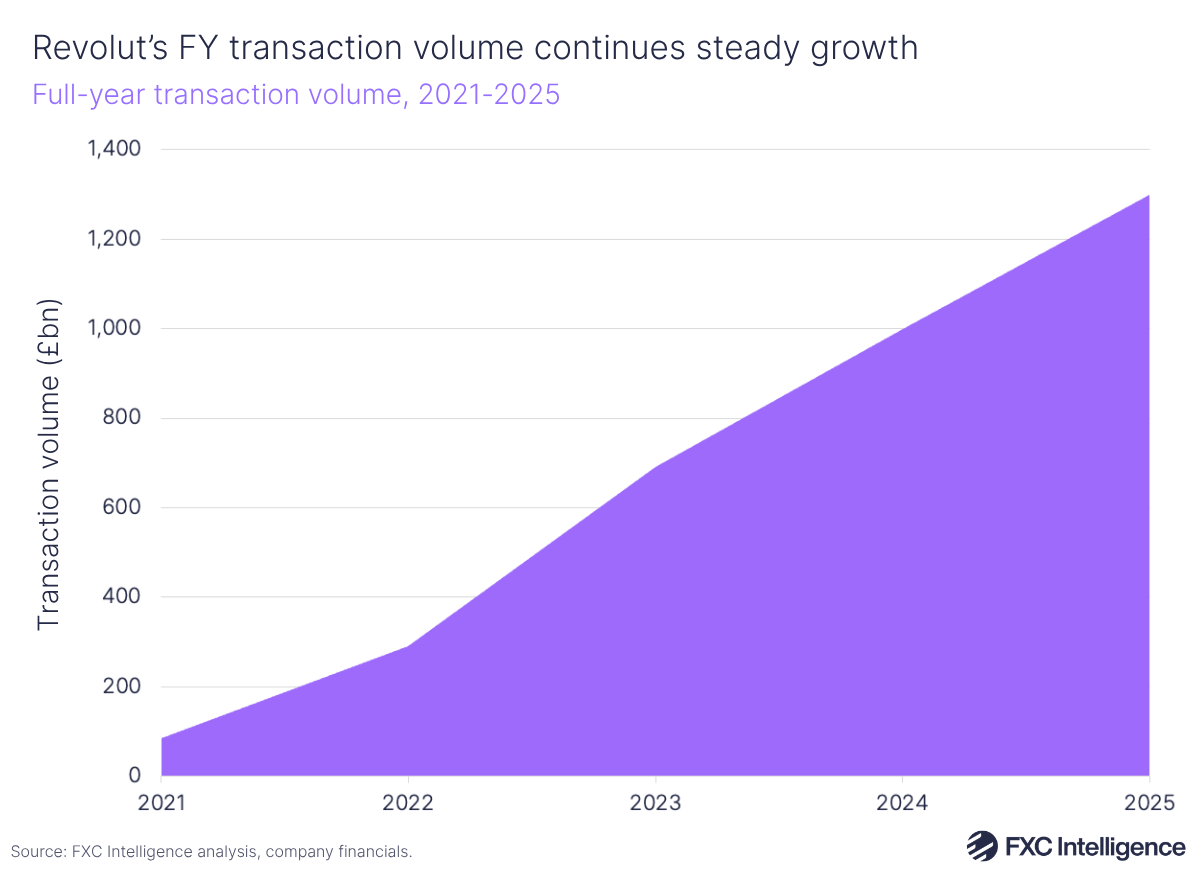
Revolut’s total transaction volumes rose 65% to £1.3tn, with the neobank reporting record levels of activity across both its retail and business segments. It also reported that the number of transactions per customer increased by 24% YoY, as the company saw its total number of retail customers increase by around 16 million (30%) to reach 68.3 million.
Revolut saw its business segment grow at a slightly faster rate – with business customers increasing 33% YoY to reach 767,000. This led to a slight increase in the percentage of total revenue attributable to business customers, up one percentage point from 2024 to 16%.
Which segments drove growth in 2025?
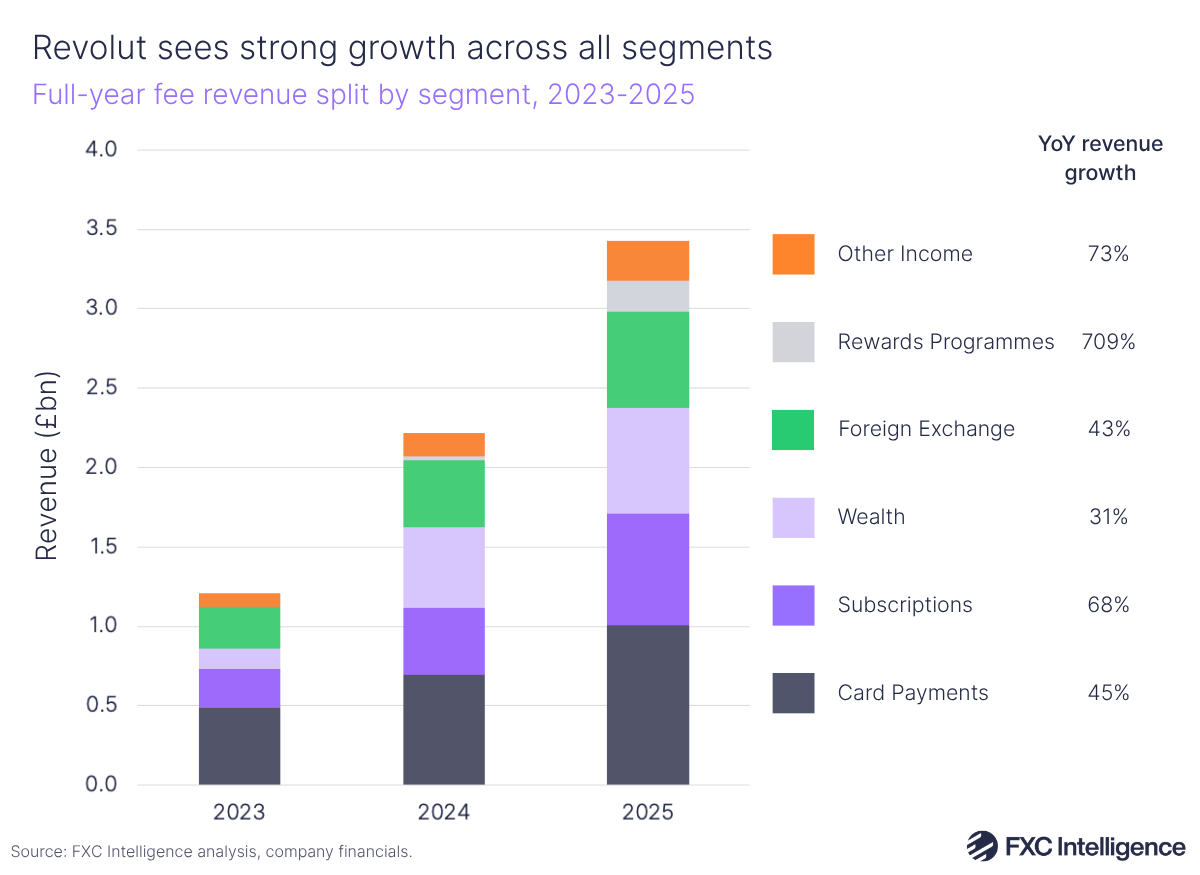
Fee income – revenue from charges associated with its various products and services – made up 76% of Revolut’s total revenue in 2025, up from 72% in 2024. Interest income made up 22%, down from 26% in 2024, while other income made up the remaining 2%.
Within fee income, Card Payments, mostly made up of revenue from transaction and interchange fees on card payments, remained the single largest segment in 2025 – rising 45% YoY to £1bn.
Subscription revenue from monthly and annual fees charged to both retail and business customers overtook Wealth to become the second-largest segment for revenue, growing 67% to £708m. Wealth – which is made up of revenue from Revolut’s cryptocurrency, commodities, trading, and savings products – followed closely behind, accounting for £663m in revenue for 2025, although its growth was outpaced by Foreign Exchange, which grew 43% to £606m.
Other Income, which comprises revenue from card deliveries, remittances facilitated at a customer’s request and sales of other products, saw 73% growth, reaching £254m in revenue in 2025.
How does Revolut plan to expand globally?
Following strong growth throughout 2025, Revolut now plans to continue expanding into more markets and progressing towards its goal of acquiring 100 million customers.
Alongside opening its new HQ in London, Revolut committed to investing £3bn in the UK and creating 1,000 high-skilled jobs across the region. It also announced plans to create 400 new roles across Western Europe in line with its new Paris HQ. In the near future, the company plans to open more offices in Madrid and Barcelona, creating around 800 new roles in Spain by 2028.
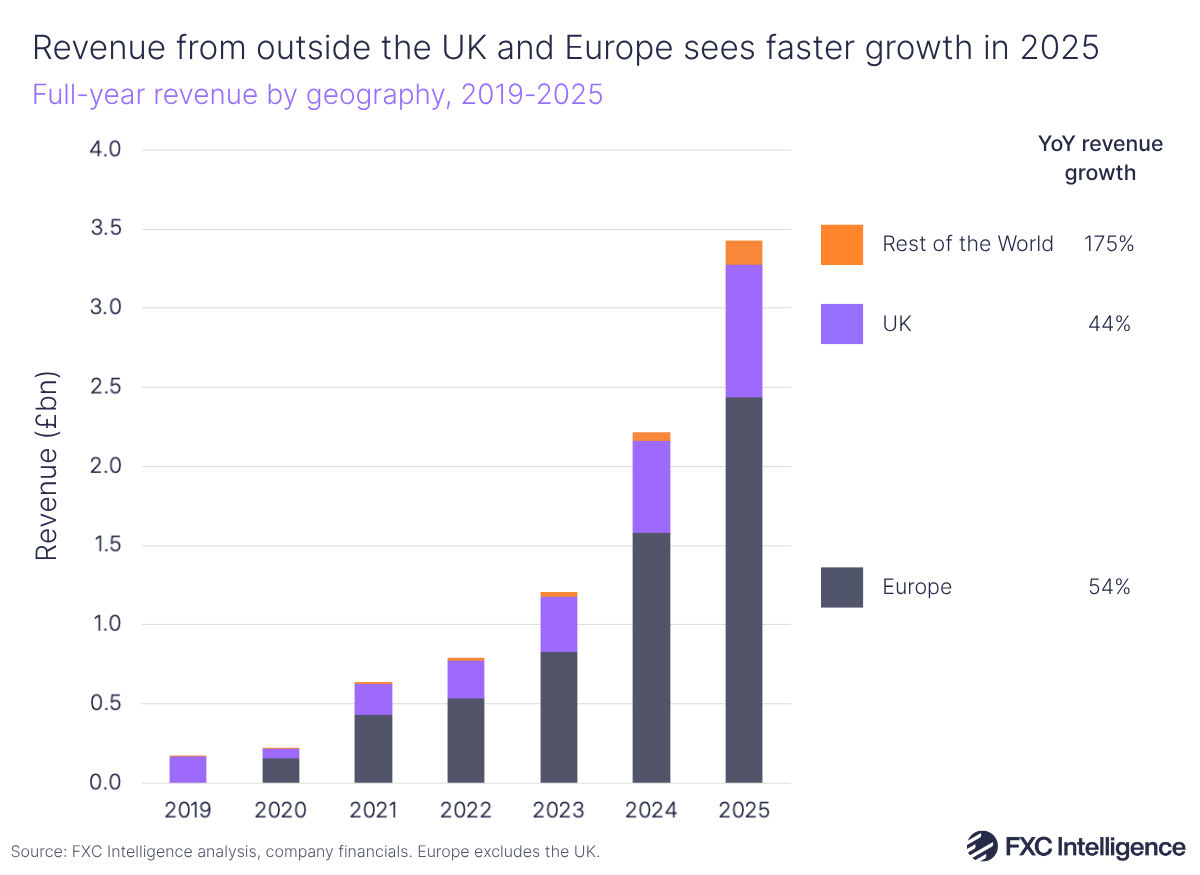
With the securing of its UK licence, the neobank now operates as a licensed bank in more than 30 of the 40 markets it operates in. Despite plans to expand globally, the majority of Revolut’s revenue continues to come from the UK and Europe, accounting for 25% and 71% of all fee income in 2025 respectively.
Although revenues from the rest of the world continue to make up a small percentage of overall fee income, this segment grew significantly faster than both the UK and Europe, rising 175% YoY to £152m. This signifies that efforts to expand Revolut’s global influence are beginning to pay off, even while the company continues to place significant amounts of investment into the UK and Europe.
Revolut hopes recent progress securing banking licences can become a springboard for further rapid global expansion. In January 2026, it launched full banking operations in Mexico and the neobank also filed a formal application for a US national bank charter in March; a significant part of Revolut’s global growth strategy as it looks to eventually begin operating across all 50 states. With the potential approval of these applications, Revolut could soon present an increasingly global presence in the payments space.