Although usage of stablecoin cards remains low in comparison to overall global payment volumes, focus on them continues to rise. This week, we take a look at some of the stablecoin card offerings currently available.
Stablecoin payment cards enable users to spend stablecoin balances the same way they would fiat currencies. These offerings see stablecoins converted to local fiat currencies at the point of sale, which enables each payment to be processed through standard card networks like Visa and Mastercard.
Interest surrounding stablecoin-powered cards has ramped up in recent weeks, with Nium launching a new stablecoin card issuance platform at the end of March, while Kulipa, another stablecoin card issuing infrastructure platform, successfully raised $6.2m in a seed funding round last week.
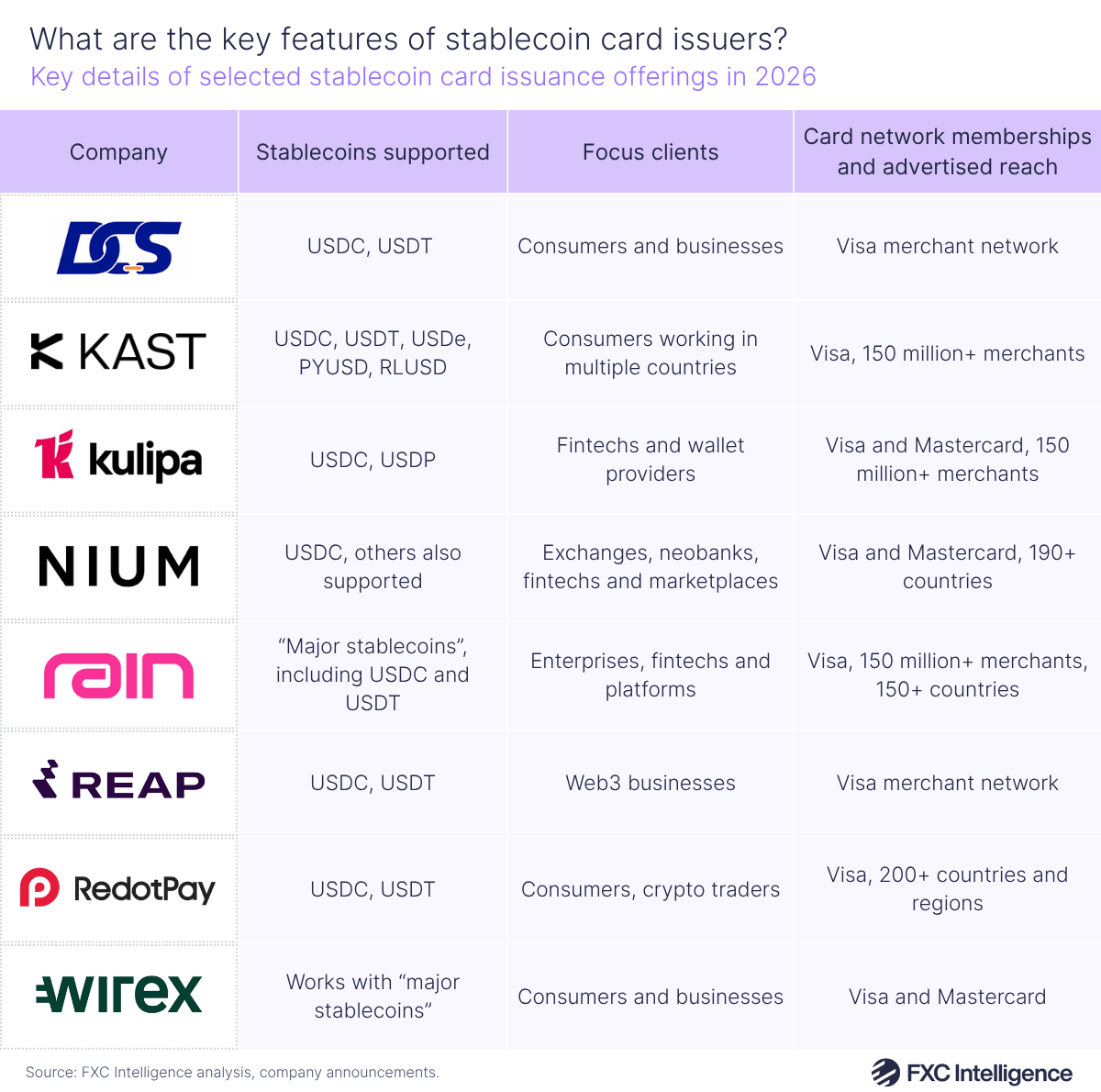
Rain, Nium, Kulipa, Reap and Wirex are amongst the companies that provide the infrastructure necessary for other businesses to issue stablecoin cards to their end-customers. Rain and Nium currently serve a range of financial players, including enterprises, crypto exchanges, fintechs, neobanks and marketplaces, enabling them to launch branded cards via a single API. Meanwhile, Kulipa is focusing on enabling fintechs and wallet providers to launch stablecoin cards and offer more neobank-like services. Reap provides stablecoin corporate credit cards, giving Web3 companies the option to pay for everyday fiat expenses using an on-chain treasury.
Wirex, which offers a direct-to-consumer platform, also provides a banking as a service offering. Like Nium, it enables fintechs, banks and Web3 companies to issue stablecoin-powered cards, alongside other offerings, through one API. Similarly, DCS Card Centre primarily targets consumers but also offers a white-label stablecoin card powered by its own infrastructure for businesses.
Kast and RedotPay primarily target consumers and function as neobanks, offering financial accounts and stablecoin cards. While Redotpay appears to aim its accounts more towards crypto traders, Kast looks to target travellers and individuals that work in more than one country.
Across companies offering stablecoin card issuing services or platforms, they primarily support stablecoins pegged to USD, including Circle’s USDC, Tether’s USDT and Paxos’ USDP. The majority also have principal memberships with either Visa or Mastercard or both – highlighting the role these major card networks will continue to play as stablecoins claim a larger share of payment volumes.
These offerings represent a significant step for stablecoins. Stablecoin balances can be spent internationally without requiring manual currency exchanges or high bank fees, while stablecoins cards provide a reliable way to hold and spend money in regions where local currencies are more volatile. As these offerings evolve, we may see usage slowly increase over time and represent a larger share of global payment flows.