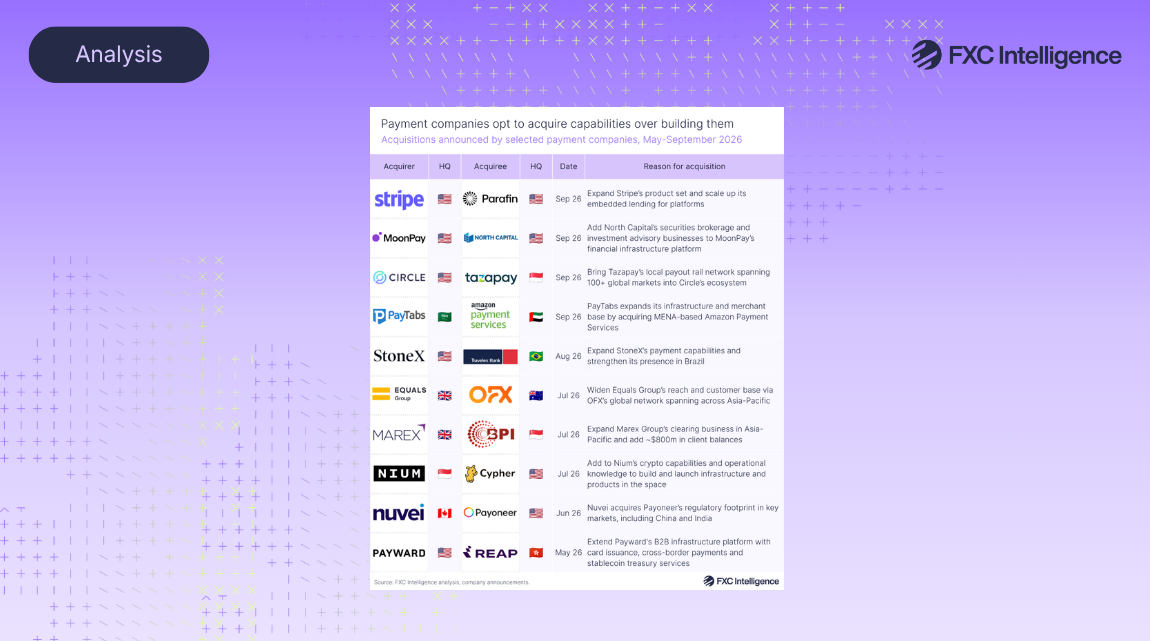
Cross-border payments companies continued to report key developments around stablecoins in 2026, including new product launches, acquisitions and partnerships. We’ve highlighted some of the key stablecoin trends from public companies’ most recent investor-facing presentations, including Q1 2026 earnings calls, Citi and Euronet’s recent Investor Days and Wise’s intro to a new US audience following its listing in the country.
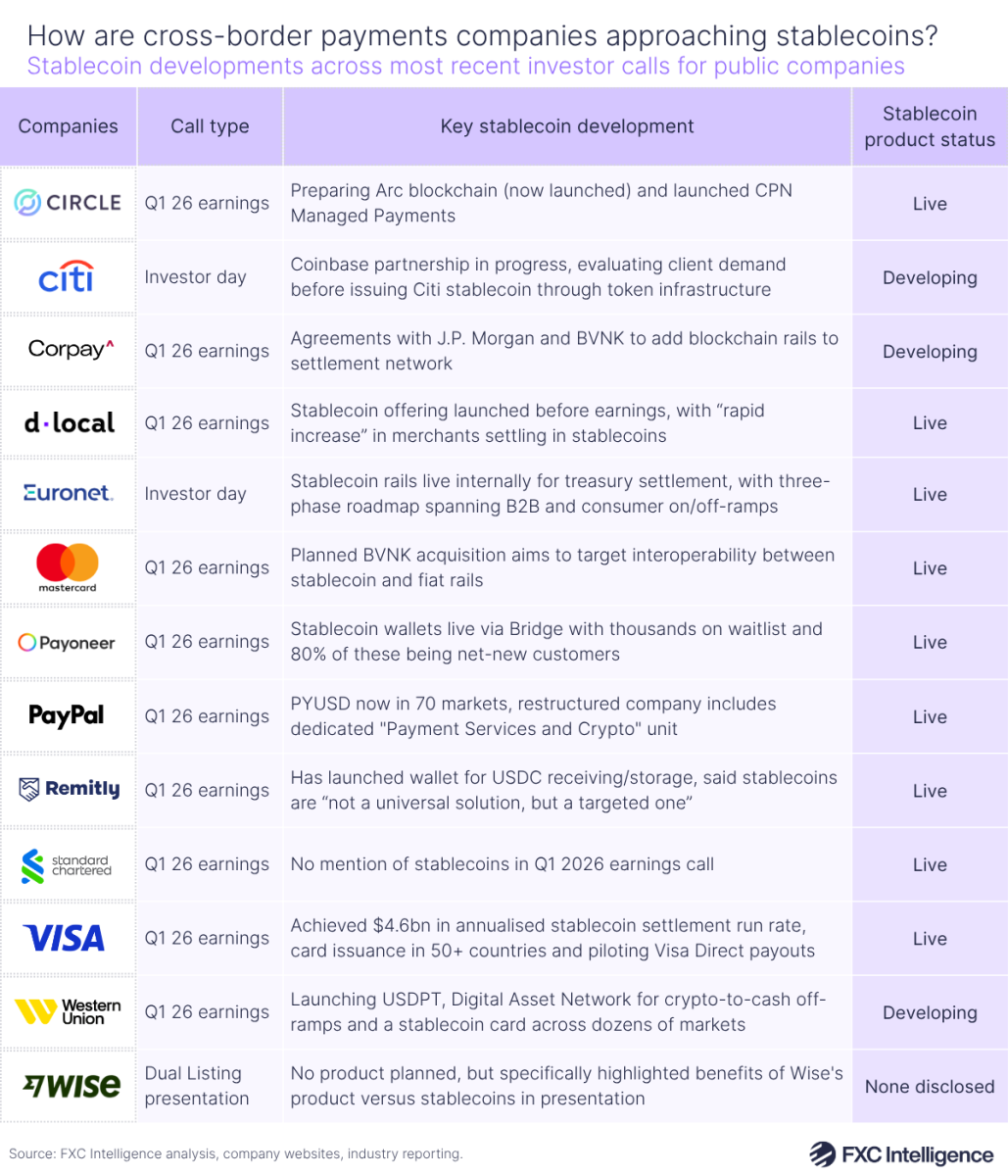
During their Q1 earnings calls, companies gave updates on new and soon-to-come launches in the space, with particular benefits on the infrastructure side, on-ramp and off-ramp capabilities and facilitating both consumer and B2B payments. For example, Mastercard is hoping to step up its existing settlement capabilities through its planned acquisition of BVNK, which will specifically aid B2B cross-border payments by enhancing Mastercard’s ability to send, receive, convert and hold stablecoins.
Companies such as Western Union, PayPal, Payoneer and Remitly have built products that allow customers to hold and use stablecoins directly. Others are currently focused on the potential of blockchain for internal treasury, though in Euronet’s case this is part of a wider roadmap to bring stablecoins to both B2B and consumer customers in the future.
Money transfer providers are seeing stablecoins differently in some cases. On the one hand, Western Union is pitching heavily into the space, having launched its own stablecoin and on/off-ramp networks in a bid to bolster digital growth. Meanwhile, during its recent investor presentation, Wise shared how the company continues to monitor the stablecoin space, but it still sees its network as offering better pricing and reduced complexity across potential use cases.
This reflects a key thread running through many of the presentations – in particular for dLocal, Visa and Remitly – which is that stablecoins are specifically of interest in emerging markets and countries with specific currency volatility challenges, rather than something that could completely revolutionise payments. Remitly’s new CEO Sebastian Gunningham summed it up in the company’s Q1 earnings call, saying that stablecoins are “not a universal solution, but a targeted one”. The company is aiming at corridors where stablecoins offer a “clear cost or speed advantage” to deliver better outcomes for customers.
Stablecoin products are going live or are in the works, but the space remains nascent and it will likely take time before more cross-border companies report significant revenue numbers derived from stablecoins. Having said this, significant acquisitions, investment and even company restructures (in the case of PayPal) signify that companies are moving to meet expected demand across a range of use cases.