Euronet has held its 2026 Investor Day, during which it outlined plans to accelerate its shift to digital and transition to an AI-first company to significantly bolster future revenue growth.
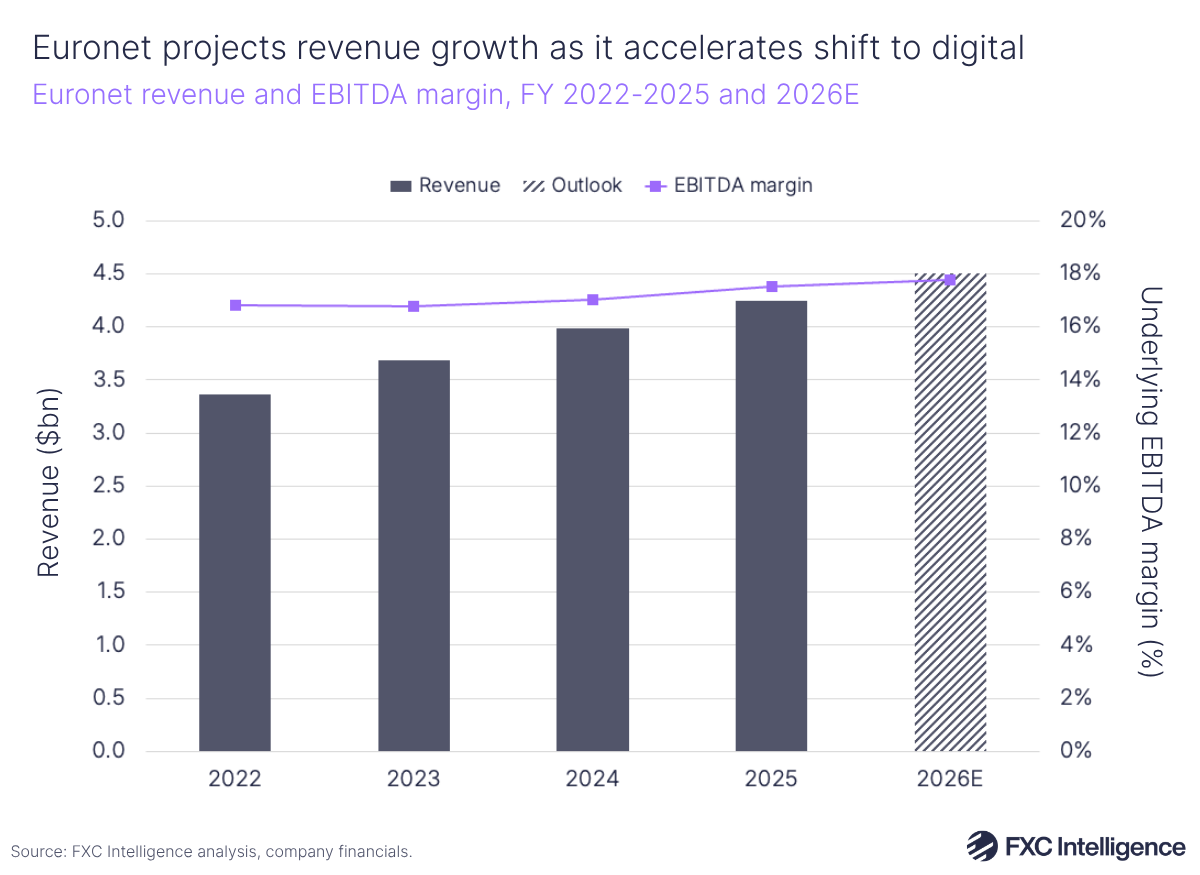
Following positive results in Q1, Euronet is projecting that its total revenue will reach around $4.5bn for the full year, which would put it at 6% revenue growth YoY. It is also expecting to deliver EBITDA of $800m, which would give the company its best FY EBITDA margin (18%) since 2019 (22%).
During the latest investor day, Euronet outlined key levers that it plans to leverage to drive earnings growth. The first of these is digital transformation, including further growing and developing its digital offerings to the remittance market. The company is focusing heavily on digital accelerators, including Ria Digital, Xe and Dandelion, which currently make up 21% of the company’s cross-border payments segment.
Euronet explained that it is focused on expanding the reach and distribution of these digital offerings, including by launching wallets and Ria and Xe-branded cards for consumers – extending the lifetime value of its customers. This follows Ria’s integration with WhatsApp that launched earlier this year, with Euronet Money Transfer Segment CEO Juan Bianchi explaining that adding new distribution channels is important for future growth. In the short-term, Euronet also plans to expand Ria’s digital offering into five new geographies, with expansion into 15 more in the next three to five years.
While digital growth remains strong, Bianchi stressed that its physical remittance offerings remain important to the company’s business. He outlined a $900bn TAM for the remittance market, roughly half of which is based on digital channels, while the other half is physical. Euronet also plans to leverage its existing physical presence to accelerate its digital growth through its Ria Connect programme, which sees its agent network refer customers to its digital platform. Around 40,000 of its new digital customers joined as a result of this programme and Euronet is now scaling it further across the US, Europe and Asia Pacific.
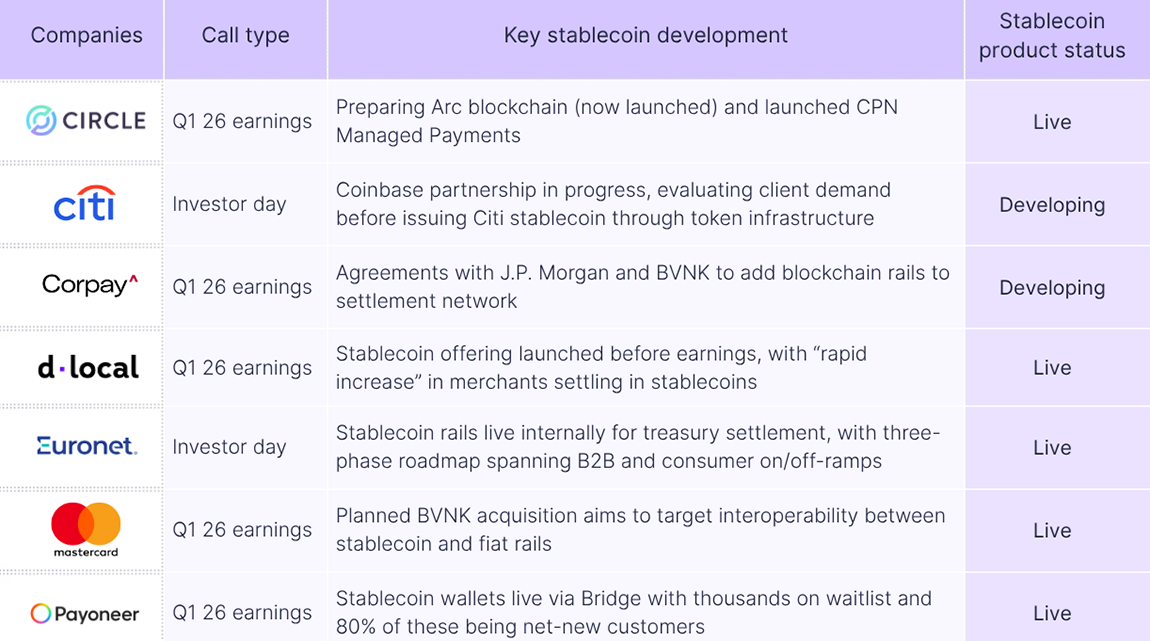
The company is also now leveraging stablecoins, using them for settlement throughout its correspondent bank network. This enables Euronet to optimise its working capital, reducing the need for prefunding over certain periods, such as long weekends. It is also planning to enable on and off-ramps for stablecoins to give customers the option to hold and transfer them throughout its network.
AI is also set to play a key role in Euronet’s operational optimisation, with Chief Technology Officer Martin Brückner explaining that its long-term plan is to transform into an AI-first company. Brückner demonstrated how the company used an AI-powered coding tool to streamline a redesign of the Xe app, bolster its customer service and support fraud detection, among other areas.
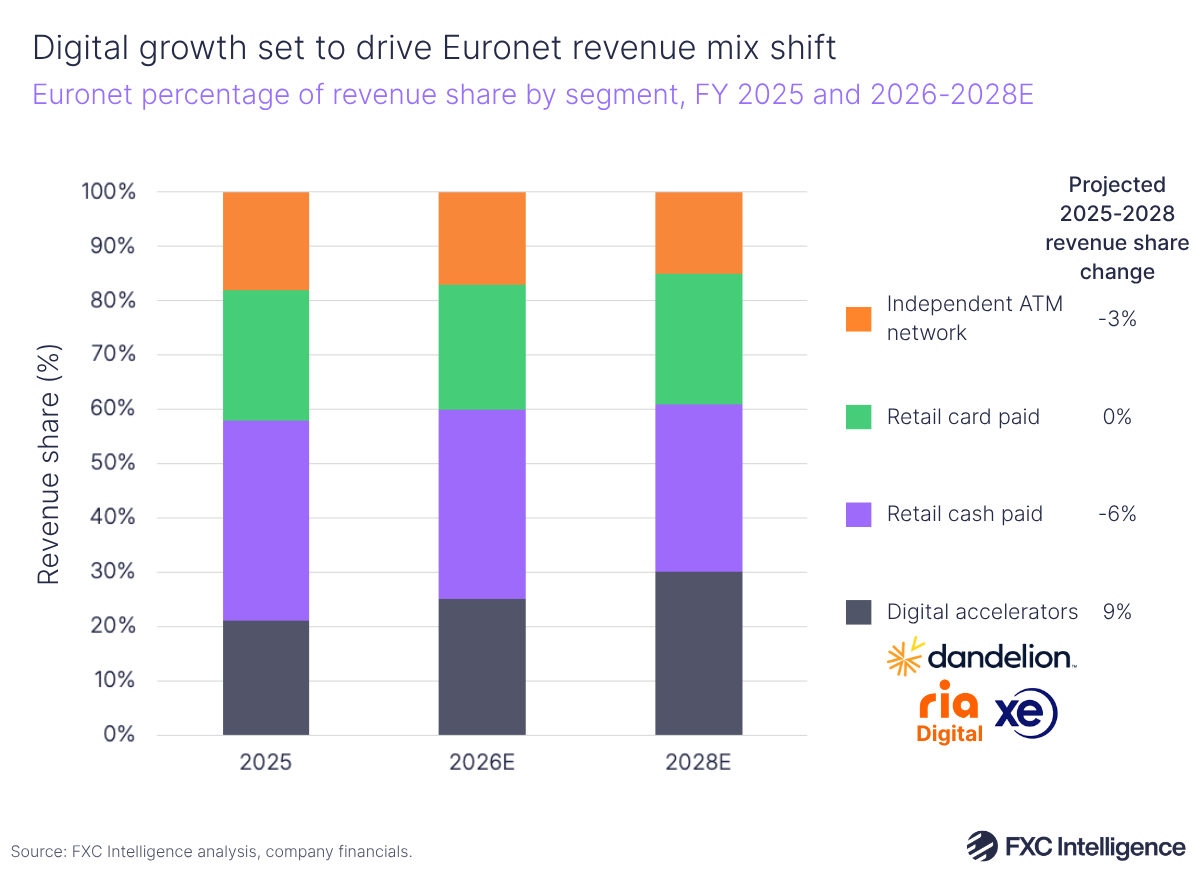
Looking to the future, Euronet is projecting strong growth for its digital accelerators, including Ria Digital, Xe and Dandelion, as well as Merchant and Payment Processing Services. It expects this segment to see faster growth than any other in its business, which it projects will see it increase its share of overall revenues to 30% in 2028.