Last week, Wise launched two new travel-focused features for its app, including the ability for customers to pay using QR codes across countries in Asia, Europe and Latin America. We compare how apps across the consumer finance space are trying to boost their appeal to travellers.
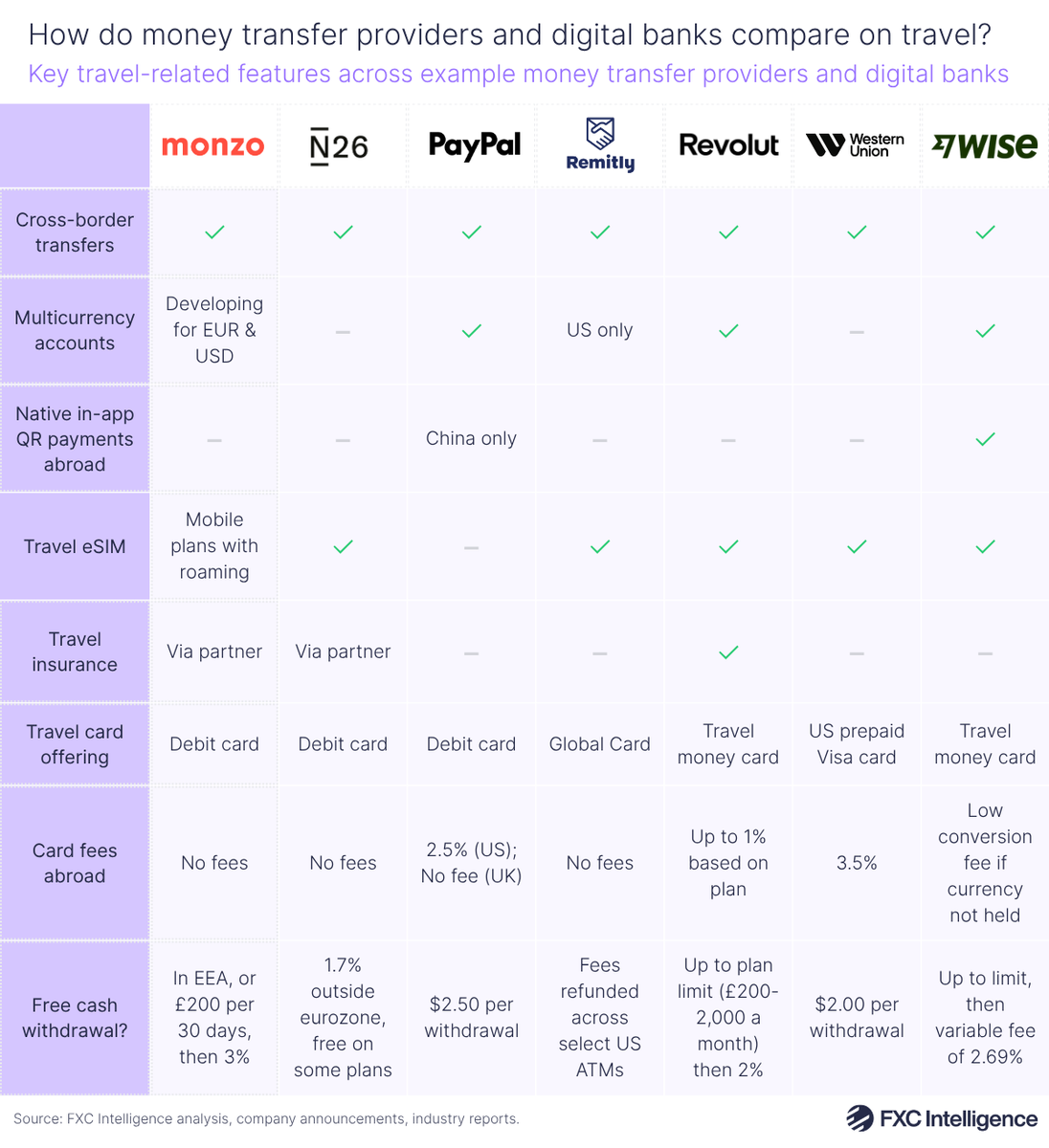
Competition for travellers now covers a mixed field of apps focused on cross-border consumer finance – including neobanks such as Revolut, Monzo and N26, as well as money transfer providers including Western Union and Remitly – all of which now offer a combination of various features focused on customers needing to spend money abroad, in addition to cross-border transfers.
From a payments perspective, these can range from multicurrency accounts that allow users to hold, send and pay in different currencies; travel card offerings or debit cards that offer low or no FX fees on spending abroad; and free cash withdrawal, usually up to certain limits. Some players have also added additional value-adds, including travel insurance, airport lounge access and travel eSIMs – digital SIM cards that specifically allow travellers to use local mobile data abroad.
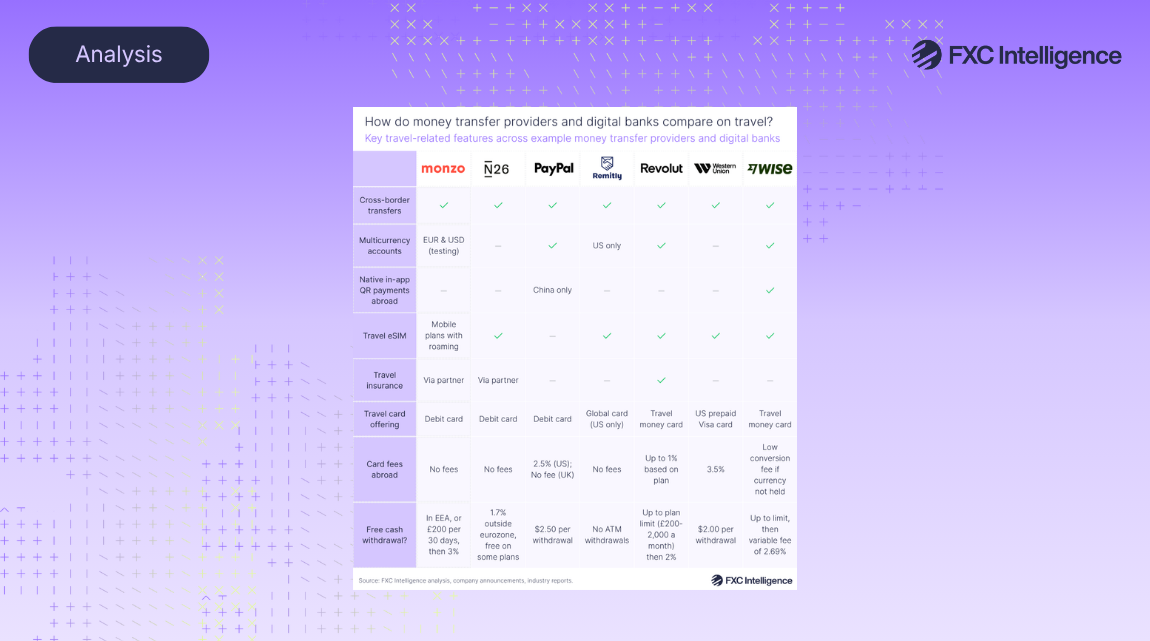
Comparing providers highlights how they differ on travel card fees and how travel features are offered, leaving room for further competition. Some raise no-fee cash withdrawal limits by subscription tier, while others offer travel cards only in specific markets.
Revolut, for example, offers a comprehensive set of travel features, including a prepaid travel money card for payments in 150+ currencies, travel insurance and global eSIM plans with a range of data amounts and durations. Fees are tied to its tiered plans, with free ATM withdrawals applying up to plan-specific limits, and while Standard customers pay a 1% exchange fee above £1,000 when spending abroad, customers on higher tiers (e.g. Premium) pay no fees.
Other neobanks such as Monzo and N26, offer debit cards with no card fees on spending. They also expose different approaches in cash withdrawal abroad. For example, Monzo offers free withdrawals within the EEA or up to £200 per 30 days elsewhere before a 3% fee applies, while N26 charges 1.7% fees on ATM withdrawals outside the Eurozone across lower customer tiers or no fees on premium plans.
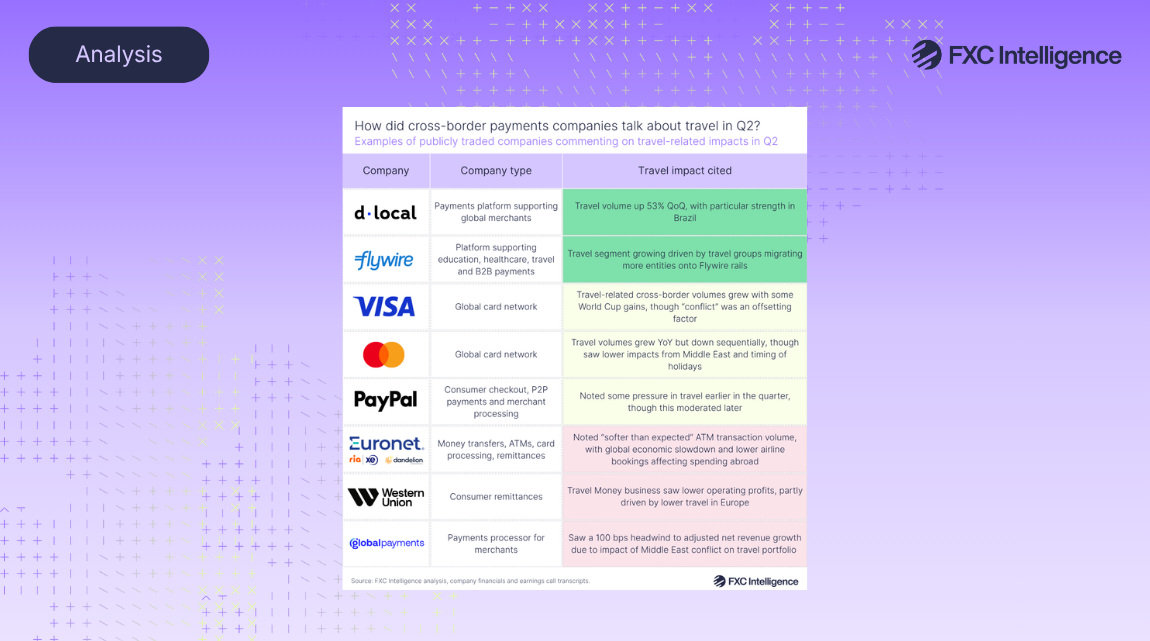
For money transfer providers such as Remitly, Western Union and Wise, the addition of travel features reflects a push for these companies to create additional revenue streams to make them more resilient. For example, in its recent earnings Western Union saw its Consumer Services (containing Travel Money, amongst other features) grow to account for 15% of its total revenue in Q2 2026, up from 6% in 2022, though the company did note an impact from declining travel patterns during the quarter.
Remitly also launched its Global Card in July 2026, offering no fees on spending abroad, the ability to hold balances in USD or USDC, preferred FX rates and faster delivery fees on transfers and access to a global travel eSIM, among other features. The card is initially available in the US and select international markets, with Remitly intending to expand its reach across the UK, Europe and 10 additional markets as it continues to diversify.
Wise’s new feature added last week allows customers to pay by scanning QR codes in a range of countries, supported partly by direct connections to local payment schemes in Singapore, the Philippines, Malaysia, Brazil, Thailand, Switzerland and Hungary. Users can also pay at millions of Alipay+ merchants through the Wise app without a Chinese bank card, so travellers no longer need a local app or cash to pay in these markets.
While many consumer finance apps use QR codes for features such as cash pickups, few let users scan to pay abroad natively through the app. One exception is PayPal, which announced in August 2026 that US users could make in-store QR payments at Weixin Pay merchants across China.
Wise’s addition of QR payments highlights that as companies expand their networks and connections to local payment methods globally, the opportunities to grow their appeal to travellers also increase, and we could see more similar features emerging across consumer finance apps in the future.